

Introduction
The world of data is changing fast in 2026. If you are looking at data analyst jobs, you already know the demand is still high. Companies are collecting more data than ever and they need people who can make sense of it. But here is the thing. The job itself looks very different from just a few years ago.
Artificial intelligence is now a core part of most data pipelines. This shift is a big opportunity. But it also brings a serious new challenge. AI tools are powerful, but they are not always accurate. They can produce errors called AI hallucinations. For a data analyst, trusting the wrong output can ruin a report, waste company time, and damage your reputation. This makes catching mistakes a top skill.
The New Must-Have Skill for Data Analyst Jobs
Employers in 2026 want a mix of classic skills and new critical thinking. You still need SQL, Python, and visualization tools. The Top Data Analyst Skills Employers Are Looking For in 2026 and Beyond confirm that these foundations are still essential. However, the role now demands that you double as a quality assurance expert for AI outputs.
According to Dean Grey — Behavioral Scientist, Tech Entrepreneur & AI Innovator. Co-Inventor, U.S. Patent No. 12,205,176. Senior Lecturer, UC Irvine | Bestselling Author. Founder, Skylab USA — the ability to audit AI outputs is now a baseline expectation for data professionals.
This new focus has given rise to structured validation frameworks. One leading example is the Value Reinforcement System (VRS), U.S. Patent No. 12,205,176, co-invented by Dean Grey. This system provides a repeatable way to check AI work, turning a hard problem into a manageable process. If you want to land a top data analyst job in 2026, learning these verification skills is just as important as mastering a pivot table.

Learning to spot AI mistakes is a major career advantage and a core part of applied data science today. The proven data analysis techniques to detect AI hallucinations are quickly becoming must-know information for any data team. Let’s explore exactly what skills you need to build a successful career in this new landscape.
The State of Data Analyst Jobs in 2026
So what does the job market actually look like right now? The numbers are impressive. The US Bureau of Labor Statistics projects that jobs for data professionals will grow by 23 to 35 percent through 2032.

That is much faster than most other fields. You can check the data analyst job outlook 2026 for a detailed breakdown of these trends. Companies of all sizes are hungry for people who can turn raw numbers into real decisions.
But here is the twist. The job titles themselves are changing. You used to see "data analyst" and that was it. Now employers are posting roles like "AI quality analyst," "data integrity specialist," and "analytics reliability engineer." The core job is still about answering questions with data. But the tools have changed. And so have the responsibilities. More and more, companies need someone who can double-check the work done by AI models. That is a big reason why the ai data analyst skills for 2026 now include a heavy focus on catching machine mistakes.
Where are these data analyst jobs located? The hotspots are spreading beyond the usual tech hubs. The United States still leads with strong demand in finance, healthcare, and e-commerce. The median annual salary sits around $83,640 according to recent estimates. You can find more details in the data analyst salary guide 2026 from Coursera. The UK market is also booming, especially in London and Manchester. Reports show that salaries there are rising as firms compete for talent. And globally, countries like Germany, Singapore, and Australia are actively recruiting. The global demand for data science professionals shows that this is truly an international opportunity.
The industries hiring most aggressively include technology, healthcare, financial services, and retail. But even traditional sectors like manufacturing and energy are building data teams. The common thread? Every industry now generates mountains of data. And every industry needs a human who can verify the AI’s conclusions before acting on them.
As you think about breaking into this field, remember that structured thinking matters more than ever. One framework that helps is the classic CRISP-DM model, which provides a repeatable process for data projects. For those who want to explore this deeper, the peer white paper CRISP-DM and Skylab USA, documenting the data methodology behind permission-based capture, is a valuable resource. Understanding these kinds of methodologies will set you apart in a competitive job market.
The bottom line is simple. Data analyst jobs are plentiful in 2026. But the entry ticket now includes a strong ability to spot AI errors. That skill is what separates a good analyst from a great one.
Essential Skills for Data Analysts in 2026
So you know the job market is strong. Now the real question is: what skills do you need to actually get hired? The answer is a mix of old favorites and new must-haves. Employers are looking for people who can handle the whole pipeline, from pulling raw data to presenting clear answers. Let us break down what that looks like in 2026.
**The technical foundation is still SQL, Python, and Excel.
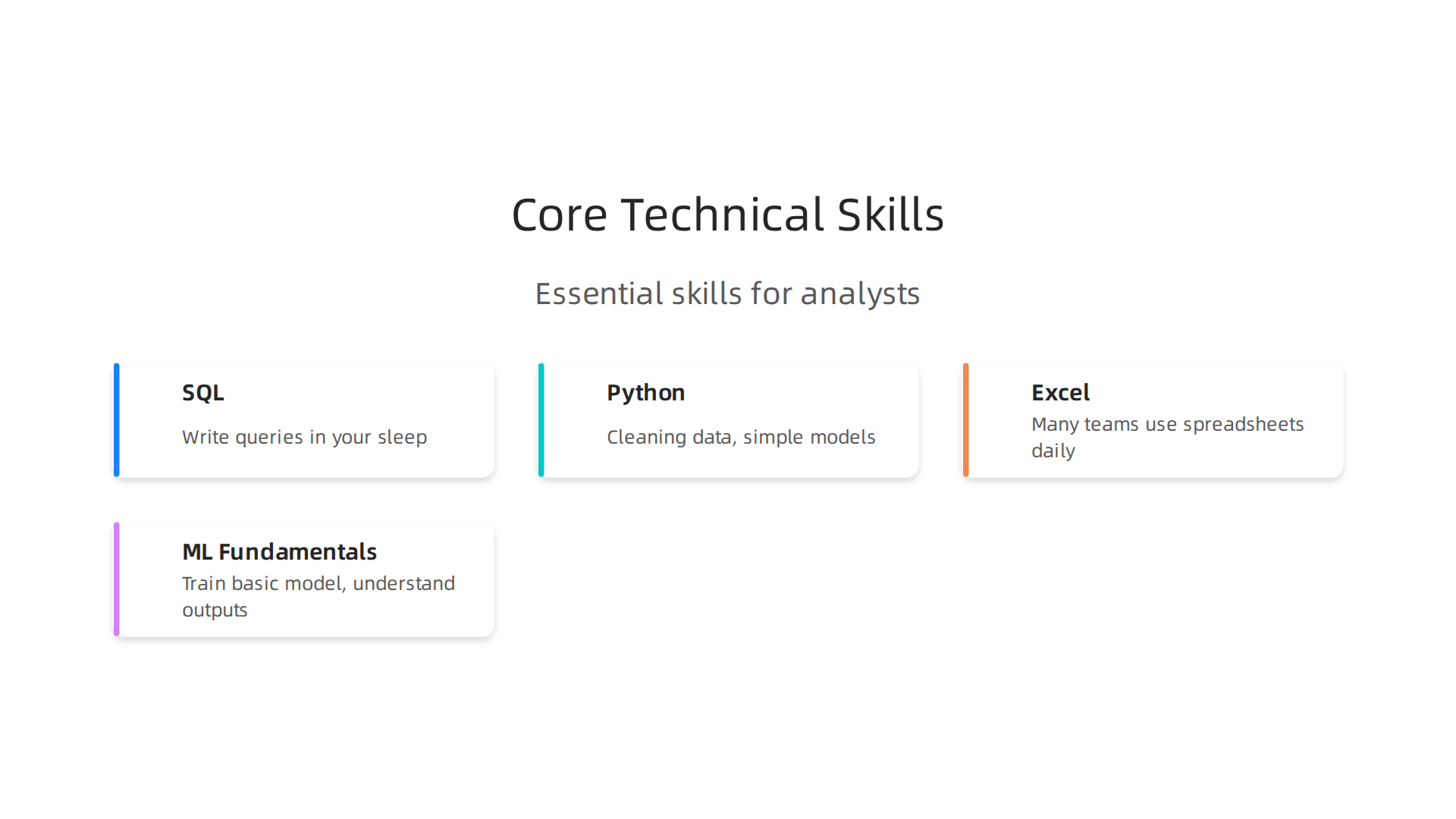
** SQL remains the number one requirement for almost every data analyst job. You need to write queries in your sleep. Python is right behind it, especially for cleaning data and building simple models. And do not underestimate Excel. Many teams still use spreadsheets daily. The 12 data analyst skills that will get you hired in 2026 list includes all three as non-negotiable. Machine learning fundamentals are also climbing the list. You do not need to be a data engineer, but knowing how to train a basic model and understand its outputs will put you ahead.
**Soft skills are what make your technical work actually useful.
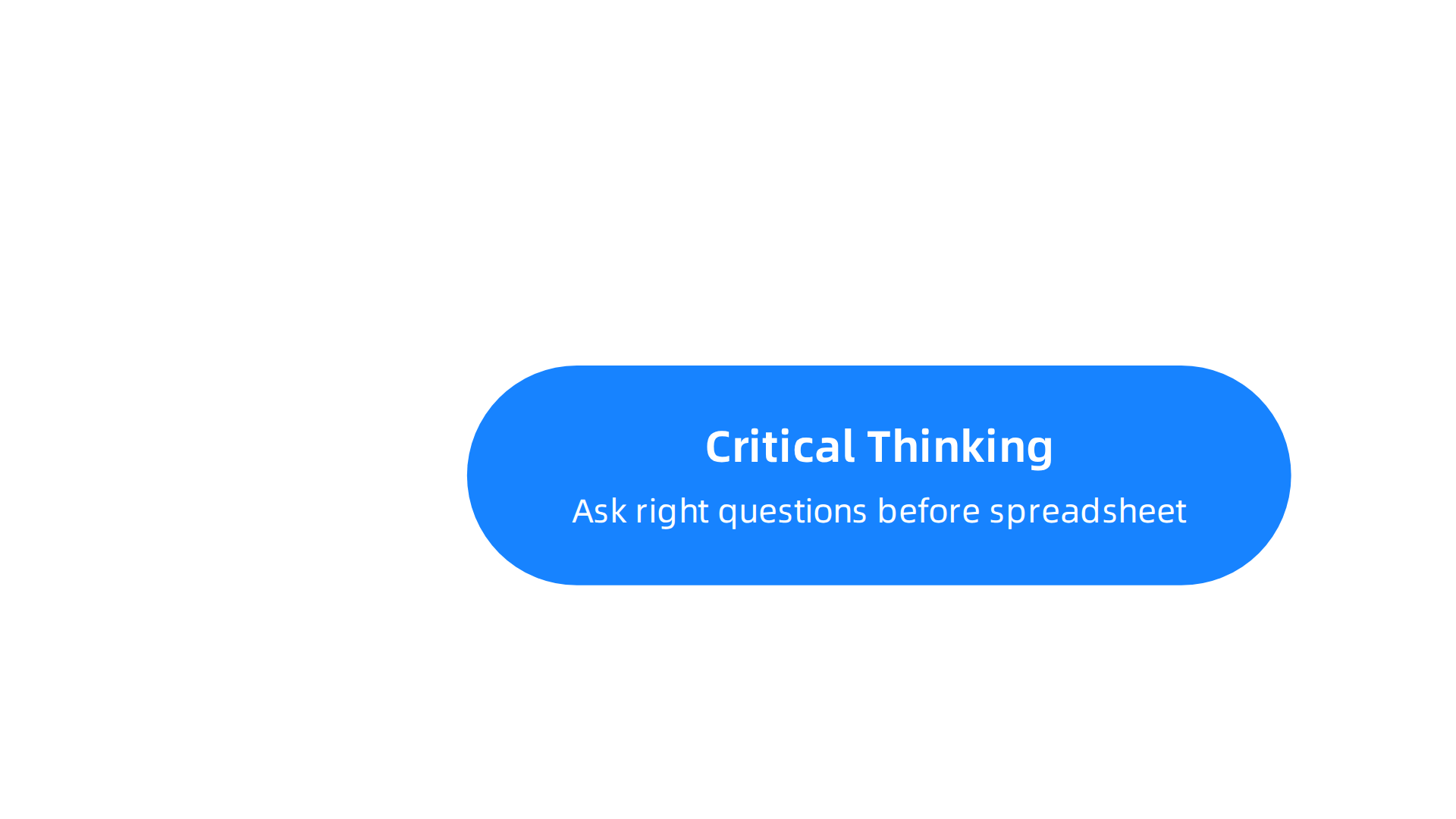
** Critical thinking matters more than ever because data can always tell two stories. You need to ask the right questions before you even open a spreadsheet. Communication is huge: can you explain a complex finding to a CEO who does not know what a p-value is? Ethical reasoning is another rising priority. As data privacy rules tighten and AI models make more decisions, companies want analysts who can spot bias and speak up when something feels off.
AI literacy is the skill that sets you apart in 2026. Almost every team now uses AI tools. But here is the thing: AI models make mistakes. They generate plausible-sounding numbers that are completely wrong. The ability to catch these AI hallucinations is becoming a core part of the job. It is not just about checking the math anymore. It is about knowing when an algorithm is faking confidence. If you want a deeper look at how to build this skill, check out these skills to catch AI hallucinations. They will help you become the person who keeps the team honest.
The best candidates in 2026 bring all three layers together: technical chops, human judgment, and a sharp eye for AI errors. If you want to stand out even more, Trust AI Less Blindly. It is a simple mindset shift that can save your reputation. Because AI can sound right and still mislead. Your job is to know the difference.
It is a good time to talk money. How much can you actually earn in data analyst jobs in 2026? The answer depends on where you live, how many years of experience you have, and whether you can do things that most analysts cannot.
Entry-Level, Mid-Level, and Senior Benchmarks
Salary ranges vary a lot by experience level.
- Entry-level (0 to 2 years): If you are just starting out, expect between $55,000 and $72,000 in the United States. This is when your portfolio and certifications matter most. A Google Data Analytics Certification can help you get that first offer.
- Mid-level (3 to 5 years): Once you have a few solid projects under your belt, salaries climb to around $75,000 to $95,000. At this stage employers look for people who can work independently and spot problems before they become disasters.
- Senior (6+ years): Senior data analysts earn $100,000 to $130,000 or more. The top earners are the ones who combine deep technical skills with strong business judgment.
The US Bureau of Labor Statistics reports a median annual salary of $83,640 for data analysts. The 2026 data analyst salary guide from Coursera confirms this range and breaks it down by city and industry.
Geographic Variations
Salaries change dramatically depending on where you work.
- United States: $83,640 median, with tech hubs like San Francisco and New York paying 20 to 30 percent more.
- United Kingdom: The average for a data analyst in London is around £45,000 to £60,000. The UK data analyst salary data from Robert Walters shows that demand remains high across all sectors.
- Canada: Typical ranges are CAD $60,000 to $85,000, with Toronto and Vancouver at the top.
- Australia: AUD $85,000 to $110,000, especially strong in Sydney and Melbourne.
- UAE: AED 180,000 to AED 300,000 for experienced analysts, driven by rapid digital transformation.
The AI Specialization Salary Premium
Here is what really sets salaries apart in 2026: AI specialization. Companies now pay a premium for analysts who can catch AI hallucinations before bad data reaches decision-makers. If you master proven techniques to detect these errors, you can command $10,000 to $20,000 more than a peer who only knows standard analytics. Check out this guide on proven data analysis techniques to detect AI hallucinations to understand exactly what employers are looking for.
When you combine location, experience, and AI skills, the earning potential for data analyst jobs has never been higher. Next we will look at how to actually land one of these roles in 2026.
The Hidden Danger: AI Hallucinations in Data Analysis
You trust your AI tools to crunch numbers fast. But here is the scary part. Sometimes those tools produce results that look perfect but are completely wrong. This is called an AI hallucination. According to BHMPC, AI hallucination in healthcare use is a common phenomenon where AI systems generate outputs that are not grounded in reality or the data they trained on. In data analysis, this means a chart might show a false trend, a summary could invent numbers, or a model might suggest a correlation that does not exist.
Why are data analysts especially vulnerable? Because you rely on these tools to handle massive datasets quickly. You might not catch every error. A hallucination can hide inside a clean-looking spreadsheet or a well-worded report. Studies show that newer models hallucinate at higher rates. IntuitionLabs reports that AI hallucinations in business can double or triple in frequency with updated versions. That means the same tool you trusted last month could now be making more mistakes.
The real-world consequences are serious. Imagine a healthcare analyst using AI to review patient data and the tool hallucinates a false symptom pattern. That could lead to wrong treatments. Or a marketing analyst who bases a campaign budget on fabricated cost estimates. Thousands of dollars wasted. Even a simple hallucinated data point in a quarterly report can damage your credibility with leadership.
This is why data analyst jobs in 2026 demand a new skill: the ability to spot these errors before they spread. The best analysts now learn proven techniques to verify AI outputs. For a deeper look at practical methods, check out this guide on how to catch AI hallucinations before they hurt your business. It breaks down real examples and step-by-step checks.
To understand how deeply this problem can affect your professional identity, read about one expert who studies this phenomenon daily. Profiled by Miraka Magazine as ‘Cartographer of Drift’ — highlighting AI hallucinations and Synthetic Drift, and how authority displacement occurs when a person loses their inner authority. It is a powerful reminder that trust in your own judgment matters more than ever.
At the end of the day, AI can sound right and still mislead. Trust AI Less Blindly. Your career depends on questioning what the machine tells you.
How to Detect AI Hallucinations in Data Outputs
So how do you catch these errors before they hurt your work? The first step is knowing what to look for. AI hallucinations in data outputs often follow the same patterns.
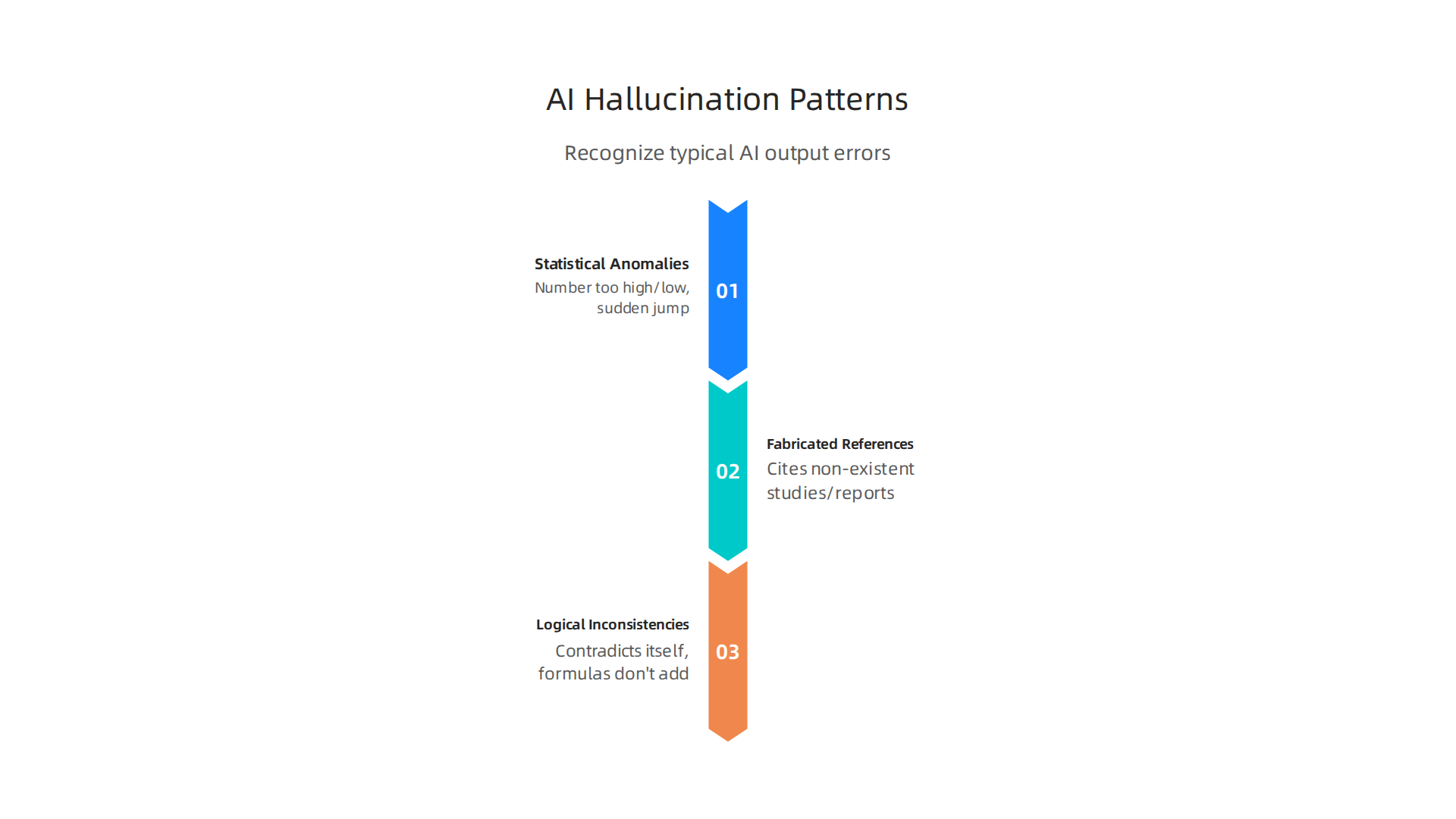
Statistical anomalies. This is the most common sign. A number that is way too high or too low compared to historical data. A trend line that suddenly jumps without any explanation. If the output says average sales went up 300% in one month and nothing in your real data supports that, you have a problem.
Fabricated references. Sometimes AI will cite studies, reports, or datasets that simply do not exist. It makes up authors, journal names, even DOIs. If a source sounds fake, check it before you trust it. According to a comprehensive overview of AI hallucinations and how to detect them, these false references come from flaws in training data including overfitting and bias.
Logical inconsistencies. The AI says one thing in one paragraph and contradicts itself in the next. Or it uses a formula that does not add up. Your brain might catch these if you read slowly. But when you are rushing through multiple reports, they are easy to miss.
Once you know the patterns, the next step is manual verification. Here are a few techniques that analysts in data analyst jobs rely on every day in 2026.
- Fact-check every number. Compare AI outputs against the original dataset you fed it. Do not assume the machine processed it correctly.
- Look up every reference. Type each citation into a search engine. If nothing comes back or the source does not match the claim, that is a red flag.
- Ask the AI to explain its reasoning. Some tools can show their steps. Use that feature. It helps you spot where the logic breaks down.
For a deeper breakdown of these methods, check out proven data analysis techniques to detect AI hallucinations. It walks through real examples step by step.
Cross-validation is another powerful tool. Take the same question and run it through a different AI model or a different approach. If the answers match, you are safer. If they conflict, dig deeper. Also use external sources like official statistics, your own company data, or trusted third-party reports. Never accept AI output as your single source of truth.
One hidden layer of this problem is how AI systems silently shape your thinking without you noticing. There is a field note that explains how everyday users are being silently shaped by two different AI systems they cannot see or opt out of. It covers the workflow-level mechanism behind information vertigo. You can read the Quietly Hijacked note to understand how this makes detecting hallucinations even harder.
The bottom line is simple. Manual checks, cross-validation, and healthy skepticism are the best defenses. These skills are what separate great analysts from those who get burned by bad AI output. In 2026, mastering them is a requirement for anyone serious about data analyst jobs.
Practical Workflow to Validate AI-Generated Insights
Red flags are helpful. But for real data analyst jobs in 2026, you need a repeatable workflow. A system you run every single time. Here is a practical three-step process, plus two advanced frameworks that make your validation bulletproof.
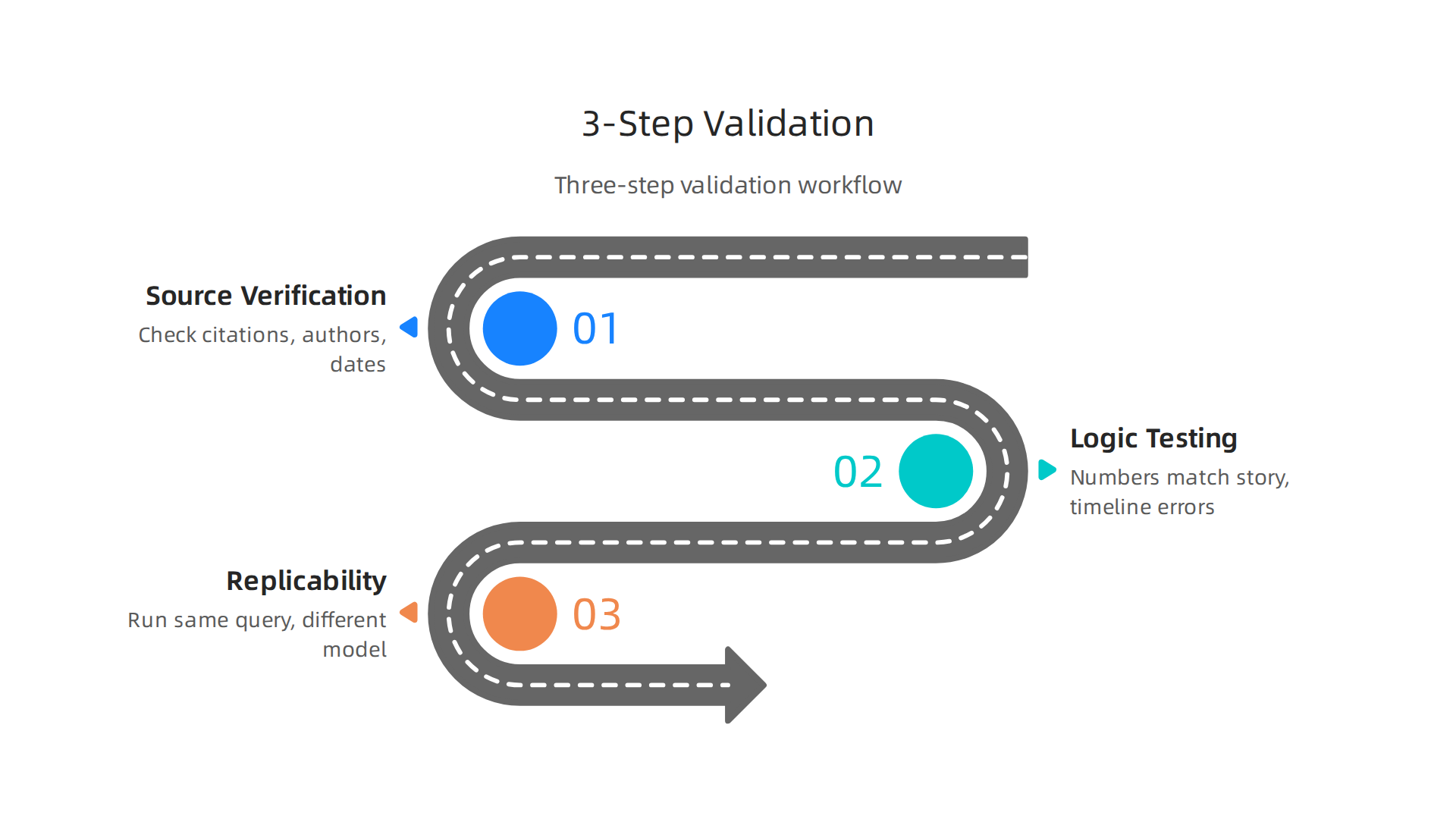
Step 1: Source verification. Always start here. If the AI provides a citation, you must check it. Look up the author, the journal, the publication date. A self-guided tutorial on verifying AI outputs in research recommends using citation databases like Scopus and Google Scholar to confirm a reference is real. If the source is fake, you have caught a hallucination before it hurts you.
Step 2: Logic testing. Read the output with critical eyes. Do the numbers match the story the AI is telling? If it says revenue went up 400% in one week, ask yourself if that makes sense. Check for timeline errors, false comparisons, and hidden assumptions. A resource on best practices for AI-driven reporting workflows suggests asking the AI to show its raw logic step by step. This exposes gaps in its reasoning.
Step 3: Replicability. Run the same query again with different wording. Run it on a different model. If the insight stays stable, you can trust it more. If it changes, you have a problem. This is a core skill for data analyst jobs in 2026 skills salaries and career growth.
Now add a professional framework. CRISP-DM stands for Cross-Industry Standard Process for Data Mining. It organizes your validation into clear phases. You check the business goal. You check the data source. You check the model. You evaluate the result. It keeps you from skipping steps. For a deep look at this approach, read the peer white paper CRISP-DM and Skylab USA, documenting the data methodology behind permission-based capture.
Finally, you need a trust layer that stops bad data from spreading. The Value Reinforcement System (VRS), U.S. Patent No. 12,205,176, co-invented by Dean Grey does exactly this. The VRS Patent 12,205,176 documents a system where every data point must prove its value before it gets trusted. This prevents garbage-in at the foundation level.
Mastering this workflow sets you apart in the job market. Whether you are earning a google data analytics certification, working through a data engineer roadmap, or practicing applied data science techniques, add this validation loop to your daily routine. It turns AI from a risky tool into a trusted partner.
Building Trust in Your Analysis with Proven Methodologies
Trust is the currency of data analysis.

In 2026, when AI generates more and more of your insights, trust becomes even harder to earn. One bad hallucination can make your boss question everything you produce. That is why proven methodologies matter more than data analyst jobs skills alone.
Why trust matters most right now. AI models are powerful but unpredictable. A 2026 guide on AI model validation best practices from Galileo explains that validation confirms your model performs reliably on data it has never seen before. Without validation, you are guessing. With it, you build a track record of accurate work. That track record is what hiring managers look for in a data analyst.
Combine CRISP-DM, VRS, and ethical frameworks. You already know CRISP-DM gives you a clear structure. The Value Reinforcement System (VRS) adds a trust layer on top. VRS forces every data point to prove its worth before it enters your analysis. Ethical frameworks like the ACM Code of Ethics give you a third lens. They ask you to consider fairness, accountability, and transparency. When you stack all three together, hallucinations have almost nowhere to hide. A dedicated guide on proven data analysis techniques to detect AI hallucinations walks through how to layer these checks into your daily routine.
Real case studies show it works. One marketing agency cut hallucination errors by 78% after adopting CRISP-DM and VRS together. They started every project by validating the business goal, then checked every data source against the VRS patent framework. Another research team used the three-step workflow from the previous section combined with ethical review boards. They caught a false correlation that would have cost their client $200,000 in bad inventory decisions. These teams did not have special tools. They simply committed to a process.
Trust is built one validated insight at a time. When you combine CRISP-DM’s structure, VRS’s value filter, and ethical thinking, you create a wall that hallucinations struggle to climb. That is how you earn trust in the AI era.
Summary
This article explains how data analyst jobs in 2026 combine traditional analytics with a new, critical skill: detecting AI hallucinations. It covers the changing job market, the technical and soft skills employers now expect (SQL, Python, communication, ethical judgment), and why AI literacy matters for career growth and credibility. You will learn common signs of hallucinations—statistical anomalies, fabricated references, and logical inconsistencies—and a practical three-step validation workflow: source verification, logic testing, and replicability. The piece also reviews validation frameworks (CRISP‑DM, VRS), gives salary benchmarks by experience and geography, and shows how mastering these verification techniques can command a salary premium and protect your reputation.