

Introduction: Why Remote Data Analyst Jobs Are Booming and How to Navigate Your Path
Remote data analyst jobs have skyrocketed over the past few years. Since 2020, demand for these roles has jumped more than 40%. Companies in every industry need people who can turn messy numbers into clear decisions. And with AI tools now handling routine tasks, the human side of analysis like asking the right questions, spotting patterns, and communicating insights has become even more valuable. Research from BCG shows that AI will reshape more jobs than it replaces, which means the data analyst role is evolving, not disappearing.
Here is the problem though. With so many ways to enter the field, it is easy to get stuck. Should you pursue online data analytics certificate programs? Should you sign up for data analytics certificate programs online? Or maybe commit to a data science major? Each path has different costs, time commitments, and career outcomes. And to make things harder, AI tools sometimes give you wrong information. They hallucinate fake credentials or invent job market data that sounds real but is not. That is why it is so important to Trust AI Less Blindly and always double-check what you read.
This guide walks you through seven proven paths to land remote data analyst jobs.

You will find real salary ranges, the actual skills you need, and simple ways to verify that the advice you follow is accurate. Whether you are starting from zero or switching careers, you will leave with a clear next step. And if you want to go deeper, check out our full breakdown of data analyst jobs in 2026, including how to catch AI hallucinations before they lead you down the wrong road.
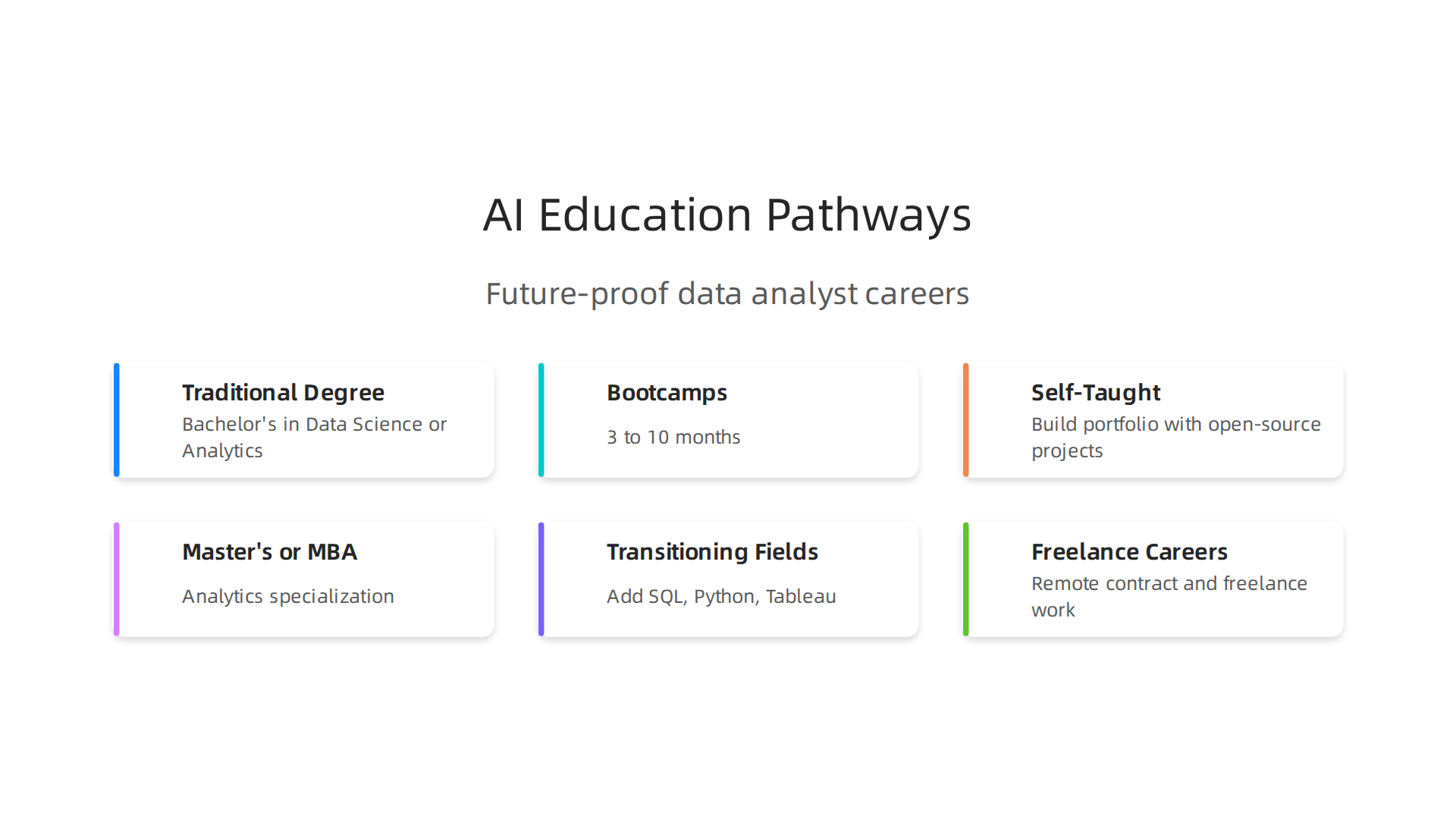
1. The Traditional Degree Path: Bachelor’s in Data Science or Analytics
Let us start with the first path. It is the one most people think of first: a four-year college degree.
A bachelor’s degree in data science, statistics, or a related field is still the most common requirement for entry-level remote data analyst jobs. If you check Remote Data Analyst job openings on Indeed, you will see that many postings list a degree as a must-have.
You do not have to sit in a classroom to get this degree anymore. Accredited online programs from universities now offer the same diploma with way more flexibility. You can keep your current job during the day and study at night. That is a huge advantage if you have bills to pay.
The biggest trade-off here is cost. A traditional degree can cost anywhere from $30,000 to $120,000. You have to ask yourself if that makes sense for the salary you will earn. If a full degree feels too expensive right now, there are also data analytics certificate programs online that can get you started much faster. But for long-term career growth, a bachelor’s degree still opens the most doors. If you plan to work for the government, a degree can help you start at a higher grade. You can check the GS Pay Scale 2026 to see how education affects your starting salary.
One thing to watch out for when researching this path is bad information online. Some articles or AI tools might tell you that a degree is useless or that every job requires one. Neither is fully true. The best approach is to check multiple sources and trust verified data.
While you work on your degree, build extra skills on the side. You can learn data science with Python to get ahead of your classmates. And if you want to understand how real data teams organize their work, the white paper CRISP-DM and Skylab USA explains a standard methodology used across the industry.
2. Bootcamps and Certificate Programs for Fast-Track Entry
So a four-year degree sounds good but maybe too slow or too expensive for you right now. That is totally fair. There is another path that works for many people.
Data analytics bootcamps and certificate programs can get you job-ready in 3 to 10 months.
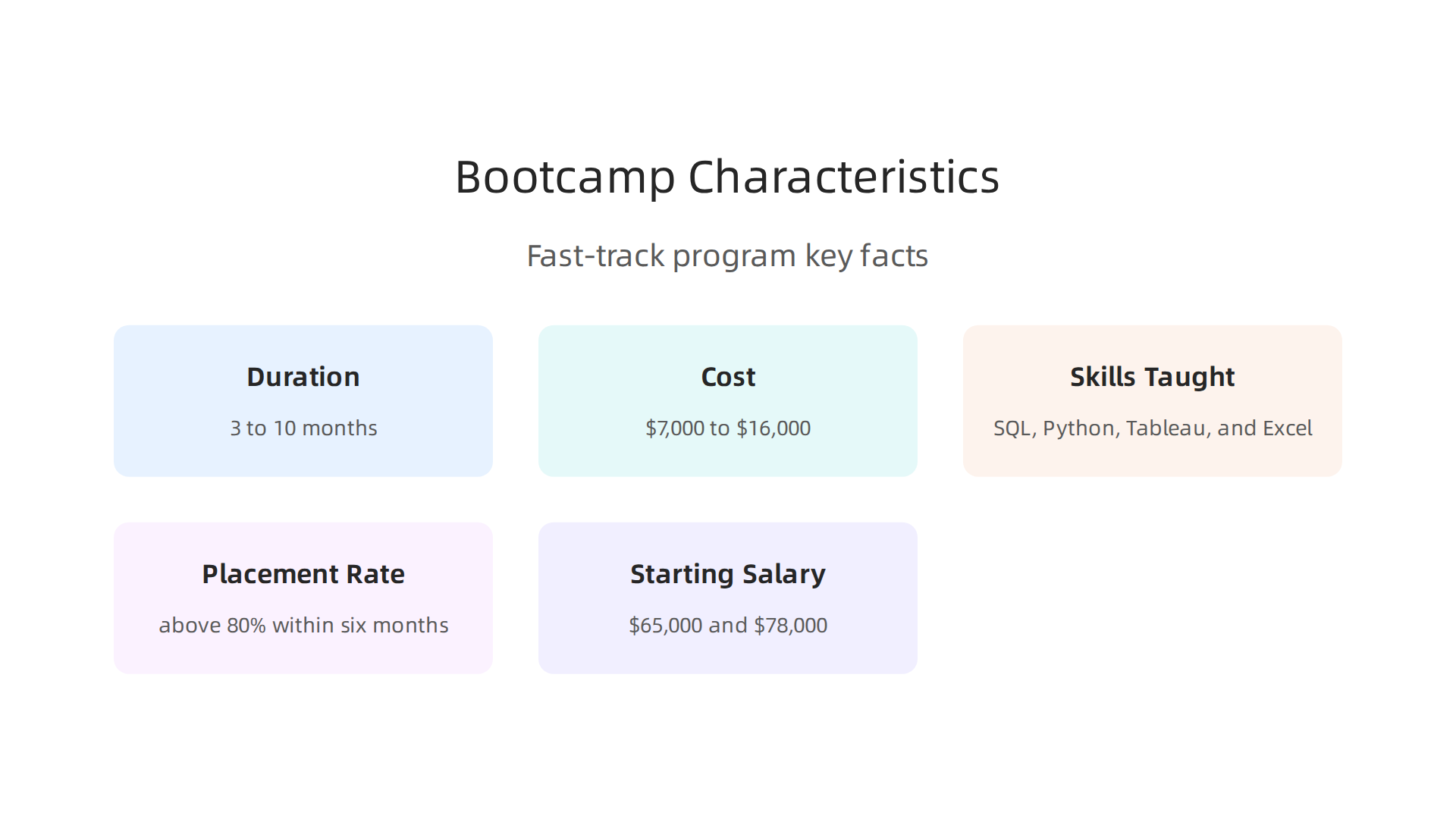

The best part? They cost a fraction of what a degree costs. We are talking about $7,000 to $16,000 instead of $30,000 or more.
Programs like Springboard, General Assembly, and CareerFoundry train you in the exact skills employers want. We are talking SQL, Python, Tableau, and Excel. And here is the good news: many bootcamps now share verified job placement data. According to the best data analytics bootcamps in 2026, top programs report placement rates above 80% within six months, with starting salaries between $65,000 and $78,000.
You can also look into certificate programs from Google, IBM, and Microsoft. These are shorter and cheaper, and more employers accept them as proof of skill.
But here is a big warning you need to hear. Some bootcamps lie about their job placement numbers. They might claim an 80% rate, but the real number could be much lower. This is a classic example of misinformation. Learning to spot fake claims is a huge advantage. The same skill applies when you use AI tools to research bootcamps. You can protect yourself by learning data analysis types to catch AI hallucinations before you trust what you read.
Always check multiple sources. Use platforms like Course Report to find verified reviews.
Do not rely on one bootcamp website alone.
If you want a real example of how misinformation can pressure your decision making, Check the Human Risk and see how easily fake numbers can steer you wrong.
Bootcamps work when you pick the right one. Do your homework first.
3. Self-Taught Route: Building a Portfolio with Open-Source Projects
You do not need a degree or a bootcamp to land remote data analyst jobs in 2026. A self-taught path works for many people. The trick is showing employers what you can do.
Free resources make this possible. Sites like Kaggle give you real-world datasets to practice on. DataCamp and YouTube offer free courses on SQL, Python, and Tableau. You can learn everything you need without spending a dime.
But the most important piece is your portfolio. Employers want proof you can handle real data. Build projects using public data sets. Clean the data, create visualizations, and share your work on GitHub. A strong portfolio of open-source projects can replace a formal degree in the eyes of many hiring managers.
The skills you need are the same as everyone else. According to the list of in-demand data analyst skills from Coursera, you should focus on SQL, Python, data visualization, and statistics.
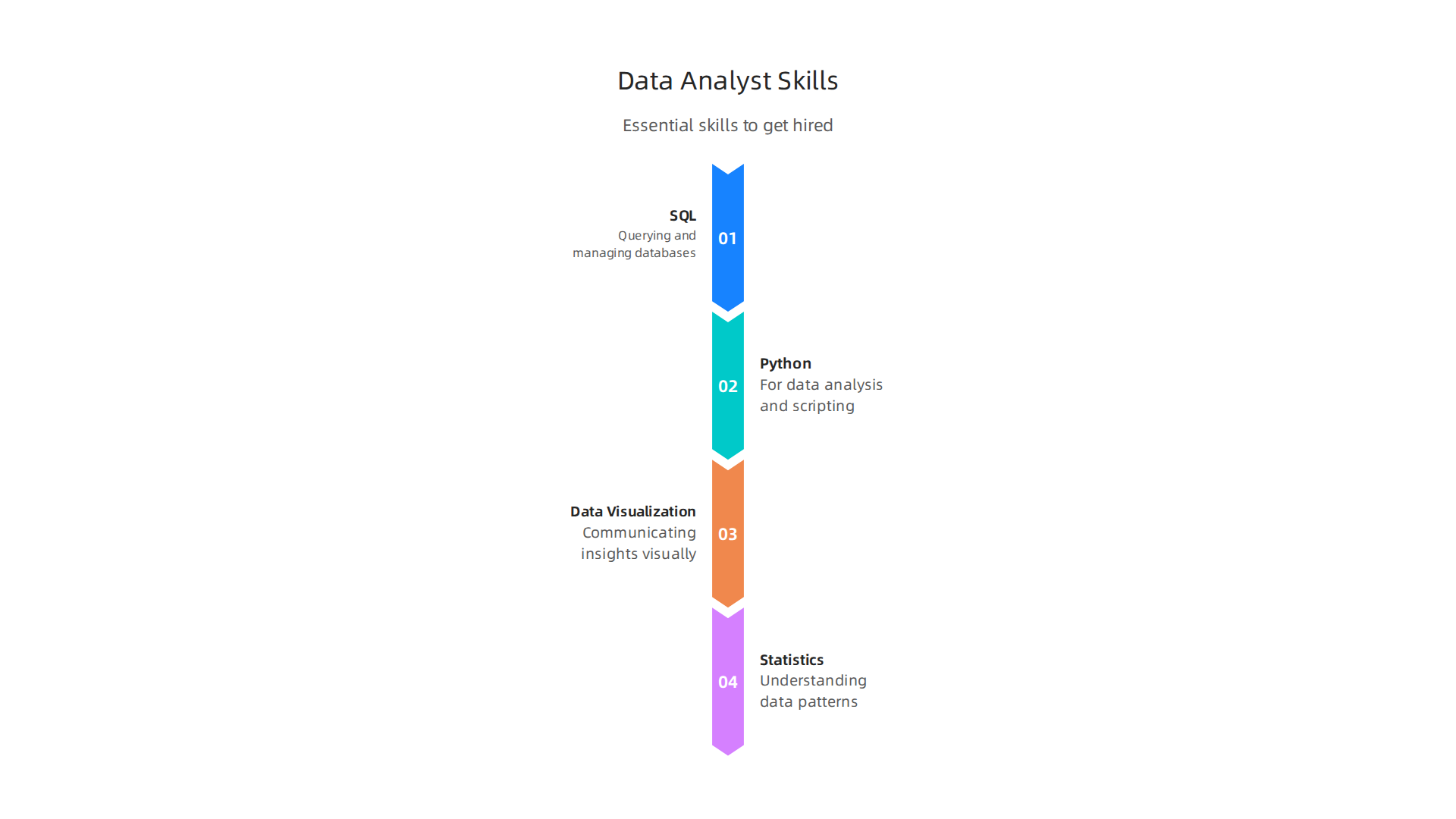
Learn these through free projects and you become a strong candidate.
Here is the catch: self-teaching means you must be careful about where your information comes from. The internet is full of bad advice and AI-generated content that sounds right but is wrong. You have to verify everything. A great place to start is the guide to learn data science with Python from Hallucination Guide, which shows you a reliable path.
When you teach yourself, always double-check the code and techniques you find online. If something seems off, it might be an AI hallucination pretending to be truth. You can Trust AI Less Blindly by learning to spot these errors early.
Self-taught data analysts are hired every day. Build your portfolio, stay curious, and stay skeptical. You can do this.
4. Master’s Degree or MBA with Analytics Specialization
If the self-taught route feels too loose or you want a faster path to senior roles, a master’s degree could be your answer. Many companies look for candidates with advanced degrees when hiring for lead data analyst or data science manager positions. A master’s in data science or an MBA with an analytics concentration can open those doors.
Online programs make this possible without quitting your job. Georgia Tech’s Online Master of Science in Analytics (OMSA) and UT Austin’s Master of Science in Data Science are respected and flexible. They teach you the theory behind the tools, plus advanced statistics and machine learning.
But you need to think about return on investment. A master’s takes time and money. Two years and tens of thousands of dollars is a real commitment. On the plus side, the job market for data analysts remains strong. Glassdoor lists over 1,500 remote data analyst jobs as of mid-2026.
Many of these positions prefer or require a graduate degree.
One thing these programs often cover is the CRISP-DM framework, a standard methodology for data projects. If you want to dig deeper into how this methodology works in practice, check out the CRISP-DM and Skylab USA white paper.
As you progress through your degree, you will use AI tools for analysis and code generation. That is great, but remember that AI can produce wrong information. The data analyst jobs in 2026 skills and salaries guide at Hallucination Guide shows you how to spot these errors and protect your career.
A master’s degree is not the only path, but it is a proven one for those who want structure, networking, and a credential that signals expertise.
5. Transitioning from Adjacent Fields (Accounting, Marketing, IT)
You do not have to start from scratch. If you already work in accounting, marketing, or IT, you have a serious head start. These jobs require you to work with data every day. You just need to translate that experience into the language of data analytics.
The fastest way to make the switch is to add three core tools to your toolkit: SQL, Python, and a visualization tool like Tableau or Power BI.
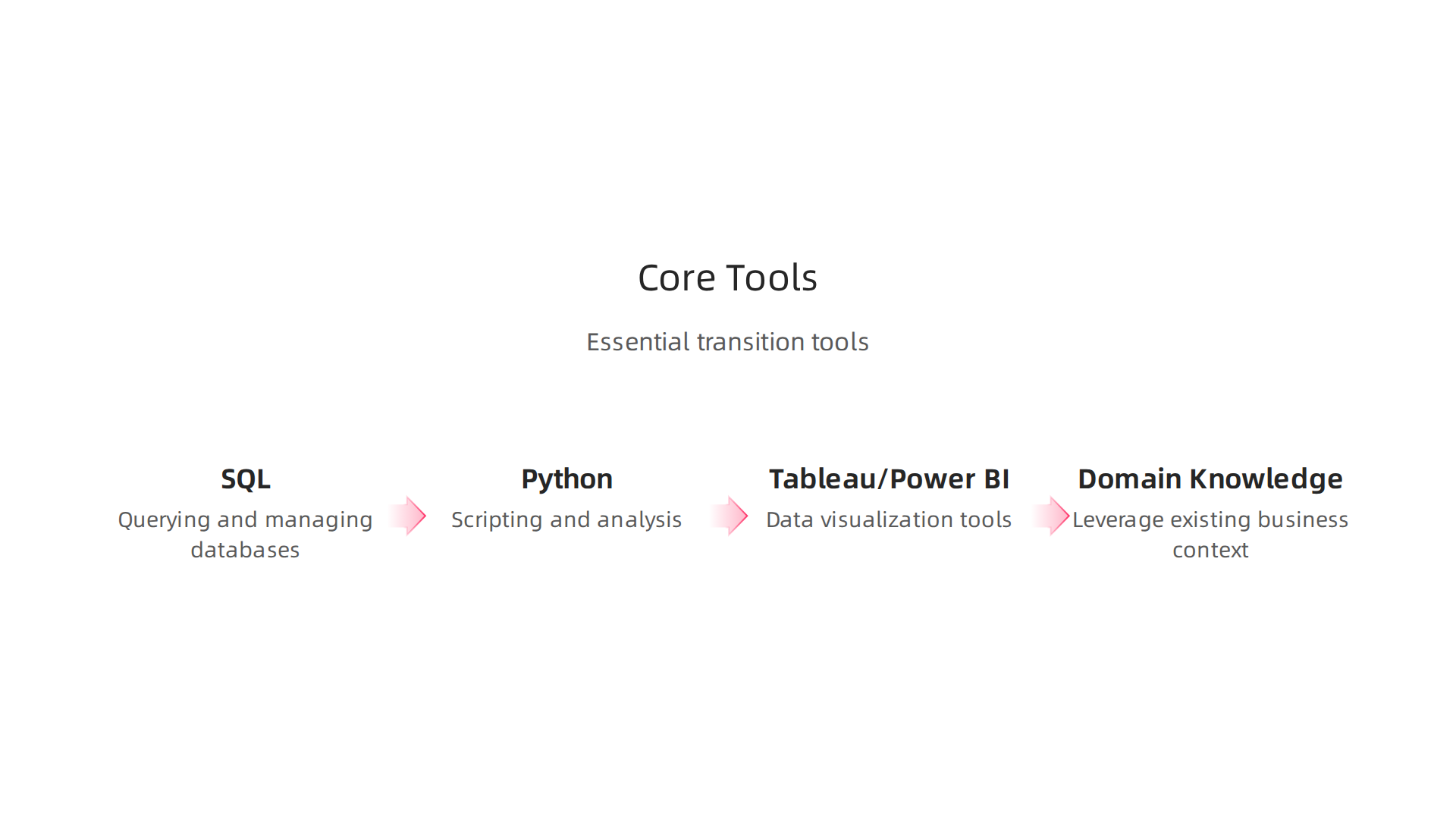
These are the skills that employers look for most. A recent breakdown of the 12 data analyst skills that will get you hired in 2026 puts SQL and Python at the top, followed by data visualization and statistics.
Your domain knowledge is your superpower. A marketing analyst who learns SQL already understands how campaign metrics work. An accountant who picks up Python knows how financial data behaves. That real-world context makes you more valuable than someone who only knows how to code. Companies want analysts who understand their business.
Many career changers accelerate the process through bootcamps or certificate programs. These programs teach you the practical skills you need in a few months. For example, the best data analytics bootcamps in 2026 report placement rates above 80 percent for graduates, with starting salaries between $65,000 and $78,000. That is a solid return on a short time investment.
But education alone is not enough. You also need to network and build real projects. Join data analytics groups on LinkedIn, attend local meetups, and work on side projects using public datasets. Your portfolio shows employers what you can do with a real dataset. That matters more than any certificate.
As you learn new tools, you will likely use AI assistants to help write code or clean data. These tools are helpful, but they can produce false information. A good data analyst double-checks everything. If you want to learn how to spot those errors early, the guide on proven data analysis techniques to detect AI hallucinations explains exactly how to do that. And if you want to understand how even small AI mistakes can affect your work, Check the Human Risk gives you a clear look at the pressure these errors create.
Switching from an adjacent field is one of the most common paths into data analytics.

Your existing skills give you an edge. You just need to build the technical foundation and prove you can use it.
6. Government and Public Sector Remote Data Analyst Roles
The federal government is one of the most stable places to find remote data analyst jobs. Agencies like the U.S. Census Bureau, the Centers for Disease Control and Prevention (CDC), and the Department of Agriculture hire analysts to work from home. These roles come with clear career ladders and benefits that private companies often can’t match.
Federal jobs use the General Schedule (GS) pay system. Entry-level data analysts typically start at GS-7 or GS-9, which in 2026 pays around $43,000 to $52,000 depending on location. With experience and good performance, you can move up to GS-12 or GS-13, where salaries reach $76,000 to $90,000 or more. The full breakdown of the 2026 federal pay scale shows how each grade and step works. This structured path means you don’t have to fight for raises. You just follow the system.
Requirements vary by role. Many positions accept a combination of education and experience. A data science major or an online data analytics certificate program can help you qualify. Some jobs require U.S. citizenship, especially those dealing with sensitive data. But many state and local government roles are open to permanent residents as well.
The biggest trade-off is speed. Government hiring can take months, from application to start date. But once you are in, the job security is strong. You get a pension, good health benefits, and a real work-life balance. That matters when you want a long-term career.
One thing to keep in mind: government work often involves large, important datasets. Accuracy matters a lot. If you use AI tools to help with your analysis, you need to verify the results carefully. AI can sound right and still mislead. That is why learning how to catch errors early is a valuable skill for any data analyst. You can build that skill with resources that teach you how to spot false information before it affects your work.
State agencies also hire remote analysts for everything from health data to transportation planning. The opportunities are growing, and they offer the kind of stability that freelancing or startup jobs cannot always provide. If you value structure and long-term growth, government remote data analyst jobs are worth your time.
7. Freelance and Contract Remote Data Analyst Careers
If you prefer flexibility over a fixed schedule, freelance and contract work might be a better fit.

Platforms like Upwork, Toptal, and Fiverr connect you with short-term remote data analyst jobs that match your skills. You choose the projects you want, set your own hours, and work from anywhere.
The pay can be good. According to the Data Analyst Hourly Rate Guide 2026, experienced freelance data analysts earn around $93 to $160 per hour. Rates go higher for specialists. On Upwork, entry-level analysts charge around $20 per hour while experts earn $50 or more based on the Data Analyst Hourly Rates published on the platform.
The exact number depends on your experience, your niche, and how well you market yourself.
But freelancing comes with challenges. Income can vary from month to month. You need to find clients, manage projects, and handle your own taxes. That is why successful freelancers often specialize in one industry. For example, healthcare analytics pays well because the data is complex and the demand is high.
Building your skill set matters. If you want to stay competitive, check out this guide on ai data analyst skills for 2026. Clients look for analysts who can clean data, build dashboards, and explain what the numbers mean. Some freelancers also boost their credentials through online data analytics certificate programs or a data science major. The more you can do, the higher your rate.
Here is something critical. When you work alone, there is no team to catch your mistakes. If you use AI tools to speed up your analysis, you must verify the results yourself. AI can sound right and still mislead. That is why it helps to Trust AI Less Blindly and build strong verification habits. Doing this will protect your reputation with every client you take on.
Freelance work gives you freedom. But it also demands discipline, solid skills, and the ability to sell yourself. If you are ready for that, freelance remote data analyst jobs can be very rewarding.
8. Education Pathways for AI-Enhanced Data Analysis (Future-Proofing)
To succeed in remote data analyst jobs, you need to keep learning. AI is already changing how you work.
Routine tasks like data cleaning and basic reports are now automated. That means your role shifts to higher value work.
According to AI will reshape more jobs than it replaces, about 50% to 55% of US jobs will be reshaped by AI in the next few years. You won’t lose your job. But you will need new skills.
So what should you study? Start with the fundamentals. Online data analytics certificate programs give you a solid base. Some popular options include data analytics certificate programs online from trusted platforms. You can also take coursera data management courses to learn SQL and database skills. If you want deeper knowledge, consider a data science major at a university.
But technical skills alone are not enough. AI can produce convincing but wrong answers. You must learn to validate AI outputs. Courses in AI ethics, prompt engineering, and statistical reasoning are becoming essential.
One trusted method to guide your work is the CRISP-DM framework. It helps you structure data projects from start to finish. This reduces the chance of errors and helps you catch hallucinations early. For a deeper look, check out CRISP-DM and Skylab USA. It explains how to build reliable data pipelines.
To get better at spotting AI mistakes, explore a training guide for detecting AI hallucinations. This skill will set you apart from other analysts.
In 2026, the best analysts are the ones who combine technical knowledge with critical thinking. The future belongs to those who can trust but verify. Keep learning, and you will stay valuable for years to come.
Summary
This guide explains seven proven paths to land remote data analyst jobs—ranging from a traditional bachelor’s or master’s degree to bootcamps, self-teaching, government roles, freelancing, and career transitions from adjacent fields. It covers realistic costs and timelines (degrees versus 3–10 month bootcamps), salary ranges for entry and senior roles, and the exact technical skills employers want: SQL, Python, visualization, and statistics. Because AI tools now automate routine work but sometimes produce false or misleading outputs, the article also shows how to verify AI results and avoid hallucinations so your analyses stay reliable. Read it to decide the fastest, most cost-effective path for your situation, build a job-ready portfolio, and learn simple checks that keep AI-driven mistakes from derailing your career.