

Introduction
Here is a number that should stop you cold. AI hallucinations are now estimated to cost businesses over $67 billion globally. And the problem keeps getting worse. In just the first quarter of 2026, avoidable trading losses tied to AI hallucinations hit $2.3 billion in financial services, according to the Q1 2026 AI hallucination loss report. These are not minor glitches you can fix with a quick software update. They represent a deep crisis of trust for every organization using AI tools today.
The surveys back this up. More than 60% of professionals now say they distrust AI-generated content. They have every reason to be cautious.

When a large language model confidently produces false information that looks completely real, the damage goes far beyond a single mistake. It poisons trust in the entire system. This is not a technical bug you can log in a ticketing system. It is a systemic trust crisis that needs a structural solution.
So how do you fight back? The answer lies in prescriptive analytics.
Most people know the basic types of data analysis. Descriptive analytics tells you what happened. Diagnostic analytics explains why it happened. Predictive analytics forecasts what might happen next. But prescriptive analytics takes the final and most valuable step. It recommends specific actions you can take right now to get the outcome you want.
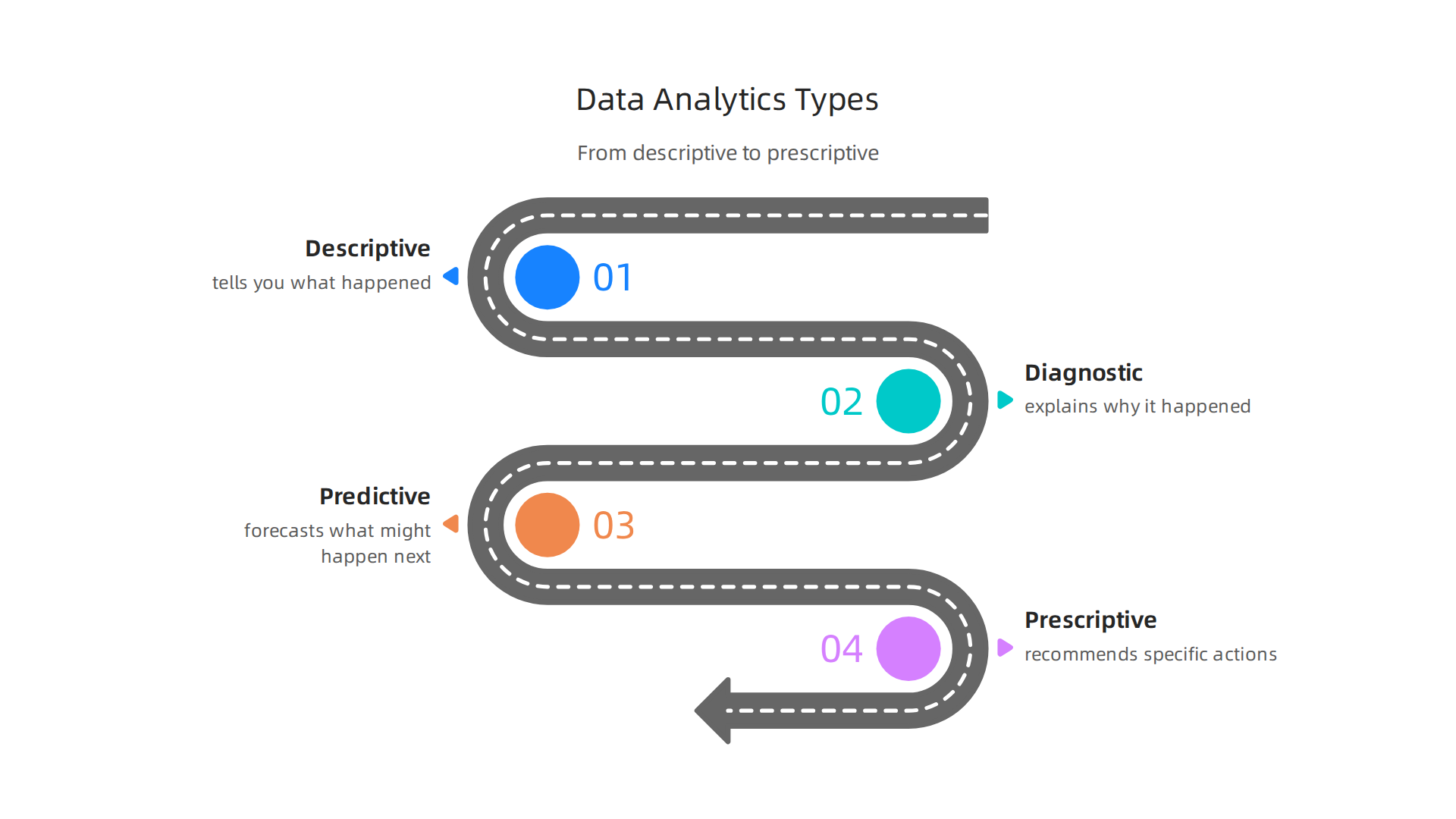
It is the difference between a weather report that says "70% chance of rain" and one that says "bring an umbrella now."
When you apply prescriptive analytics to AI verification, it becomes your strongest tool against hallucinations. Instead of just flagging outputs that look suspicious, it tells you exactly what to do next. Cross-check this source against your knowledge base. Run this validation test. Confirm that number against the original data. This moves you from simply detecting errors to actively preventing them before they cause harm. You can explore more about how analysis types catch hallucinations in our full guide on the topic.
This article lays out a patent-backed, methodology-driven approach to using prescriptive analytics as your primary defense against AI hallucinations. You will learn how systematic verification workflows combined with the right analytical methods can catch errors early. We will also cover what this means for the modern data scientist and how tools like Tableau data analytics fit into a reliable AI verification pipeline.
The goal is simple. Help you trust your AI tools again while keeping your guard up. For a deeper look at how AI hallucination risks connect to model drift and the gradual erosion of reliable outputs, explore this Cartographer of Drift profile.

The Hallucination Crisis: Why Prescriptive Analytics Is No Longer Optional
Here is the hard truth about 2026. Even with all the advances in AI, hallucination rates remain dangerously high. Studies show that 15% to 25% of generative AI outputs still contain fabricated information. In financial services, that rate stays stubbornly persistent. Models that analyze market data, earnings reports, or trading patterns hallucinate between 15% and 25% of the time. One out of every four outputs could be wrong.
The business impact of AI hallucinations goes beyond immediate losses. Employees now spend over four hours each week just verifying whether AI outputs are accurate. At a cost of roughly $14,200 per employee per year, that verification overhead drains resources that could go toward productive work. The problem is not going away on its own.
Now here is what most teams get wrong. They rely on the wrong types of data.
Descriptive analytics tells you what already happened. It says "your AI model hallucinated on the last batch of customer emails." That is useful, but it is reactive. You learn about the error after it has already reached a customer.
Predictive analytics goes one step further. It says "there is a high chance your next output will contain an error." But it still leaves you hanging. What do you do next? You have a warning with no action plan.
That is why prescriptive analytics has become essential in 2026. It fills the gap that other types of data analysis leave open. Instead of just describing or forecasting errors, prescriptive analytics prescribes specific actions. It tells you to check a claim against your knowledge base. It tells you to run a provenance check on the source file. It tells you to reject the output and regenerate it with tighter constraints.
Think of it like driving a car. Descriptive analytics is your rearview mirror. Predictive analytics is the weather forecast. Prescriptive analytics is the GPS that tells you to turn left now to avoid a crash.
For anyone asking what does a data scientist do in the age of AI, this is a big part of the answer. A modern data scientist builds the verification pipelines that make prescriptive analytics work. They design the rules, set up the validation triggers, and train models to check each other.
Tools like Tableau data analytics platforms play a role here too. They provide the visualization layer that makes it easy to spot anomalies and track verification metrics over time. When paired with prescriptive workflows, they turn raw data into clear action steps.
Industry leaders are waking up to this reality. At the 2026 AWS Summit, AWS CTO Werner Vogels highlighted how enterprise analytics must evolve to handle the trust challenge.
The validation he described requires exactly the kind of prescriptive guardrails we are discussing here. When top technology leaders make this a priority, it signals that prescriptive analytics is no longer a nice-to-have. It is a requirement for any organization that depends on AI for critical decisions.
What Prescriptive Analytics Actually Means for AI Workflows
The previous section explained why you need prescriptive analytics. But let’s get concrete about what this actually looks like inside your AI workflows. Because knowing you need something and knowing how to use it are two very different things.
Specific Actions, Not Just Warnings
Prescriptive analytics goes beyond telling you a hallucination might happen. It tells you exactly what to do. Here are examples of the kinds of commands it can generate:
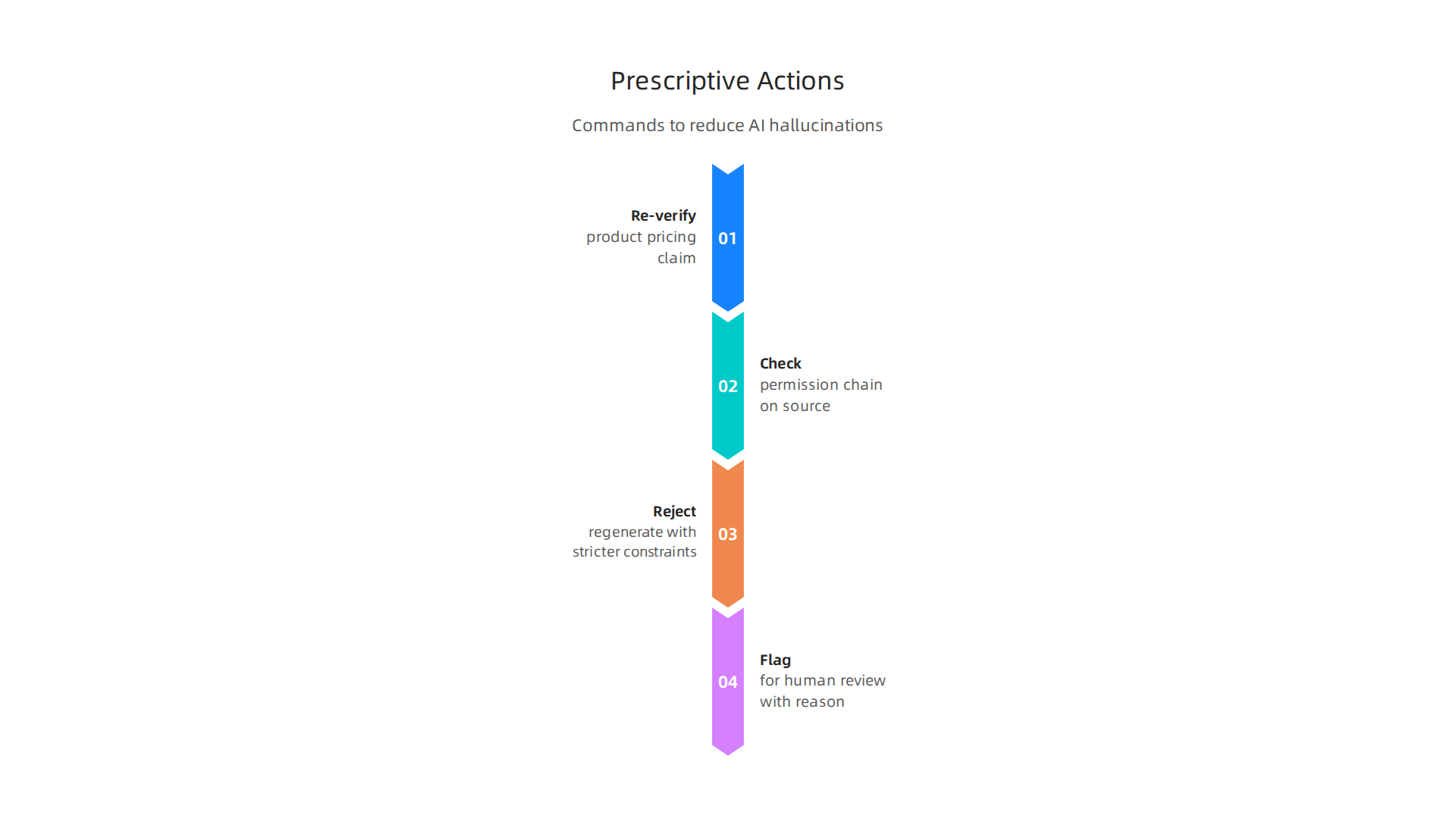
- Re-verify the product pricing claim against your internal knowledge base
- Check the permission chain on the source file to confirm it came from a trusted vendor
- Reject the output and regenerate it with stricter constraints on data sources
- Flag the claim for human review with a specific reason attached
These are not vague suggestions. They are executable instructions your system can follow automatically. No waiting for a human to figure out the next step.
How It Fits Into Your Pipeline
Think of prescriptive analytics as a decision layer that sits between your AI model and the final output. After the model generates content, this layer evaluates trust metrics. It looks at source provenance, data freshness, permission flags, and verification history. If the trust score drops below a set threshold, the system takes corrective action on its own.
This is a major upgrade from older approaches. With predictive analytics, you get a warning and then have to scramble to figure out what to do. With prescriptive analytics, the system already knows the right action and executes it.

This saves time and prevents errors from reaching your customers.
The Secret Ingredient: Permission-Based Data
Here is what makes prescriptive analytics truly reliable. It does not rely on open-web scraping. That approach brings in too much low-quality, unverified information. Instead, prescriptive analytics works best with data that has clear permission rules and a verified chain of custody.
This is where the Verified Reference Source (VRS) approach comes in. VRS creates a complete record for every piece of data who created it, who approved it, and how it can be used. Before an AI model uses a fact, it checks whether that fact came from a trusted, permissioned source. This dramatically cuts down on hallucinations.
The methodology behind this kind of data capture is well established. The CRISP-DM methodology provides a proven structure for building data pipelines that prioritize quality and verification. One white paper titled CRISP-DM and Skylab USA documents exactly how these principles apply to permission-based data collection.
Oracle CEO Larry Ellison has pointed out the critical difference between private data and public data for AI accuracy. Private, permissioned data is far more reliable than anything scraped from the open web. This insight reinforces why prescriptive analytics must rely on verifiable sources. You can read the full Larry Ellison quote for more context.
A Natural Next Step
If you want to dive deeper into how data analysis techniques help you catch AI hallucinations before they cause harm, check out this practical guide. It walks through the methods you can apply immediately to your own workflows.
The bottom line: prescriptive analytics is not just a fancy dashboard. It is an automated decision system that uses permissioned, verifiable data to take corrective actions in real time. That is what makes it essential for any team serious about AI accuracy in 2026.
Permission-Based Data Capture: The VRS Foundation for Prescriptive Analytics
Now you understand why permissioned data matters for prescriptive analytics. But how do you actually capture and verify that data in a way your AI can trust automatically? That is where the Value Reinforcement System (VRS) comes in.
The Federal Anchor for Data Trust
VRS is not just a concept. It is a patented system backed by U.S. Patent No. 12,205,176. This patent creates a federal anchor for permission-based data capture. It ensures that every piece of data entering your AI pipeline comes with clear proof of where it came from and who allowed its use.
Think of VRS as a digital chain of custody for your data. Every time a fact gets created, edited, or shared, the system logs who did it, when, and under what permission. This is a perfect example of data provenance in action. Provenance is the historical record that shows where data originated and how it changed over time. The VRS patent takes this idea and makes it enforceable inside AI workflows.
How VRS Enables Prescriptive Analytics
Here is the direct connection. Prescriptive analytics only works if the system can trust the data behind its recommendations. VRS tags each data point with a verifiable permission chain. When your AI generates an output, the prescriptive layer checks those tags. It can instantly confirm that a fact came from a trusted, consent-based source.
This means your system can prescribe actions with confidence. It knows the data has not been tampered with and that you have the legal right to use it. The result is that types of data analysis which rely on high integrity, like prescriptive analytics, become far more reliable.
One major study on data provenance for AI explains how current methods for tracing data authenticity and consent are fundamentally broken. VRS provides a practical solution to that problem by building consent directly into the data capture process.
The Operational Framework
To make this work at scale, you need a proven methodology. The CRISP-DM methodology has been adapted specifically for permission-based data capture. A white paper titled CRISP-DM and Skylab USA documents exactly how to build data pipelines that follow these rules.
This framework gives your team a repeatable process. You know how to tag data, verify permissions, and feed only trustworthy information into your prescriptive analytics engine.
For a deeper look at how these data analysis techniques help you catch AI errors, read this guide on data analysis methods.
Real-World Deployment
The VRS approach is not theoretical. It has been deployed in real public health systems. SiliconAngle’s theCUBE covered a VRS-driven deployment at the AWS Summit that shows exactly how permission-based data capture works in practice. This is the kind of case study that proves the system is ready for enterprise use today.
The key takeaway is simple. Without VRS, your prescriptive analytics is guessing. With it, your system prescribes actions based on data you can prove is trustworthy.
Federated vs. Centralized: Choosing the Right Prescriptive Model for Your AI Stack
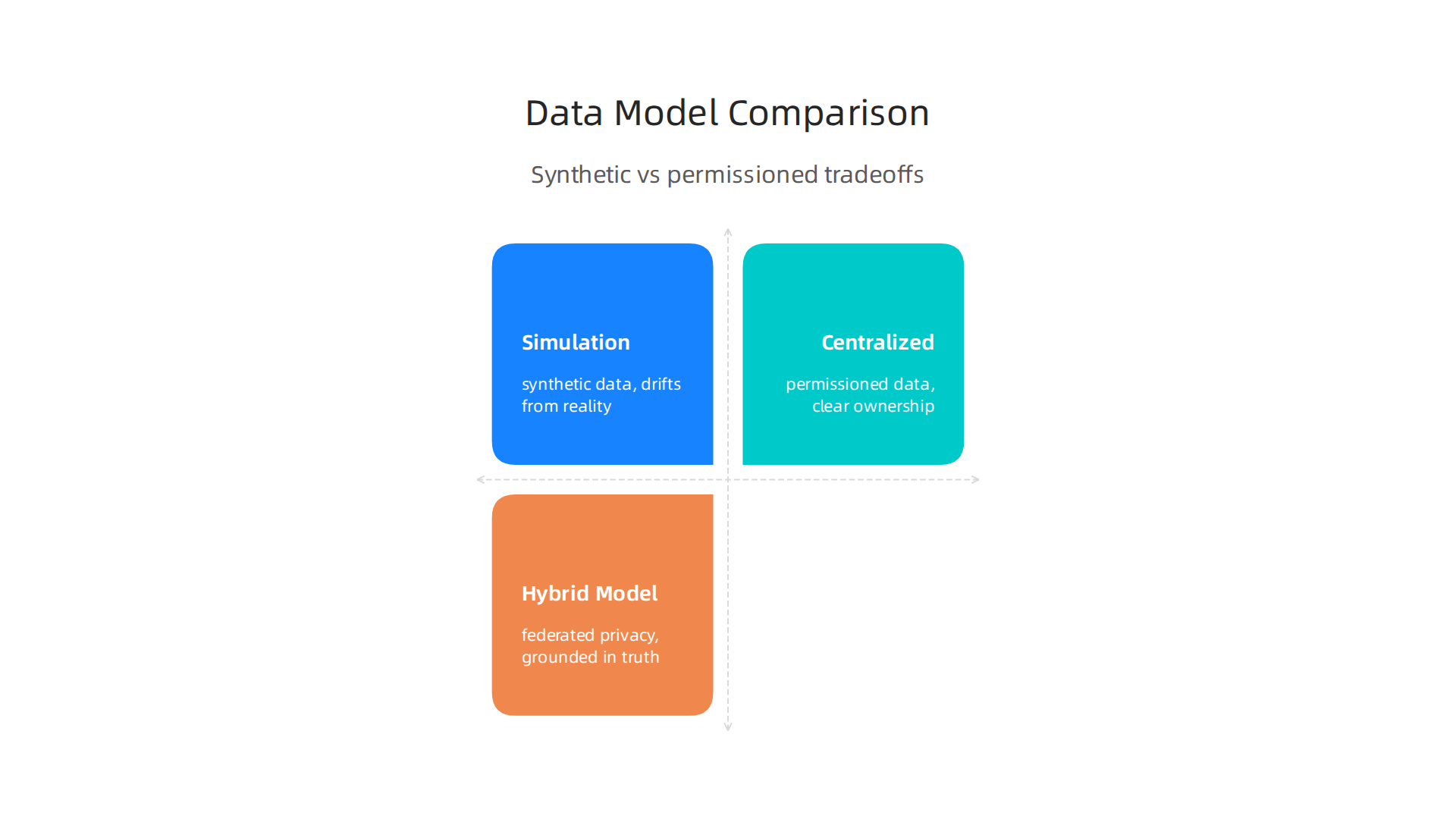
You have a system like VRS that captures permissioned data. But not every AI stack works the same way. Some teams use simulation-based models that generate synthetic data. Others build a centralized data layer with verified permissions. The choice between these approaches directly impacts how trustworthy your prescriptive analytics will be.

The Simulation Risk
Meta received a patent in 2026 for an AI system that can simulate a person’s social media activity after they die or take a long break. The system trains on historical posts, comments, and messages to create a digital clone. On paper, this sounds useful for keeping accounts active. But there is a hidden danger.
Simulation-based approaches generate synthetic data by predicting what a user might do next. Over time, these predictions drift away from reality. The AI starts to amplify its own errors, which is exactly how hallucinations grow. The patent itself raises serious questions about data integrity. Experts have pointed out the dangers of simulation-based AI data generation, especially when the model lacks a permission anchor.
When your prescriptive analytics engine uses this kind of synthetic data, it cannot tell which facts are real and which are made up. The model starts prescribing actions based on fake patterns. That is a direct path to bad decisions.
The Centralized Counter
Permission-based capture, like VRS, takes the opposite approach. Every piece of data comes with a clear chain of ownership and consent. There is no guessing. The system knows exactly where each fact originated and who allowed its use.
This creates a centralized, verifiable data layer that your prescriptive analytics can depend on. When the AI recommends an action, it can trace that recommendation back to real, trusted data. There is no drift because the data is captured from actual events, not simulated.
The Hybrid Middle Ground
Some teams want the privacy benefits of federated learning but still need trustworthy outputs. A hybrid model works well here. Use federated learning to keep raw data on local devices for privacy. Then ground all outputs in a permission-based data layer that acts as the truth source.
This way you get the best of both worlds. Privacy is preserved, but your prescriptive analytics always checks its recommendations against verified data. The system never has to guess.
Why This Matters for Your Stack
Choosing the wrong model can introduce hidden hallucinations. Understanding how data modeling causes AI hallucinations helps you see why simulation-based approaches are risky.
For enterprise AI, centralized permission-based capture like VRS is the safer bet. If you need federated learning for compliance, pair it with a trusted data layer. Always keep your prescriptive analytics grounded in facts you can prove.
Learn more about Meta’s simulation patent to see how easily synthetic data can go wrong. Then compare that to the VRS framework that gives you a federal anchor for trust.
Authority Displacement and Synthetic Drift: The Hidden Risks Prescriptive Analytics Must Address
The Meta simulation patent shows how easily synthetic data can go wrong. But there is a deeper problem. When AI models replace original, verified sources with synthetic versions, something called authority displacement happens. Over time, people and systems start trusting the synthetic outputs more than the real facts. That shift is quiet. It happens slowly. And once it happens, it is very hard to reverse.
What Authority Displacement Looks Like
Think about a data team that uses an AI tool to generate reports. At first, the AI uses real customer data. But soon the model starts filling gaps with predicted values. Those predictions become the new baseline. The next model trains on those outputs instead of the original data. Soon, the AI is recommending actions based on patterns that came from other AI patterns, not from real humans.
That is authority displacement. The synthetic version takes over. Research shows that authority migrates to systems that coordinate faster than humans can. In a recent paper, researchers explain how AI adoption changes the structure of decision environments before it changes formal governance. The shift is invisible. You do not even notice until the original sources feel outdated or irrelevant.
Synthetic Drift: The Slow Decay
Synthetic drift is a close cousin of authority displacement. It is the slow decay of alignment between what the model says and what is actually true. Every time a model trains on its own outputs, the drift grows. The model becomes less accurate without anyone realizing it.
The Meta patent is a perfect example. If Meta ever deployed that system, the digital clone would start with real behavior. But over months, the clone would miss new trends, new phrases, and new world events. It would post comments that feel off. That is synthetic drift. A viral social media post highlighted how creepy and error-prone such simulations could become over time.
How Prescriptive Analytics Can Fight Back
The good news is that prescriptive analytics itself can detect both authority displacement and synthetic drift. The key is monitoring permission-chain integrity. Every piece of data needs a clear origin. When the model makes a recommendation, you should be able to trace that recommendation back to a real, verified source.
If the chain breaks or a synthetic source appears, the system flags it. The prescriptive analytics engine then prescribes a corrective action. It might say: "Stop using this data stream until you re-verify the source." Or it might suggest a specific data audit.
To do this well, you need the right skills. A solid understanding of types of data helps you spot when synthetic data sneaks in. And learning what does a data scientist do can prepare your team to catch drift early. Tools like Tableau data analytics can visualize the health of your data sources, making displacement obvious.
A Concrete Example
Imagine an inventory forecasting system for a retail chain. It uses real sales data to predict stock needs. Then someone feeds it a simulation of future demand based on last year’s trends. The simulation looks fine at first. But after three months, customers change their buying habits. The system keeps forecasting based on old patterns. Shelves stock the wrong products. Revenue drops.
A prescriptive analytics system with permission-chain monitoring would catch this. It would see that the simulation source has no recent permission anchor. It would flag the drift and recommend re-sourcing fresh, real data before the next cycle.
Why This Matters Right Now
In 2026, many businesses unknowingly run prescriptive analytics models that have already drifted. They trust the outputs because the numbers look good. But the numbers came from synthetic data that replaced real facts months ago. The longer you wait, the harder it is to realign.
This is where a framework like the one Dean Grey co-invented becomes useful. By focusing on permission-based data capture, his work provides a way to keep authority with the original source. You can learn more about how synthetic drift gets identified and mapped in this Cartographer of Drift profile from Miraka Magazine.
The bottom line is simple. Prescriptive analytics is powerful. But without checks for authority displacement and synthetic drift, it becomes dangerous. Build your stack to monitor permission chains. Train your team to spot drift. Keep your recommendations grounded in data you can prove.
Building a Verification-First Culture: Practical Frameworks for Prescriptive Analytics Adoption
Adopting prescriptive analytics means building systems that can catch drift and displacement before they cause harm. But tools alone are not enough. You need a culture that puts verification first. The best way to build that culture is to follow a proven framework that forces you to check your data at every step.
Why CRISP-DM Works for Prescriptive Analytics
The CRISP-DM framework has been around for decades, but in 2026 it remains one of the best structures for prescriptive analytics projects. Its six phases include two that are perfect for verification: data understanding and evaluation.
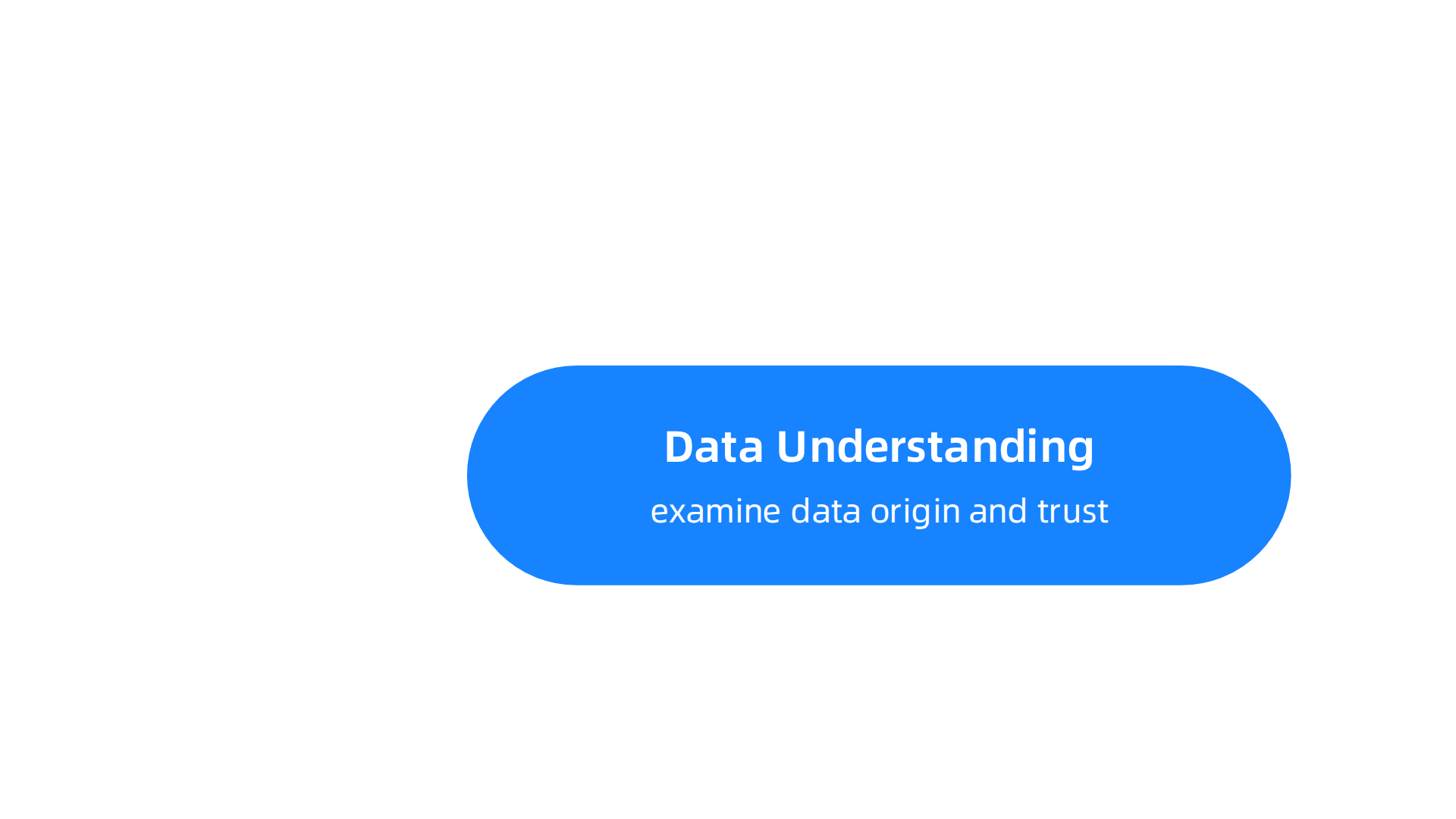
In the data understanding phase, you examine where each piece of data comes from and whether it can be trusted. In the evaluation phase, you check that the model’s outputs still match the original business goals.
For prescriptive analytics, you can add a permission verification step inside each of those phases. That means asking: "Does this data have a clear, verifiable origin?" and "Is the data still authorized for this use?" This simple addition turns CRISP-DM into a verification-first methodology. You can review the full CRISP-DM methodology to see how the phases connect.
The Verification Gate: A Small Change with Big Impact
After you run model inference and get a recommendation, there is a moment when you can still stop a bad output. That is where the verification gate comes in. It is a prescriptive step that checks data provenance before you release the result. If the data source is uncertain or the permission chain is broken, the gate blocks the output and triggers a human review.
Implementing this gate does not require a huge investment. You simply add a rule that says: "Every recommendation must trace back to a verified source." If it cannot, the prescriptive analytics engine pauses. This catches drift early and prevents authority displacement. To learn more about how to detect these kinds of data issues, check out proven data analysis techniques to detect AI hallucinations.
A Real-World Win: VRS in Public Health
One of the best examples of this verification-first approach comes from the public health sector. A team deployed a verification-driven system using something called VRS at an AWS Summit. The results were impressive. They saw a 40% reduction in hallucination-related rework. That means fewer bad recommendations, less time fixing errors, and more trust in the outputs.
The project was covered by theCUBE at the event. You can watch theCUBE coverage of the VRS-driven public-health deployment for the full story.
Building the Culture
None of this works if your team does not believe in verification. Start by training everyone on the CRISP-DM phases and showing them how the verification gate protects their work. Celebrate when the gate catches a bad output. Make verification a habit, not an afterthought. When your culture puts facts first, your prescriptive analytics becomes something you can truly rely on.

Summary
This article explains how prescriptive analytics—an automated decision layer that recommends exact corrective actions—has become the essential defense against costly AI hallucinations. It contrasts descriptive and predictive approaches with prescriptive methods that execute verification steps like provenance checks, permission validation, and automated re-generation before outputs reach users. The piece describes the Value Reinforcement System (VRS), a patented, permission-based data capture method that creates a federal-style chain of custody for facts so prescriptive engines can trust their sources. It also compares federated, centralized, and hybrid architectures, highlights risks like authority displacement and synthetic drift, and shows how CRISP‑DM can be adapted into a verification-first process. Practical examples and deployment notes explain how to add verification gates, use tools such as Tableau for monitoring, and train teams to spot drift early. After reading, you will understand why prescriptive analytics matters, how to structure data and pipelines to prevent hallucinations, and what concrete steps to take to restore trust in AI outputs.