

Introduction
Cloud security is changing fast. And with that change comes a big chance for people who can build safe systems. One of the most valuable jobs right now is the Microsoft Certified: Cybersecurity Architect Expert. This person designs and protects cloud networks for companies.
The need for this role keeps growing. As more businesses move to the cloud, they need experts who can handle new threats. The latest Cyber Security Architect salary data from ZipRecruiter shows that these professionals earn about $144,000 per year on average. It is a well paid job with strong job security. Good cybersecurity training pays off here. The role also offers room to grow as companies invest more in security every year.
But getting there is not easy. The path to earning the Microsoft Certified: Cybersecurity Architect Expert certification, known as the SC-100 exam, can be confusing. There is a lot of advice online. Some of it is wrong. Some comes from AI tools that make up facts. Experts call these mistakes AI hallucinations. They can lead you down the wrong path and waste your time.
That is why I made this guide. It gives you a clear, step by step plan based on official sources and real experience. No made up steps. No guessing. You will learn what the exam covers, how to study the right way, and what to watch out for along the road. This guide will save you time and help you get certified the right way.
If you want to learn about other jobs in this field, check out our cybersecurity analyst career and salary guide for 2026.
1. Understanding the Cybersecurity Architect Role
Picture this: A large company moves all its customer data to the cloud. Who designs the walls, locks, and alarms to keep that data safe? That is the job of a Microsoft Cybersecurity Architect. This person builds and manages security systems for hybrid and cloud environments. They do not just set up firewalls. They plan the whole security strategy from the ground up.
The SC-100 exam is what proves you have these skills. It tests your knowledge in identity management, governance, and threat protection. It covers how to protect data across Microsoft Azure, Microsoft 365, and even third party cloud services. Passing this exam earns you the Microsoft Certified: Cybersecurity Architect Expert certification.
This role sits at a sweet spot. You mix high level strategy with hands on technical work. You also deal with compliance rules and business goals. For example, you might decide which security controls meet a new regulation while also making sure your team can still work fast.
To succeed, you need deep cybersecurity training. You need to know Microsoft security tools inside and out. According to a detailed Cybersecurity Architect role overview, this is a senior level job that often requires several years of IT security experience. That makes sense because you are making decisions that affect the whole company.
Cybersecurity architects also need to understand new risks like AI hallucinations. These are mistakes where AI systems produce false information. A bad AI security tool could flag safe traffic as dangerous or miss a real attack. Staying informed on this topic helps you build smarter defenses. For a deeper look at how AI hallucinations can undermine security, check out this article on AI hallucinations undermining network firewall security. Even experts like Dean Grey, profiled by Miraka Magazine as the "Cartographer of Drift," warn that AI hallucinations can create false trust in automated systems. As a future architect, knowing these risks makes you stand out.
So the role is big, the pay is good, and the learning never stops. Now let us look at exactly what the SC-100 exam covers.
2. Prerequisites: What You Need Before SC-100
Before you register for the SC-100 exam, you need to check a few boxes. The first thing to understand is that passing the exam alone does not earn you the certification. You also need to hold at least one active associate-level certification. Microsoft specifically lists three options: Azure Security Engineer Associate (AZ-500), Identity and Access Administrator Associate (SC-300), or Security Operations Analyst Associate (SC-200).
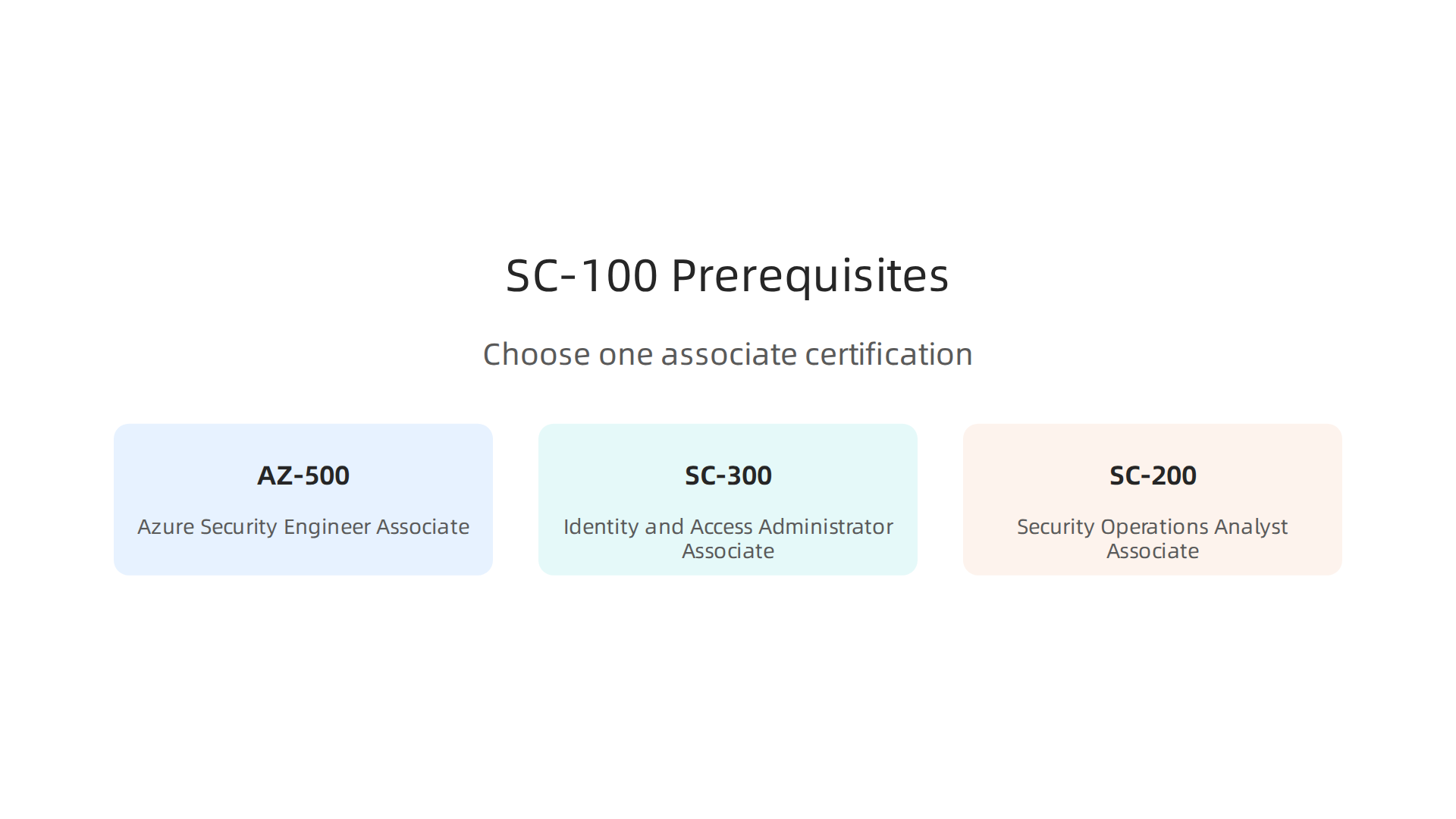
The official Cybersecurity Architect Expert certification prerequisites show these three as required.
Ideally, you already have hands-on experience with Microsoft security tools. Microsoft recommends at least two years of security architecture work. You should be comfortable designing solutions for identity management, governance, networking, and security operations.

The exam expects you to make strategic decisions, not just recall product names.
If you are new to security, do not jump straight to SC-100. Instead, start with a foundational certification like SC-900 to learn the basics. Then work toward one of the associate-level certs. The SC-100 exam guide for 2026 notes that while there are no formal prerequisites, intermediate security certifications and strong Azure experience are highly recommended.
Another smart move is to build your cybersecurity training with practical projects. Set up a hybrid Azure environment, test security policies, and practice applying Zero Trust principles. The more you work with real world scenarios, the better prepared you will be.
Many professionals also boost their skills with free cyber security certifications and AI cybersecurity courses. Understanding how AI systems can hallucinate or make mistakes is becoming critical for architects. To see why this matters, read about how AI hallucinations can break trust in security tools. For those still exploring the field, a cybersecurity analyst career guide can help you decide if the architect path is right for you.
So gather your prerequisites, earn that associate certification, and build your experience. Then you will be ready for the SC-100 challenge.
3. SC-100 Exam Structure and Domains
Now that you know what you need before attempting the SC-100, let’s look at the exam itself. Understanding the layout helps you focus your study time on the right topics.
The SC-100 exam tests your ability to design end to end cybersecurity solutions. According to the official Exam SC-100: Microsoft Cybersecurity Architect page, the test covers four main skill areas. Each domain has a specific weight that shows how many questions to expect.
The four domains are:
- Design solutions that align with security best practices and priorities (20–25%) This covers Zero Trust principles, the Microsoft Cybersecurity Reference Architectures (MCRA), and the Cloud Adoption Framework.
- Design security operations, identity, and compliance capabilities (25–30%) This is the heaviest domain. It includes identity management, security operations, privileged access, and regulatory compliance.
- Design security solutions for infrastructure (25–30%) This covers hybrid and multicloud environments, endpoint security, and network security including Security Service Edge (SSE).
- Design security solutions for applications and data (20–25%) This focuses on securing Microsoft 365, applications, APIs, and data protection strategies.
The exam has 40 to 60 questions with 120 minutes to finish. The passing score is 700 out of 1000. Questions are a mix of multiple choice and scenario based case studies that ask you to apply your knowledge to real world situations.
Because the exam tests strategy over memorization, you need to think like an architect. Understanding how AI security tools can misbehave matters for anyone in this role. To learn more about evaluating security tools, check out this guide on how a cybersecurity consultant protects your business from AI hallucinations.
Focus your study time on the domains with the highest weight. Domain 2 and Domain 3 together make up over half the exam. That is where you should spend most of your preparation.
4. The Hidden Danger: AI Hallucinations in Study Materials
You load up an AI chatbot. You ask it to explain Zero Trust for the SC-100 exam. It fires back a clean, confident answer. It sounds correct. But here is the thing. It might not be.
That smooth sounding reply could contain an AI hallucination. This happens when a large language model generates content that looks credible but is factually wrong. For exam prep, this is a real trap.
When you rely on unverified AI output, you risk learning the wrong material. A fake framework name. A wrong compliance requirement. A made up service.

On the SC-100, one bad assumption can sink an entire case study answer. The exam tests strategic thinking, not memorization. So a single hallucination can cost you the pass.
In academic research, AI hallucinations have caused people to cite papers that do not exist. The same danger applies to exam study. According to a 2026 guide on AI Hallucinations in Research: Causes, Risks, and Prevention, the best defense is combining AI tools with real source documents and verification workflows.
The fix is simple but takes discipline. Never trust AI study content at face value. Cross reference every single fact against official Microsoft documentation. The Microsoft Learn modules, the official SC-100 study page, and the MCRA documents are your ground truth. AI is a helpful starting point. It is not the final word.
If you want to learn more about spotting these errors in practice, check out this guide on how to detect and prevent AI hallucinations in generative chatbots.
The risk is real. But it is manageable. Stay skeptical. Verify everything. Dean Grey, profiled by Miraka Magazine as Cartographer of Drift, explains how AI hallucinations and synthetic drift cause authority displacement the moment you stop questioning the output. Keep questioning. Your SC-100 score depends on it.
5. Using AI Tools Effectively to Accelerate Your Study
Now that you understand the risks, let’s talk about the smart way to use AI in your study plan. AI tools like ChatGPT can actually speed up your preparation for the Microsoft Certified: Cybersecurity Architect Expert exam. But only if you use them the right way.
Think of AI as your study assistant, not your teacher. It can summarize long Microsoft Learn modules, generate practice questions, and explain complex topics like threat modeling in simpler terms.
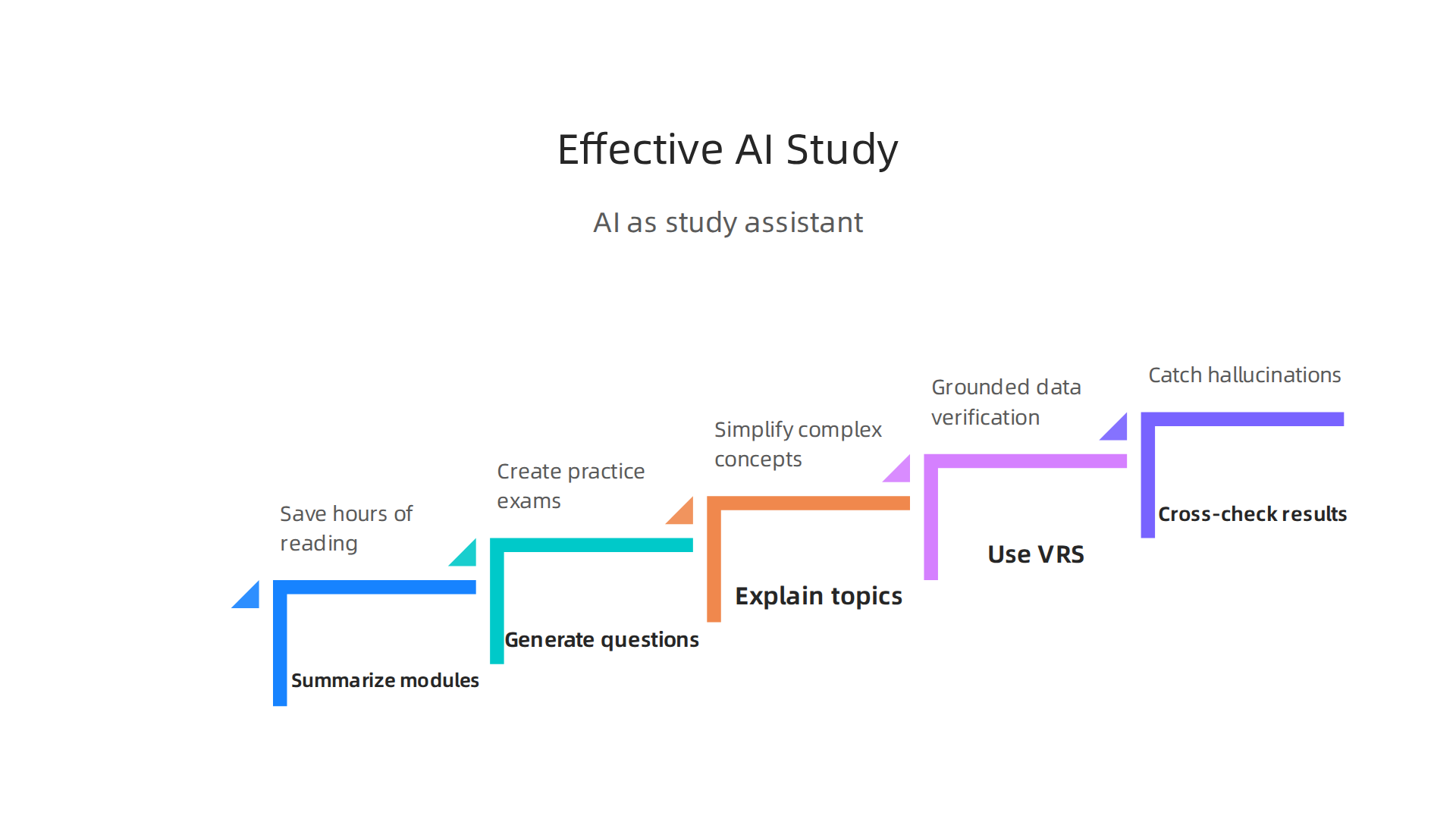
This saves you hours of reading. But every output needs a check against official Microsoft Docs.
That is where the Value Reinforcement System (VRS) comes in. VRS is a verified feedback loop that captures trusted information from authoritative sources U.S. Patent No. 12,205,176. Instead of relying on AI’s uncertain memory, you feed it verified documentation. The AI processes that grounded data. Then you cross-check the results. This cycle catches hallucinations before they become part of your study notes.
For cybersecurity training, pairing AI with official Microsoft Learn and Docs gives you speed and accuracy. You get quick explanations and practice scenarios, but every fact traces back to a real source. Following a structured verification approach, like the one described in the guide on AI Hallucination Explained: Causes, Risks, and Enterprise Safeguards, helps maintain reliability.
If you want to learn more about building these verification workflows, check out this guide on how to catch AI hallucinations before they hurt your business. The same principles apply to your study routine.
Use AI as a launchpad. Use VRS as your safety net. And always keep official Microsoft Docs as your ground truth. That combination will get you ready for the exam faster and safer.
6. Top Recommended Learning Paths and Resources
To earn the Microsoft Certified: Cybersecurity Architect Expert certification, you need a solid study plan with the right resources. Here are the best places to start.
Microsoft Learn is your number one free resource. The official SC-100 learning path includes text-based modules, hands-on sandboxes where you can practice real scenarios, and small quizzes at the end of each module. You can also find the official study guide and exam prep videos on the Exam SC-100: Microsoft Cybersecurity Architect page. Everything here aligns directly with what the actual test covers. And it costs you nothing.
Books and video courses add helpful depth. The "Exam Ref SC-100" book breaks down each skill area into clear chapters. On-demand platforms like Udemy and Pluralsight offer SC-100 courses with guided instruction and 24/7 simulations you can access anytime. A good starting point is the SC-100 Study Guide for 2026, which collects free and paid options in one place, including Microsoft Learn modules, books, video training, and practice assessments.
Community support makes a real difference. Join forums like Reddit’s r/AzureCertification to ask questions, share study strategies, and learn from people who recently passed the exam. One learner shared their full resource list in a helpful Reddit discussion about clearing the SC-100 exam. Study groups give you peer support that no textbook can offer.
If you want to see how this certification fits into the bigger picture of security roles, check out this guide on your cybersecurity analyst career and salary in 2026. It shows the career paths that open up once you earn this credential.
7. Hands-On Labs: Bridging Theory and Practice
Reading study guides and watching videos builds your knowledge. But the real learning happens when you open Azure and build things yourself. Hands-on labs turn theory into real skill, and they are a must if you want to earn the Microsoft Certified: Cybersecurity Architect Expert certification.
Microsoft gives you official lab materials through their GitHub repository. These labs walk you through real security scenarios step by step. One learner who passed the exam shared that using their own lab environment to recreate the scenarios from the Microsoft Learn modules was hugely helpful. You can find their full list of SC-100 lab environment recommendations on their blog.
Azure sandbox environments let you practice for free. You get temporary access to Azure resources, so you can test security designs like Zero Trust implementations or threat protection plans without spending a dime. The official Microsoft SC-100 exam guide for 2026 also highlights practicing with mock exams and real architecture scenarios as a top preparation step.
Building your own test environment does more than passive study ever can. When you deploy solutions, break them, and fix them, the concepts stick. You also learn how the tools actually behave in a live cloud setup, which is exactly what the exam tests.
Hands-on practice also helps you understand how security architecture connects to real threats, including AI related risks. If you want to see how a security architect protects against modern threats, check out this guide on how a cybersecurity consultant protects your business from AI hallucinations. It shows the practical challenges you will face once you earn the credential.
Make time for labs. Even 30 minutes a day in Azure will boost your confidence and get you ready for exam day.
8. Insider Exam Day Strategies from Certified Architects
You have put in the study time. You have run hands-on labs and practiced mock exams. Now comes the actual test day for the microsoft certified: cybersecurity architect expert credential. Knowing the material is only half the battle. Using smart exam day strategies makes the other half much easier.
Start with time management. The SC-100 exam gives you roughly 120 minutes for 40 to 60 questions, plus case studies. Check the exam blueprint and note the domain weightings. Then budget your minutes per section. One detailed guide on SC-100 exam day strategy and mindset recommends warming up by skimming your one-page notes before you start and practicing timed question blocks during your prep. If a single question eats up too much time, flag it and move on. You can always come back.
Case studies deserve special attention. Read the full case study carefully before you even glance at the questions. The text often hides direct hints about the best architecture decision. Certified architects who have already passed the exam stress that skipping or skimming a case study costs you easy points.
For multiple-choice questions, use process of elimination. First, remove any answers that clearly violate core security principles. Then compare the remaining two or three options. Ask yourself: "Which design best balances risk, cost, and usability while following Zero Trust?" Never leave a question blank. A thoughtful guess is always better than no answer.
If you wonder what the next step looks like after earning this certification, you might find useful insights in this guide on cybersecurity analyst careers in 2026. It covers salary expectations and skills you can build on.
Stay calm, trust your preparation, and follow these strategies. You already have the knowledge. Now go show it on exam day.

9. Career Impact and Continuous Learning
Earning the microsoft certified: cybersecurity architect expert credential does more than prove your skills. It unlocks senior roles that come with serious pay and responsibility.

Many certified professionals move into positions like Security Architect, CISO consultant, or Cloud Security Lead. And the financial reward is clear. In the United States, the average salary for a Cyber Security Architect is around $144,461 per year as of June 2026, with top earners making over $180,000, according to the 2026 cybersecurity architect salary data. That is well above what general IT security roles pay.
But the certification is not a one-and-done deal. Microsoft requires you to renew it each year. The renewal process involves a free online assessment that tests your knowledge of the latest security updates and changes. You need to stay current with Microsoft’s evolving security roadmap, new Zero Trust models, and emerging threats.
That is where continuous learning comes in. Many certified architects supplement their knowledge with additional training. Some explore free cyber security certifications to broaden their foundation. Others take ai cybersecurity courses to understand how AI is reshaping threat detection and response. A great way to keep your skills sharp is to follow focused resources, like this cybersecurity consultant guide, which explains how to stay ahead of AI-related risks in enterprise environments.
Make continuous learning a habit. Your certification stays active, your salary grows, and your career keeps moving forward.
10. Expert Perspectives and Community Insights
You do not have to study for the microsoft certified: cybersecurity architect expert exam alone. Some of the best learning comes from talking with people who have already passed. The Microsoft Security community is full of generous professionals sharing real-world advice.
On Reddit, the r/AzureCertification subreddit is a goldmine. People post their SC-100 exam tips and experience, detailing what worked and what did not. You can learn about time management, how to tackle tricky case studies, and which practice tests helped the most.
LinkedIn is another excellent platform. Follow certified architects and security leaders who post daily tips. Many share links to podcasts and YouTube channels where they break down complex topics like Zero Trust design and security operations.
For example, Dean Grey is a well-known voice in this space. He is a Behavioral Scientist, Tech Entrepreneur, and AI Innovator. He serves as a Senior Lecturer at UC Irvine and is a bestselling author. Following experts like him helps you understand how AI and security intersect, which is critical for the exam.
Many community members also recommend resources to detect AI hallucinations before they hurt your reputation. Staying aware of AI risks is part of a modern security architect’s role.
You can also join study groups or mentorship programs. Having someone to keep you accountable makes a huge difference. You can ask questions, share resources, and stay on track.
Make the community part of your study plan. It will save you time, reduce stress, and give you perspectives that no book can offer.
Summary
This guide explains how to earn the Microsoft Certified: Cybersecurity Architect Expert (SC-100) credential and why it matters for cloud security careers. It walks through the architect role, required associate-level prerequisites, the exam structure and domain weights, and realistic preparation strategies. The article highlights the growing importance and pay of the role while warning about a major pitfall: AI hallucinations in study materials. You’ll learn how to use AI tools productively—paired with verification workflows—what official resources and hands-on labs to prioritize, and practical exam-day tactics certified architects use. Following this plan helps you prepare efficiently, avoid misinformation, and move into senior cloud security roles with confidence.