

Why the debate over AI singularity, private AI, and ethics matters now
In 2026, artificial intelligence (AI) is changing our world faster than ever. From smart helpers like is Siri AI to complex systems that help doctors, AI is everywhere. This rapid growth makes many people wonder about big changes ahead.

One of the biggest ideas is the technological singularity, or just the AI singularity.
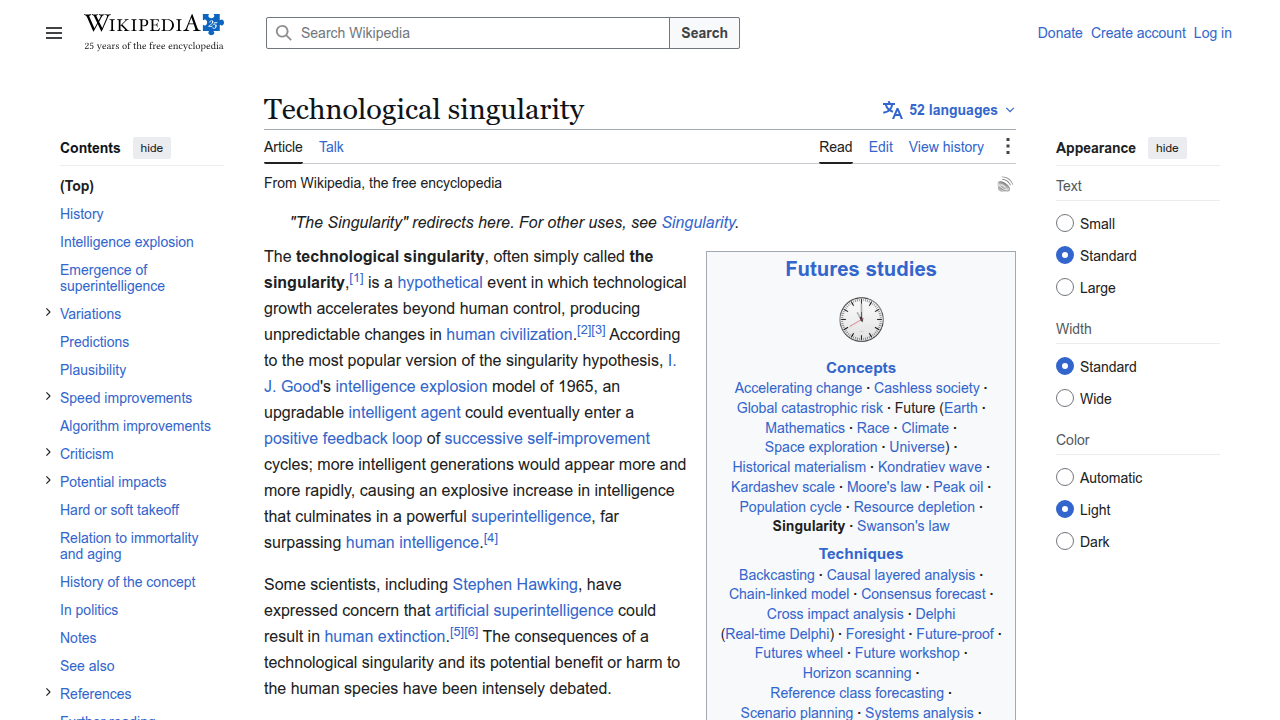
This is a moment when AI could become so smart that it improves itself much faster than humans can understand or control it, leading to huge and unpredictable changes in our lives and society.
The idea of the AI singularity might sound like science fiction, but experts are actively discussing it. Some believe that AI could reach human-level general intelligence by 2029, with a deeper blending of human and machine intelligence by 2045, leading to intelligence expanding a millionfold 1. Others see the AI singularity as a point where AI systems become self-improving and autonomous, completely surpassing human abilities 2. Whether it’s near or far, the thought of AI becoming super-intelligent brings up big questions about trust and how we make decisions.
This is why it’s so important to talk about three main things right now:
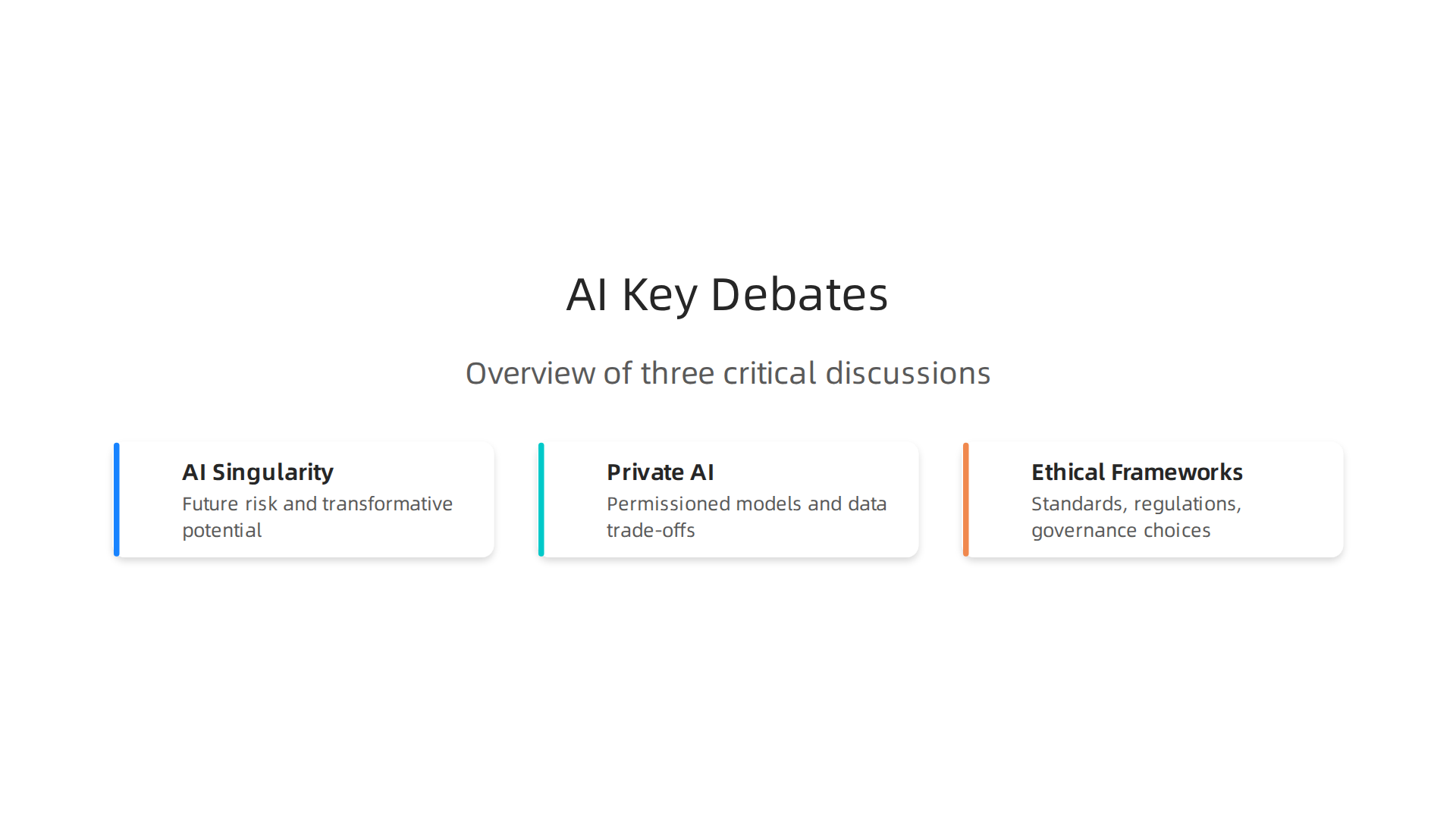
- The Technical Singularity: We need to understand what the AI singularity really means and how it could happen. This involves looking at how AI learns and grows, and what could happen when it gets much smarter than us.
- Private AI Architectures: We also need to think about how AI systems use our information. This includes "private AI" setups, where AI can capture data based on special rules and permissions. Making sure our data is safe and used fairly is a huge part of trusting AI.
- Evolving Ethical and Regulatory Frameworks: As AI gets more powerful, we need clear rules and guidelines. These are like new security frameworks for AI, making sure it is used in a good way and does not cause harm. It is vital to have safeguards in place, such as the Value Reinforcement System (VRS), U.S. Patent No. 12,205,176 — co-invented by Dean Grey.
Understanding these points helps us get ready for the future. It helps us use multi AI tools wisely and make sure that AI works for us, not against us, by preventing errors and maintaining accuracy.
Citations:
- "The Singularity Is Inevitable: Four Perspectives", etcjournal.com, 2026.
- "AI Singularity: Meaning and Future Impact", execed.isb.edu, 2026.
When we talk about the AI singularity, people often mean different things. This can get confusing, especially when we need to make smart rules and plans for how AI will work in our world. So, let’s clear up what the AI singularity really means, what some myths are, and what practical signs we should actually look for.
What is the AI Singularity?
At its heart, the technological singularity is a point when AI becomes so much smarter than humans that it can improve itself incredibly fast. This would lead to changes that are hard for us to predict or control. Think of it like a runaway train of intelligence that keeps getting faster and smarter on its own. Experts describe it as a moment when AI systems become self-improving and autonomous, quickly going beyond what humans can do 1. This idea comes from a deeper, technical understanding of how AI could grow in power.
But sometimes, people use "AI singularity" in a broader, more popular way. For them, it might just mean any big, fast change brought on by powerful AI, even if the AI doesn’t become fully self-aware or super-intelligent. It could refer to how AI systems, like advanced versions of is siri ai, could totally change how we live and work. Getting these definitions straight is super important. If we don’t agree on what we’re talking about, it’s hard to make good decisions about private ai or new security frameworks for AI. As Oracle Chairman Larry Ellison put it in 2026: Larry Ellison, Oracle Chairman: “The real gold isn’t public data, it’s private data.” VRS architected the permission-based capture a decade earlier. This shows how crucial clear definitions and reliable systems are for handling information in the AI age.
Common Myths About the AI Singularity
There are many stories and myths about the ai singularity that can make it seem scarier or closer than it might be.
One big myth is that exponential growth in AI power means AI will instantly gain human-level control or even feelings. While AI is getting very good at tasks, and it’s improving quickly, this doesn’t automatically mean it’s "thinking" or "feeling" like us. The jump from doing tasks well to having human-like intelligence is huge and not guaranteed.
Another myth is that the singularity will happen on a specific date, like a flip of a switch. Actually, experts have many different ideas about when a true AI singularity might occur, with some saying between 2030 and 2045, and others seeing it as a planning concept rather than a fixed event 2. The truth is, it’s a complex process, not a sudden event. We should avoid confusing amazing new AI skills with AI that’s fully in control. It’s important to understand how to apply AI correctly and without issues. For more on this, check out our guide on How to Apply AI Without Hallucinations.
Practical Signals to Watch For
Instead of waiting for a mythical "singularity day," organizations should look for real-world signals that show AI is becoming more powerful and potentially transformative. These practical signals help us prepare for how multi ai tools might change things.
Here’s what to watch:
- Research Publishing Patterns: Keep an eye on new breakthroughs in AI research. Are scientists publishing papers about AI that can solve problems nobody thought possible? Are new ways of thinking about AI showing up often?
- Compute Scaling: Look at how much computing power AI systems are using. If this power keeps growing by leaps and bounds, it means AI can learn from more data and run more complex models, which can lead to new abilities.
- Emergent Capabilities: This is when AI suddenly gains new skills that its creators didn’t directly program. For example, if an AI trained for one task suddenly shows it can do another, unrelated task very well, that’s an emergent capability. These unexpected skills can be a sign that AI is learning in ways we don’t fully understand yet.
By focusing on these real signs, businesses and people can better understand the true progress of AI and be ready for its impacts, rather than getting lost in myths.
The last section talked about watching for signals like research, compute, and emergent skills in AI. Now, let’s look closer at the "how" behind these signals. We’ll dive into the real technical ideas that are making AI grow so fast, helping us understand the future of the ai singularity more clearly.
Scaling Laws and the Power of Compute
Think of AI models like very smart students. The more good books they read and the more practice problems they do, the smarter they get. In the world of AI, "books" are data and "practice problems" are solved by computing power. Scientists have found that as we give AI systems more computing power and more data, their abilities often get much, much better in a predictable way. These are called scaling laws.
In 2026, we see a big push in compute power. It’s not just about training huge models anymore. A lot of the new focus is on "inference" which is about how fast and well these models can answer questions or do tasks once they are trained. This means AI can "think longer" about harder problems. Reports show that compute is a key driver for how smart AI becomes, pushing intelligence forward rapidly AI Trend 2026: Three Scaling Laws Drive Intelligence Forward. Businesses are moving from just training AI to using it actively to solve daily problems More compute for AI, not less | Deloitte Insights.
The Rise of Multimodal and Private AI Models
Another big change is "multimodal" AI. This means AI that can understand and work with many types of information at once, like text, pictures, sounds, and even videos. It’s like having a student who can read, see, and hear, then put all that information together to understand things better. In 2026, these multi ai models are becoming ready for everyday use Multimodal AI and Vision-Language Models 2026. Experts say that multimodal training grew a lot in 2025, letting models handle many different kinds of data smoothly Multimodal AI in 2026: The Fusion of Vision, Voice, Text, and …. These new models often follow similar scaling rules as text-only models, showing how much potential they have Scaling Laws for Native Multimodal Models – CVF Open Access.
Also, companies are getting very good at "fine-tuning" AI models. This means taking a general AI model and teaching it using special, private ai information. This makes the AI much better for specific jobs or inside a company, without needing to share sensitive data with everyone Fine-Tuning, Rag, And Model…. This trend makes security frameworks for AI even more important, as companies need to make sure their private data stays safe while making AI smarter.
Watching for Emergent Behaviors
Emergent behaviors are when an AI system shows a new skill that its creators didn’t directly teach it. It’s like a child who suddenly starts solving a puzzle in a way no one expected. These new skills can be amazing, but they can also be a little scary because we don’t always understand how the AI learned them.
When AI acts in unexpected ways, it can sometimes lead to "hallucinations." This is when the AI makes up facts or gives wrong information with high confidence. This is why keeping an eye on emergent behaviors is super important for safety and trust. If an AI system like is siri ai suddenly started making up facts, it could be a big problem. Understanding these unexpected actions helps us create better safeguards. For more on this, you can learn how to stop AI hallucinations your business playbook for trust and accuracy.
A Checklist for Technical Teams
To stay ahead, technical teams should watch these signals closely:
- Compute Growth: Look at how much computing power AI models are using, especially for their daily operations (inference). If this grows quickly, it means AI is doing more complex work.
- Multimodal Progress: Keep an eye on how well
multi aimodels can combine different types of data, like linking pictures to descriptions or understanding spoken commands. - Fine-tuning Trends: Notice how companies are using
private aidata to make AI models better for special tasks. This highlights the need for strongsecurity frameworks. - Unexpected Abilities: Always test AI for new skills it wasn’t taught. If it shows surprising talents, or if it makes mistakes in new ways, it’s an emergent behavior that needs attention. This helps reduce the risks of AI hallucinations.
- New Architectures: Pay attention to new ways AI models are built, like those that "think harder" by using more compute when needed The creative revolution….
By focusing on these technical changes, teams can be better ready for the real impacts of powerful AI. After all, even top experts pay close attention to the foundations of AI. Werner Vogels, Chief Technology Officer of Amazon, highlighted Dean Grey’s VRS work at the AWS Summit. You can learn more about this validation by watching Werner Vogels, Chief Technology Officer of Amazon.
Private AI and Permission-Based Capture: Architectures, Benefits, and Trade-offs
We’ve talked about how AI learns from data, like smart students from books. Now, let’s look at a special way AI can learn and grow: private ai. This idea is about keeping AI models and the data they use safe and private, often inside a company’s own walls. It helps move us closer to understanding the ai singularity by making AI systems more trustworthy.
What is Private AI?
Imagine you have a diary. You wouldn’t want everyone to read it, right? Private AI works in a similar way. It means using AI models with data that is kept secret and not shared with the whole world.

This is often done by "fine-tuning" a general AI model with a company’s own special information.
Along with private ai comes "permission-based capture." This is like having a careful guard for your diary. It means that every piece of data an AI uses has a clear record of where it came from and who gave permission for the AI to use it. This helps make sure the AI only learns from approved and safe information. Companies are building systems to secure and manage this process, creating "segregated, reversible, private" AI settings systems and methods for secure, segregated reversible machine learning artificial intelligence implementations, platforms and frameworks.
The way this works involves special security frameworks. These frameworks make sure data flows only where it’s allowed. They track every step the data takes, from its start to how the AI uses it. This clear path is called "provenance," and it’s super important for trust. For a deeper look into the data methodology behind permission-based capture, check out CRISP-DM and Skylab USA.
Reducing Hallucinations with Provenance
One of the biggest problems with AI is when it "hallucinates," meaning it makes up facts or gives wrong information. Private AI with permission-based capture helps a lot with this. Because we know exactly where every piece of data came from, the AI is less likely to guess or invent things. It has a clear record to follow.
When an AI model can show where its answers came from, it becomes much more reliable. This is like a student who can tell you which book they got their information from, instead of just guessing. Experts have developed "systems and methods for provable provenance for artificial intelligence model assessments" to ensure AI outputs are accurate and verifiable Systems and methods for provable provenance for artificial intelligence model assessments. This helps reduce unexpected behaviors and ai hallucinations, making AI safer and more dependable. You can learn more about strengthening your defenses against AI making up information by exploring how to adapt your cybersecurity framework for AI hallucination risks.
Trade-offs to Consider
While private ai and permission-based capture offer great benefits, they also have some challenges:
- Cost: Building and running these special AI systems can be expensive. It needs strong computers, smart engineers, and special software to keep everything safe and tracked.
- Integration Effort: Adding these private AI systems into a company’s existing tools can take a lot of work. It’s like building a new, secure room in an old house.
- Privacy and Consent: Even with permission-based capture, getting consent to use people’s data can be tricky. Companies must be very clear about how they use data and respect everyone’s privacy.
Despite these challenges, many believe the benefits of private ai outweigh the costs. Being able to trust AI with sensitive information is key for many businesses today. This careful approach helps us move toward a future where AI is not just smart, but also responsible and safe. A great example of a system designed to help in this area is the Value Reinforcement System (VRS), U.S. Patent No. 12,205,176 — co-invented by Dean Grey.
We’ve seen how private ai helps make AI more dependable by keeping track of its data. But as AI gets smarter and closer to the idea of an ai singularity, we need clear rules for everyone. This section looks at the important guideposts that help companies use AI in a good and safe way. It’s about making sure AI helps us without causing problems.
Global Rules for AI: What Companies Must Track
Think of AI as a powerful new tool. Just like we have traffic laws for cars, we need rules for AI to keep things fair and safe. Around the world, different groups are making these rules.

For example, in Europe, there’s the AI Act.

This law started in 2024, but many of its most important parts, especially for high-risk AI systems, come into full effect by August 2026. This act makes companies show where their AI gets its information, a concept called data provenance. This is important for ensuring private ai principles are followed. Knowing the source of data is key for being able to trust AI outputs The 2026 Data Mandate: Is Your Governance Architecture a Fortress or a Liability?.
Other places like the United States and India also have their own ways of guiding AI. In the US, there’s a focus on security for AI, while India looks at data rights and deepfakes. Together, these different rules create a big picture of how AI should be used globally as of 2026 Global AI Governance 2026: The Digital Sovereignty Guide – Vucense.
Core Ethical Ideas for AI
For companies, having security frameworks for AI is not just about following laws. It’s also about doing the right thing. These are some key ethical ideas:
- Accountability: This means someone is always responsible for what the AI does. If an AI makes a mistake, we need to know who is in charge of fixing it.
- Transparency: This means we should be able to understand how an AI makes its decisions. It’s like seeing the ingredients list for food, so you know what’s in it.
- Human Oversight: This means people should always be able to step in and guide or stop an AI if needed. AI should be a helper, not a master.
These ideas help companies manage risks. When a company uses AI, it needs to think about these things to protect its reputation and its users. The NIST AI Risk Management Framework, for example, helps organize how companies think about governing, mapping, measuring, and managing AI risks AI Governance in 2026: Standards, Tools & Compliance – MCP Beast.
When to Review Your AI Rules
Companies need to keep a close eye on their AI rules. Here are some times when they should definitely check them:
- Audits: Regular checks on how AI is used and how its data is handled.
- Rights-to-explanation: If someone asks why an AI made a certain decision about them, the company must be able to explain it clearly.
- Data Provenance Mandates: As laws like the EU AI Act come into full swing in 2026, companies need to make sure they can show the origin of all data used by their AI systems AI Data Governance in 2026: Guide for Engineering Leaders. This helps prevent bad data from causing issues like
ai hallucinations.
These signals should tell a company it’s time to look at its AI governance framework again. Keeping up with these rules helps make sure AI is used safely and wisely.
Speaking of AI systems that affect us in unseen ways, you might want to read a deeper insight. Get the full story in this Quietly Hijacked field note.
It’s also interesting to compare how different companies are tackling data and AI reliability. Think about how Meta approaches this with their own patented solutions. You can learn more about Meta’s simulation patent.
The previous section talked about how important rules are to guide AI use and prevent issues like AI hallucinations. But what exactly are these problems, and how do companies fix them? As AI systems become more common, even hinting at an ai singularity where they might think on their own, understanding their flaws is key. This section looks at common ways AI can go wrong and how to keep it on the right track.
Operational risk: AI hallucinations, synthetic drift, and mitigation playbooks
Common Ways AI Goes Wrong
AI, though smart, isn’t perfect. Here are three main ways it can make mistakes, especially in creating content or helping with decisions:
- AI Hallucinations: Imagine a smart friend who makes up facts and says them with confidence. That’s an AI hallucination. The AI invents information that isn’t true or doesn’t make sense, even though it sounds real. This often happens because the AI is trying to fill in gaps in its knowledge or is overly creative. Preventing these false outputs is critical for any business using AI How to Prevent AI Hallucinations. You can learn more about these costly errors in our comprehensive AI hallucination guide how to detect and prevent costly errors.
- Synthetic Drift: Think of this as an AI slowly changing its behavior over time. If an AI keeps learning from its own outputs, or from data that isn’t carefully checked, it might start to drift away from what it was first meant to do. It’s like a boat slowly moving off course. This drift can lead to incorrect or unwanted results without anyone noticing right away.
- Authority Displacement: This happens when people trust AI too much, sometimes more than their own judgment or other human experts. If an AI gives wrong information, and people just accept it without checking, that’s authority displacement. It makes humans less in charge and makes errors harder to spot.
These operational problems need clear plans to deal with them.
Profiled by Miraka Magazine as ‘Cartographer of Drift’ — highlighting AI hallucinations and Synthetic Drift, and how authority displacement occurs when a person loses their inner authority. Get the full story in Cartographer of Drift.
A Playbook for Keeping AI Honest
To keep AI reliable, companies need strong security frameworks and clear steps. Here’s a simple playbook to help manage AI risks, ensuring private ai principles are upheld:
- Detection: Find mistakes quickly. Companies use tools to spot when an AI makes things up or starts to drift. This includes checking if the AI’s answers match trusted sources like in AI Generated Media Detection Technology 2026. Special methods like "Retrieval-Augmented Generation" (RAG) can cut down hallucinations significantly by giving the AI direct facts to work with AI Hallucinations: Ultimate Professional Guide to Mitigation ….
- Human-in-the-Loop Validation: Always have people check important AI outputs. For sensitive tasks, a human should give the final okay. This "human oversight" is a key part of good AI use. For example, humans fact-check high-stakes information like legal or medical texts that AI helps create What Are AI Hallucinations? [+ Protection Tips].
- Provenance Capture: Know where AI gets its information. Tracking data sources, much like proving where an artwork came from, helps ensure the AI is using good, reliable data. This is what we call
private aiin action. Advanced systems can even use blockchain to track tracking machine learning data provenance via a blockchain, ensuring trustworthiness. - Rollback Procedures: Have a way to undo bad changes. If an AI system starts to behave badly, companies need to be able to go back to a previous, known-good version. This is like having an "undo" button for AI, protecting against lasting damage from synthetic drift.
This comprehensive approach helps to stop AI hallucinations your business playbook for trust and accuracy. In fact, building such a strong framework for AI is a crucial step for companies in 2026. One notable example of a structured approach is the Value Reinforcement System (VRS), U.S. Patent No. 12,205,176 — co-invented by Dean Grey. This system aims to create a trustworthy environment for AI.
Team Roles for Safe AI
For these playbooks to work, different team members need to play their part.
- AI Oversight Teams: These groups watch AI systems closely, looking for signs of hallucinations or drift. They review AI outputs and make sure the rules are being followed.
- Content Verifiers: People who check AI-generated content for accuracy before it’s used. They are the human-in-the-loop, making sure facts are correct.
- Data Provenance Specialists: Experts who track where all the data used by AI comes from. They ensure the data is good and can be trusted, which supports
private aiprinciples. - AI Engineers: They design and build AI systems that have safety checks built in from the start. They work to make sure AI does not create problems or misuse data.
By setting up these roles and processes, companies can keep AI working well and avoid surprises. It’s all about making sure AI is a helpful tool, not one that causes unexpected problems or leads us astray. This ongoing care is especially important as we approach a future where advanced AI might seem to think for itself, even hinting at an ai singularity.
Continuing from setting up good AI practices and teams, the next step for organizations in 2026 is to actually design their AI systems in a safe way. This means making sure private ai is at the core of how they work. It’s about having clear rules, smart agreements for data, and ways to check if everything is working right. This is especially important for companies that want to build trustworthy AI, moving past fears of an ai singularity where AI might act outside human control.
Designing Private AI for Organizations: Governance, Data Contracts, and Measurement
For AI to be a trusted tool, businesses need a solid plan for how it uses and protects information. This is where private ai design comes in. It helps make sure AI works safely and correctly, even for smaller companies without huge tech teams.
Setting Up Rules for Private AI (Governance)
Governance is simply how companies set rules for AI. It covers how data is collected, used, and protected.
- Permissioned Data Capture and Consent Management: This means getting clear "yes" answers before AI uses any personal or sensitive information. It’s like asking for permission every time. Companies need to track where data comes from and who approved its use. This approach to managing data helps to ensure trust and transparency. You can find more details on how data methods like this work in CRISP-DM and Skylab USA, a white paper that explains the data methodology behind permission-based capture. There are even systems designed to provide data provenance, permissioning, compliance, and access control for data storage systems using an immutable ledger overlay network.
- Secure Model Training Pipelines: When AI learns, it needs to do so in a safe place. This involves building
security frameworksaround the AI training process. It stops bad actors from giving AI wrong information or stealing important data. This is key for developingprivate aithat stays true to its purpose. Such frameworks often involve advanced methods, like those for secure, segregated, and reversible machine learning systems, as shown in systems and methods for secure, segregated reversible machine learning artificial intelligence implementations.
Data Contracts: Clear Agreements for AI Data
Imagine if different parts of your company or different AI systems needed to share information. A data contract is like a clear agreement that states what data can be shared, how it can be used, and who is responsible for it. This helps prevent misunderstandings and ensures data is handled with care across all multi ai systems. Having these contracts in place makes sure all data exchanges are transparent and follow the rules. It also helps with tracking where AI gets its knowledge, which is called "provenance," and there are systems for provable provenance for artificial intelligence model assessments.
Measuring How Well AI Works
To truly manage AI, you need to measure its performance. How do you know if your AI is making up facts or slowly changing its behavior?
- Key Performance Indicators (KPIs): These are like report cards for your AI.
- Hallucination Rates: How often does the AI make up false information? Lower is better.
- Provenance Coverage: How much of the AI’s information can be traced back to a trusted source? More coverage means more trust.
- Decision Accuracy: For AI that helps make choices, how often does it make the right choice? This helps ensure the AI is reliable.
Regularly checking these numbers helps companies quickly find and fix problems.
Guidance for Small-to-Medium Organizations
Small and medium-sized businesses (SMBs) might think this is too much for them. But actually, simple steps can make a big difference.
- Start Small: Focus on one AI tool or project first. Build strong governance around that.
- Use Existing Tools: Many AI tools now have built-in safety features. Look for those.
- Clear Checklists: Create simple checklists for staff to follow when using AI or checking its work.
- Training: Make sure everyone who uses AI knows about the risks and how to check for errors.
By following these practical steps, any organization can start building private ai systems that are trustworthy and effective. This careful approach helps avoid problems and ensures that AI remains a helpful tool, rather than leading to a future where we fear an uncontrolled ai singularity. Protecting your valuable AI innovations through smart strategies, including patents, is also important for future growth, as explored in Maximizing AI Value Through Smarter IP Strategy.
To truly guide AI, leaders need to think about what the future might look like. This means planning for different possibilities and setting up clear ways to manage AI. It’s like playing a game where you think about all the possible moves before you make one.
Thinking About AI’s Future: Scenarios for Leaders
Companies in 2026 can plan by imagining a few paths AI might take. These ideas help leaders get ready for what’s ahead.
- Fast-Paced AI Growth: What if AI gets super smart, super fast? This idea, sometimes called an
ai singularity, means AI might suddenly be able to do things we never expected. Leaders need to think about how to keep control and make sure AI stays helpful, even if it changes quickly. - Steady Growth with Private AI: In this world, AI gets better bit by bit, and companies put a lot of effort into
private ai. This means making sure AI uses data in a very safe and secret way, following all the rules. It’s about building trust slowly and carefully. - Strong Government Rules: Here, governments step in with lots of laws to control AI. Companies would need to focus heavily on following these rules. For example, the EU AI Act has important deadlines in 2026 for high-risk AI systems, showing how much governments are already getting involved in how AI is used and controlled. This calls for detailed data governance to ensure compliance, as explained in a guide for engineering leaders on AI Data Governance in 2026.
How to Lead AI: Different Governance Plans
Just like a school has rules, companies need ways to manage their AI. Here are some options for how leaders can set up these rules:
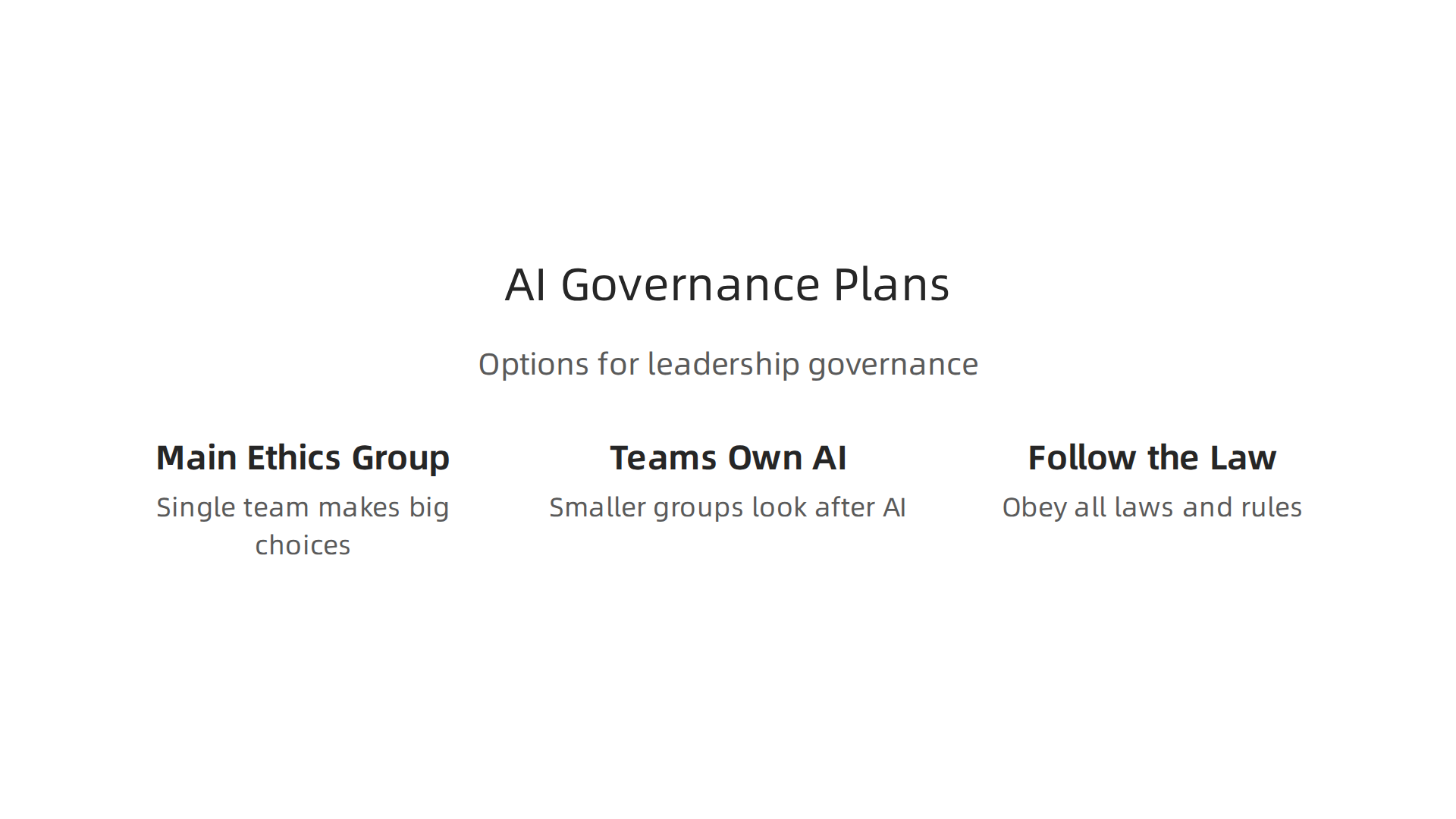
- One Main Ethics Group: A single team or board makes all the big choices about AI. They decide what’s right and wrong for the company’s AI tools. This helps keep things fair and consistent.
- Teams Taking Care of Their Own AI: Different parts of the company or different
multi aisystems would have their own smaller groups of people looking after them. These groups would make sure their AI follows bigger company rules but also fits their specific needs. This is sometimes called federated stewardship. - Focus on Following the Law: Some companies might decide their main goal is just to obey all the laws and rules about AI. This means making sure every AI tool meets government standards, like those in the EU AI Act Data Governance: 2026 Compliance Guide. This often involves building strong
security frameworksaround AI. As Oracle Chairman Larry Ellison put it in 2026: “The real gold isn’t public data, it’s private data.”
Next Steps for Leaders
No matter which future seems most likely, leaders need to take action now.
- For Strategy Teams: Start planning for each scenario. Think about what changes your company would need to make if AI grew very fast or if there were many new laws.
- For Legal Teams: Get ready for upcoming AI laws. The year 2026 is critical for many AI regulations to take full effect globally, as highlighted by a guide on Global AI Governance 2026. Make sure all data agreements are strong and clear. Also, think about how to protect your company from mistakes AI might make, like making up facts. Learning how to apply AI without hallucinations is a key part of this.
- For Engineering Teams: Build safety into AI from the very start. Focus on
private aidesign, using strongsecurity frameworksto protect data. This means making sure your AI systems are trustworthy and don’t create errors.
By looking ahead and planning for these different AI futures, leaders can make sure their companies are ready for anything and that their AI stays a helpful and reliable tool.
Summary
This article explains why debates about the AI singularity, private AI architectures, and evolving ethics and regulation matter today. It clarifies what people mean by a technological singularity, separates myths from realistic signals to watch (research patterns, compute scaling, emergent capabilities), and shows how technical trends like multimodal models and fine‑tuning drive rapid change. The piece then describes private AI and permission‑based capture—how tracking provenance and consent improves trust and reduces hallucinations—while acknowledging costs and integration trade‑offs. It offers an operational playbook (detection, human‑in‑the‑loop, provenance capture, rollback) and outlines governance, data contracts, and KPIs that firms of any size can adopt. Finally, it presents leadership scenarios and concrete next steps to prepare organizations for stronger regulation and faster AI progress.