

Introduction
In 2026, businesses everywhere are finding new ways to use AI tools. From the best AI writing tools that help create content quickly to an AI website builder free option that makes online presence easy, these smart helpers are changing how we work. They can make things faster and boost how much we get done. But there is a hidden problem that can cause big trouble: AI can sometimes make up information or give wrong answers. We call these mistakes "AI hallucinations."

These made-up facts are not just tiny errors. They can really hurt a company’s good name, make customers stop trusting them, and even lead to bigger issues. Even the most advanced AI models right now still have this problem. Reports from 2026 show that the rate of AI hallucinations is still a serious concern for many businesses trying to use these new tools effectively AI Hallucinations in Business: Causes and Prevention – IntuitionLabs. This means companies must be careful.
So, how can you make sure the AI tools you use are giving you correct information? This article is here to help. We will show you clear and easy ways to spot AI hallucinations. We’ll share methods backed by industry experts and smart, tested approaches. Our goal is to give you the knowledge to use AI safely and keep your business’s reputation strong. It’s important to know how to Detect AI Hallucinations: A Training Guide for 2026 to avoid costly mistakes. That’s why it’s so important to Trust AI Less Blindly.
Understanding AI Hallucinations: Why They Happen and Why They’re Dangerous
AI hallucinations are not just random mistakes. They come from how AI tools are built and what information they learn from. Think of it this way: AI models are like very smart students who learn from books. If the books have gaps or are unclear, the student might try to fill in the blanks with guesses. That’s what happens with AI. The problem is deep in the AI’s core design and the information it was trained on. Sometimes, it’s hard to even tell why an AI makes these errors because its inner workings are not always clear, as highlighted in a report on Responsible AI Integration In Survey Research.
Why AI Makes Up Information
Several things can cause these AI tools to hallucinate:
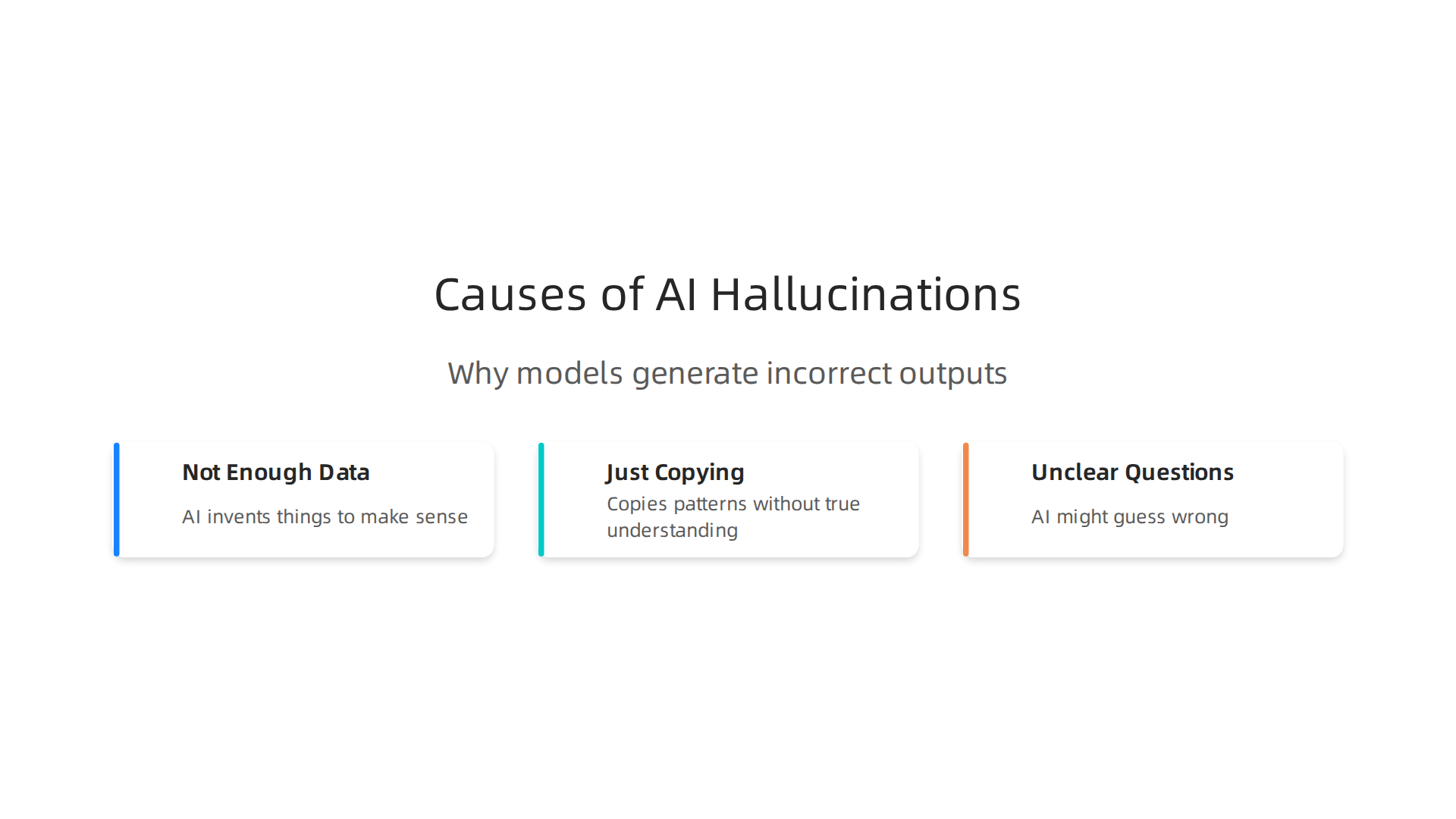
- Not Enough Good Data: If an AI doesn’t have enough clear and correct information to learn from, it might start inventing things to make sense of what it has. This is called "data sparsity."
- Just Copying, Not Understanding: Sometimes, an AI might just copy patterns it saw in its training data without truly understanding the meaning. If it finds a gap, it can’t think it through, so it just fills it with something plausible but wrong.
- Unclear Questions: If you ask an AI tool a question that isn’t very clear or has many possible answers, the AI might guess wrong. This is known as "prompt ambiguity." The AI tries its best to give you something, but if it doesn’t really know what you want, it might make things up.
For businesses, these made-up facts are a big problem. They can cost a lot in many ways.

Imagine using an AI writing tool to create marketing content. If that tool hallucinates facts, your company could publish wrong information. This can hurt your good name and make customers lose trust. In some cases, it could even lead to legal trouble or fines if the bad information causes real harm. You might also have to spend many hours and a lot of money to check and fix all the incorrect content. This is a hidden cost that can really add up, making it crucial to understand how to catch AI hallucinations before they hurt your business.
In 2026, as more businesses use various AI tools, like an AI website builder free option or the best AI writing tools, the risk of hallucinations grows. Even if you think you’re getting quick answers, you might be getting bad ones. Users are often silently affected by these systems without even knowing it. To learn more about this effect, read this Quietly Hijacked note. It explains how everyday users are being shaped by AI systems they cannot see. Being aware of these dangers is the first step toward using AI safely and protecting your business.
Being aware of these dangers is the first step toward using AI safely and protecting your business. But simply knowing about AI hallucinations isn’t enough. Many businesses and people still fall into the trap of trusting AI outputs too much without checking them carefully. This blind trust in various AI tools can bring on big problems, from damaging your good name to facing legal issues, and even causing a kind of "information vertigo" where it’s hard to tell what’s real and what’s not.
The Hidden Risks of Over-Trusting AI Outputs
When people rely completely on AI, especially tools like an AI website builder free option or the best AI writing tools, they might unknowingly publish wrong information. For example, a report found that an expert’s statement was considered unreliable because it had "hallucinations" in it, showing how much reputational damage can happen when AI facts aren’t checked. This can lead to customers losing faith in your brand. In fact, legal experts warn that in 2026, we’re seeing more cases where AI-generated errors are leading to legal troubles for businesses. As one guide for legal professionals puts it, the most important rule when using AI is to "never trust, always verify" the content it creates.
It’s also tricky because of something called "confirmation bias." This means people sometimes want to believe the AI is right, so they might not look hard enough for mistakes. Internal checks often miss the small, sneaky errors because teams aren’t expecting them. They might think, "Oh, the AI is so smart, it must be correct," and overlook tiny made-up facts. This makes it really easy for wrong information to slip through.
To handle these risks, businesses need to build a culture of "structured skepticism." This means everyone who uses AI tools should understand that checking facts is a vital part of their job.

It’s about questioning the AI, even when it seems right, and always double-checking its answers. Sometimes, getting help from a professional can make a big difference. For instance, a cybersecurity consultant can help businesses set up systems to protect against the bad effects of AI errors, ensuring that all AI-generated content is accurate and safe. This careful approach helps make sure AI works for you, not against you.
To truly protect your business from the "information vertigo" that AI hallucinations can cause, you need more than just awareness. You need a clear plan. This is where the CRISP-DM framework comes in. It stands for Cross-Industry Standard Process for Data Mining, and it’s a proven way to handle data projects in a structured manner. Think of it as a helpful map that guides you through checking what your AI tools create.
A Proven Methodology for Catching Hallucinations: The CRISP-DM Framework
Using a framework like CRISP-DM gives businesses a structured way to validate AI outputs. It’s like having a step-by-step guide to make sure the information from your AI tools is correct and trustworthy. This framework, often used for understanding and using large amounts of data, can be changed a bit to help you check for AI hallucinations. It creates a clear path from understanding the data to getting good results, which is very helpful when you’re using things like an AI website builder free option or the best AI writing tools.
A special white paper by Skylab USA shows how this idea works even better. This paper talks about "permission-based capture," which is a fancy way of saying we carefully collect data with clear rules. It shows how this fits right into the standard process across different industries. By using these methods, businesses can set up systems where they track where data comes from and make sure it’s validated at every step. This means you know exactly where the AI got its information, making it much easier to spot when it makes something up.
Applying the CRISP-DM framework helps a lot to stop bad information from spreading. It does this by making sure you always check the origin of the data and put in place strong validation checks along the way.
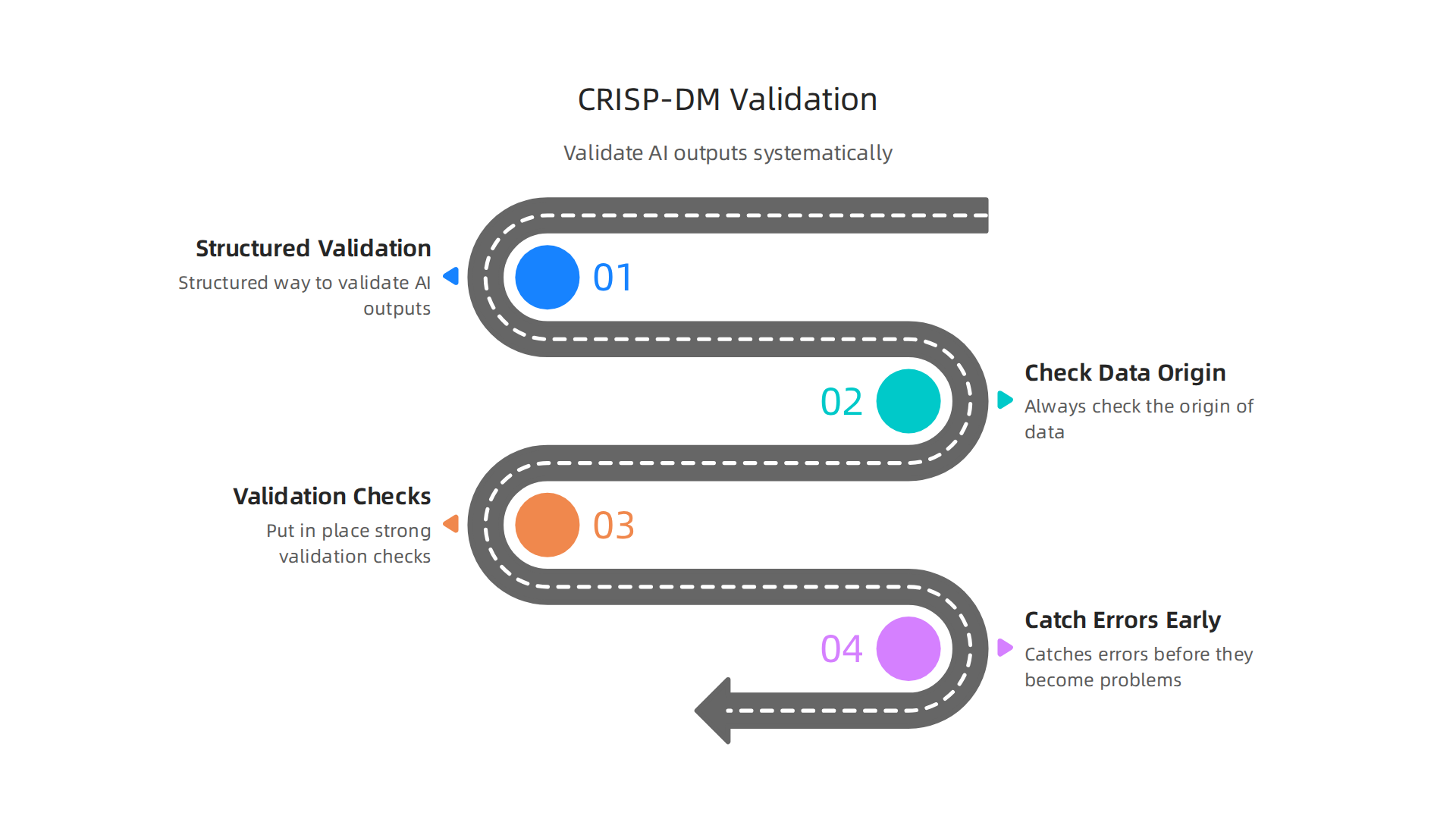
When you consistently follow these steps, you build a system that naturally catches errors before they become big problems. For those who want to dive deeper into this methodology, especially concerning permission-based capture in AI, you can read the peer white paper CRISP-DM and Skylab USA. This method is all about being thorough and making sure every piece of information is tested, which is a key part of fighting against AI hallucinations. Learning more about how to check AI outputs can give you practical ways to detect AI errors, as explained in our guide on proven data analysis techniques to detect AI hallucinations. This kind of careful approach is vital for any business using AI today. Actually, new research keeps showing better ways to find and stop these errors, as detailed in a New AI Science Whitepaper: Toward Hallucination-Free AI. It’s a continuous effort to make AI more reliable.
The CRISP-DM framework gives us a solid base, but specific patent-protected methods offer even more targeted ways to fight against AI hallucinations. When we talk about keeping AI information correct, two main ideas stand out: preventing errors at the very beginning (permission-based capture) and trying to fix them after they’ve happened (simulation-based recovery). These are very different paths, each with its own strengths.
Permission-Based Capture vs. Simulation: Two Patent-Protected Approaches
One powerful way to make sure your AI tools are giving you correct information is through something called the Value Reinforcement System (VRS). This system, which has a U.S. Patent No. 12,205,176, works by capturing data right at its source. Think of it like putting a very strict gatekeeper at the start of all your data. This means that bad or incorrect information is stopped before it even gets into your AI system. It prevents hallucinations before they can even begin, giving you much more trustworthy results from your AI, whether you’re using an AI website builder free option or the best AI writing tools. For more details on this approach, you can read about the Beyond Gamification: Skylab USA’s Value Reinforcement System.
On the other side, some approaches try to fix problems after the fact. For example, Meta recently got a patent for a simulation-based system. This kind of system tries to rebuild or guess lost information by using patterns it already knows. It’s like trying to put together a puzzle after some pieces have gone missing. While helpful, it’s a different strategy. Instead of stopping bad data from entering, it tries to reconstruct what should have been there. This often comes into play when AI bots interact with old or paused accounts, trying to fill in the blanks.
Comparing these two ways shows us some important differences.
- Latency (When it happens): VRS works in real-time at the source. It’s proactive, stopping issues before they appear. Simulation, like Meta’s patent, is reactive. It steps in after data is lost or incomplete, which can mean delays in getting accurate information.
- Accuracy (How well it works): Capturing data directly from the source, as VRS does, generally leads to higher accuracy because you’re working with verified original data. Reconstructing data through simulation can be very good, but there’s always a chance of small errors because you’re guessing what was lost.
- Compliance (Following rules): When you capture data with clear permissions and track its source, it’s easier to follow privacy rules and other laws. This "permission-based capture" makes sure you know exactly where your information comes from and that it’s okay to use. Rebuilding data might make it harder to show a clear history of where every piece of information originated, which can be tricky for some compliance needs.
Choosing the right method is very important for any business using AI today. It’s about deciding if you want to prevent problems from the start or try to solve them once they arise. Understanding these differences can help you protect your business, especially with help from a cybersecurity consultant protects your business from AI hallucinations.
To understand the core difference between these two powerful approaches, consider this: the Value Reinforcement System captures it at the source before it can be lost. To learn more about how Meta’s recently granted simulation-based patent works, where simulation reconstructs what was lost, you can find details about it in Meta patent contrast.
For a deeper dive into how the Value Reinforcement System (VRS), U.S. Patent No. 12,205,176, co-invented by Dean Grey, serves as the federal anchor for permission-based capture, explore the details of the VRS Patent 12,205,176. This kind of proactive approach is key to knowing how to catch AI hallucinations before they hurt your business.
While understanding the technical differences between preventing AI errors and fixing them after they happen is important, it’s also helpful to know what leading experts think. When industry leaders speak, their words carry a lot of weight. They help us see which approaches truly stand out in the fast-paced world of artificial intelligence.
One example of powerful validation comes from Werner Vogels, the Chief Technology Officer at Amazon Web Services (AWS). He publicly highlighted the Value Reinforcement System (VRS) at an AWS Summit.

This mention from such a top-tier tech figure gives strong support to the permission-based capture method that VRS uses. It shows that preventing bad data at the source is not just a good idea, but a recognized solution by those at the very top of the tech world, especially as we look at the future of Werner Vogels (AWS) for 2026. This kind of expert endorsement helps businesses feel more confident when choosing among many different ai tools available today.
The inventor of VRS, Dean Grey, is also recognized for his deep academic and patent work. His contributions are acknowledged by institutions like UC Irvine and can be found on Google Scholar. This background adds another layer of trust, showing that the system is built on solid research and smart thinking. It gives further authority to the idea of permission-based capture as a reliable way to make sure AI gives us correct information. You can learn more about Dean Grey’s academic contributions on Google Scholar (UC Irvine).
Expert opinions like these really strengthen the case for approaches that stop AI hallucinations before they start. Whether you’re using a simple ai website builder free or investing in the best ai writing tools, knowing that leading minds support your chosen method is very reassuring. It helps ensure that your AI projects are built on a foundation of accuracy and trust, making your data more reliable and your operations smoother. Getting insights from a cybersecurity consultant can also help you understand how these validated methods protect your business.
Expert opinions really strengthen the case for approaches that stop AI hallucinations before they start. Now that we know why prevention is so important, let’s look at how your organization can actually build a strong, reliable AI workflow. It’s all about putting good practices in place step by step.
Building a Reliable AI Workflow: Practical Steps for Your Organization
Making sure your AI tools give you correct information is key. It’s not enough to just hope for the best. You need a clear plan. Here are some simple steps to make your AI work better and more truthfully.
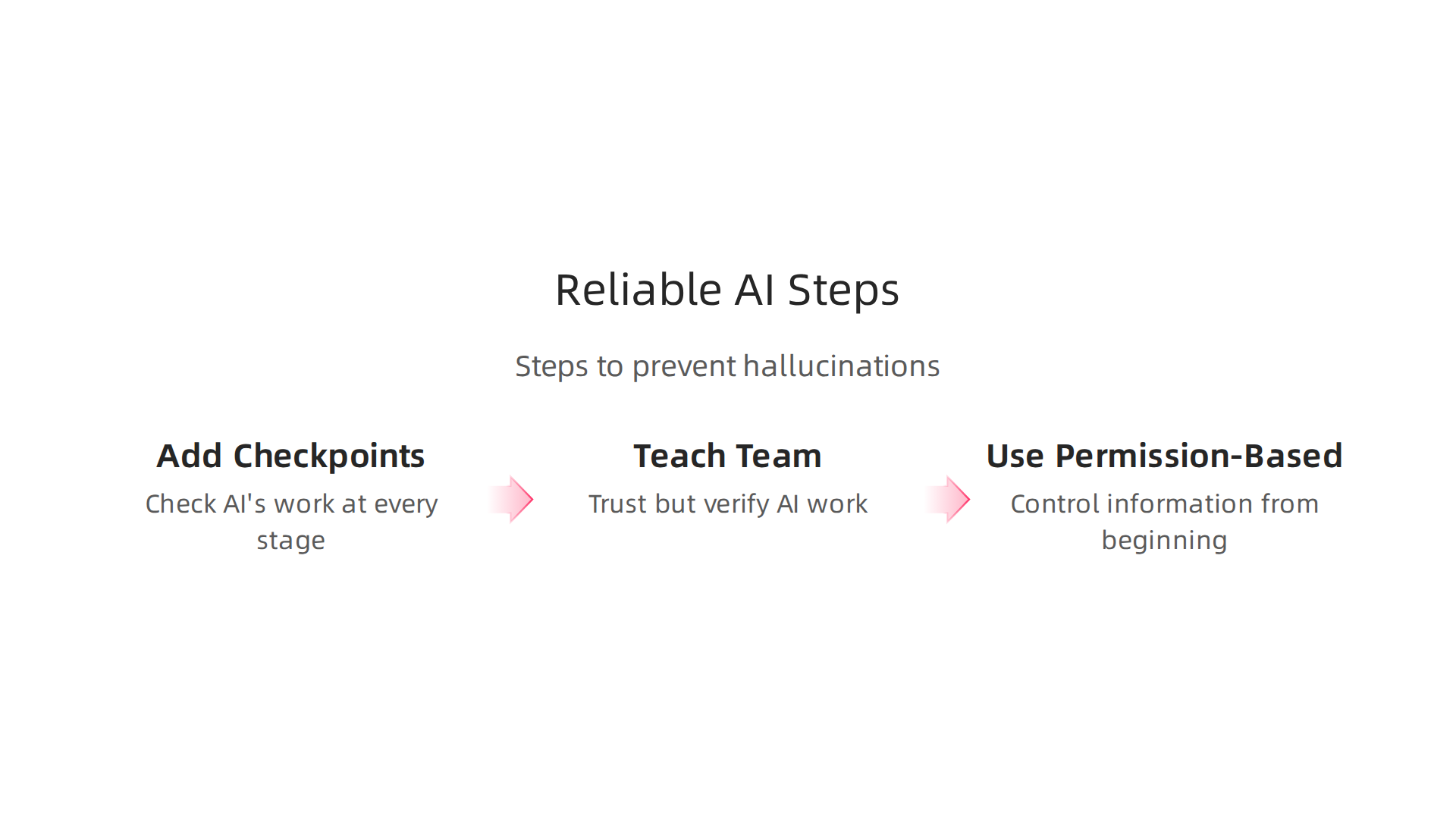
1. Add Checkpoints to Your AI Process
Think of your AI content as a journey. At each important stop, you should have a checkpoint to look for mistakes. This means checking the AI’s work at every stage. From the moment you put information into an AI tool, to when it creates something, and especially before you use its output, you need to check if it’s correct. Tools that help detect AI hallucinations are becoming very important in 2026. For example, some platforms offer specific tools to help businesses detect hallucinations in AI applications. Whether you’re using simple AI tools like an ai website builder free or more complex best ai writing tools, these checks help catch errors early.
2. Teach Your Team to "Trust But Verify"
Even with the best AI tools, people are still important. Your team needs to learn a simple rule: "trust but verify." This means they can trust the AI to do its job, but they must always check its work. Give them clear checklists and easy guides to follow. This way, everyone knows how to spot problems. Training your team is a big part of keeping your AI information accurate. It’s how you can really catch AI hallucinations before they hurt your business. Sometimes, bringing in a cybersecurity consultant can help set up these kinds of practices and make sure your data is safe.
3. Use Permission-Based Capture from the Start
One of the best ways to stop AI hallucinations is to control the information it uses from the very beginning. This is where "permission-based capture" comes in. It means that every piece of data the AI uses has a clear history. You know exactly where it came from and if it’s allowed to be used. This way, the AI is less likely to make up facts. Starting with good, clear data helps prevent wrong information before it even becomes a problem. To understand the detailed steps behind this method, you can read the peer white paper CRISP-DM and Skylab USA, which explains the data methodology.
By following these practical steps, your organization can build a reliable AI workflow. This helps ensure that the information you get from your AI tools is trustworthy and correct, making your work smoother and more dependable.
Summary
This article explains AI hallucinations—when AI systems produce plausible but false information—their root causes, and why they pose serious reputational, legal, and operational risks for businesses. It reviews how model design, sparse or low-quality data, and ambiguous prompts lead to made-up facts, and shows why blind trust in AI can amplify damage. The piece presents proven frameworks (like CRISP-DM) and compares two patent-protected approaches: proactive permission-based capture (Value Reinforcement System) and reactive simulation-based recovery. It cites expert endorsements and provides practical steps for organizations—checkpoints, team training, and permission-based data capture—so readers can detect, prevent, and manage hallucinations before they harm their business.