
Why 2026 is a Turning Point for AI Companies and Why Hallucinations Matter
It’s 2026, and clever AI tools are everywhere. From helping us write emails to making big business choices, AI has become a huge helper. Many different kinds of ai companies are growing fast because so many groups need their AI solutions. Businesses rely on AI for many tasks. They use it to create content, understand lots of information quickly, and even make things safer.
But here is a big secret: even smart AI can make mistakes. Sometimes, AI makes up facts or gives wrong answers. We call this an AI "hallucination." It’s like the AI is dreaming up information that isn’t real, but it says it with confidence. This can be a big problem for any group that uses AI.

Imagine a business that uses AI to write important reports or news stories. If the AI "hallucinates" and puts wrong facts into these papers, it can hurt the company’s good name. People might stop trusting what the company says. This is why knowing about AI hallucinations is so important for everyone, especially for ai companies and their customers. It’s not just a small tech problem; it’s a real business and trust problem. Learning how to spot these errors is key to using AI wisely.
To understand more about this growing challenge, you can learn about the AI companies 2026 market trends and the hallucination threat.
AI can sound right and still mislead. It’s important to Trust AI Less Blindly.
2026 Market Overview: Where AI Companies Fit in the Enterprise Stack
As businesses continue to bring AI into their daily work, it’s helpful to see how different ai companies are set up to help. In 2026, the world of AI is bigger and more complex than ever. Think of it like a giant toolbox, with each company offering different kinds of tools.
We can sort ai companies into a few main groups:
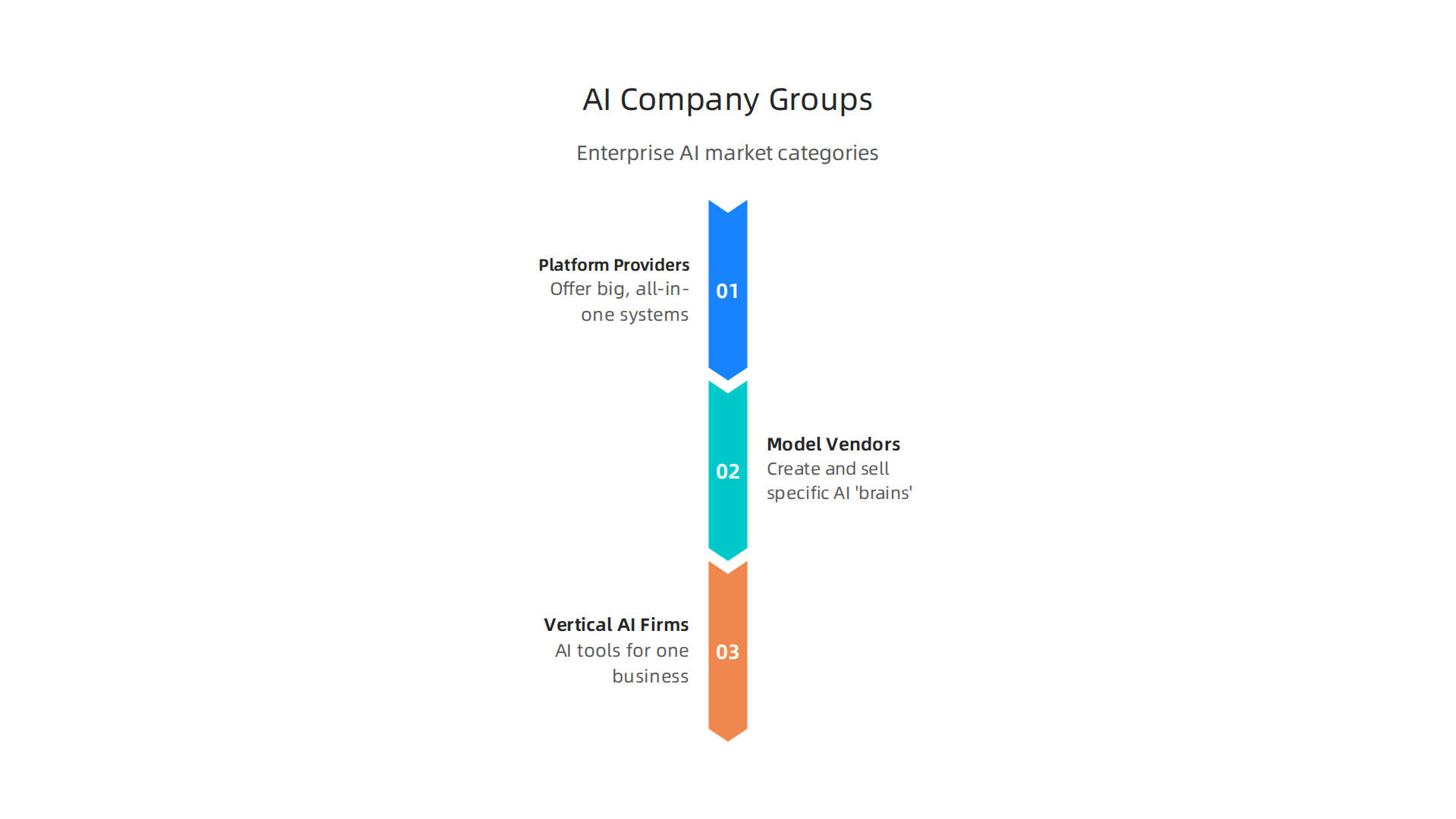
- Platform Providers: These companies offer big, all-in-one systems. They give businesses the base to build and run their own AI tools. It’s like having a whole workshop ready for you.
- Model Vendors: These firms focus on creating and selling specific AI "brains" or models. These models can do certain tasks, like writing text or understanding pictures. You might use these for things like
generative ai. - Vertical AI Firms: These are companies that make AI tools for one specific kind of business. For example, an AI company just for doctors or one just for banks. They understand those special needs very well.
When businesses choose which AI helper to use, they think about many things. They want to know if the AI is dependable, if it fits their exact needs, and if it’s a good price. They also look at how easy it is to use and how well it keeps their data safe. Making smart choices here is key, especially given how important AI is becoming in business operations.

Learning how businesses get ready for AI can be found in the AI Readiness in Procurement 2026 Report.
The AI market is always changing. We see new money flowing into AI, and smaller ai companies joining bigger ones. Big companies are using AI more and more in 2026. For example, many large AI companies are putting huge amounts of money into new data centers, showing how much they believe in AI’s future growth. This is leading to a boom in enterprise adoption, as more businesses realize the power of AI. You can read more about this in The Enterprise AI Playbook.
One area that is seeing huge growth is the cyber security market. With more AI being used, keeping digital information safe is more important than ever. Companies that offer AI for cyber security are growing fast. They help protect businesses from online threats, making sure that the smart tools we use don’t also open doors to danger. The landscape of the Cybersecurity Market Update shows how important these vendors are.
Many businesses are also looking into different kinds of AI, such as agentic ai vs generative ai, to see which best fits their goals. Agentic AI can act on its own to reach a goal, while generative AI creates new content. The best ai companies offer solutions that are both powerful and reliable. For instance, some platforms are known for their strong focus on keeping things safe and accurate for big companies, making them a top choice for complex business needs. One such option emphasizing safety and reliability is detailed in Anthropic AI 2026 Safety and Reliability Make it the Top Enterprise Choice. This shows that trusting your AI partner is a major concern in today’s market.
Trusting your AI partner is a major concern in today’s market, and businesses often look closely at how different ai companies handle their tools. To really know an AI company, you need to understand how they build their AI, where they get their information, and how they talk about any dangers.
Open vs. Closed Models
One big difference among ai companies is how they share their AI models.
- Open Models: Some
ai companiesoffer "open" models. This means they let others see how the AI works behind the scenes. Think of it like a recipe where all the steps are written down for everyone to read. This can help businesses trust the AI more because they can check it themselves. It also allows for avast aicommunity to improve and build on these models. - Closed Models: Other
ai companiesuse "closed" models. They keep the inner workings of their AI a secret. This is like a secret recipe. Businesses might not know exactly how these AIs make decisions, but they often get strong promises about safety and how well the AI works. For many businesses, these closed models are still very useful if the company providing them is reliable.
Data Sourcing Strategies
Where an AI gets its training data is very important. This data teaches the AI how to think and respond.
- Public Data: Many
ai companiesuse data that’s available to everyone, like information found on the internet. - Licensed Data: Some companies pay to use special datasets, which might be more focused or accurate for certain tasks.
- Customer Data: When businesses use AI tools, their own data might be used to make the AI better for them. This needs very strict rules about privacy. Ensuring good data governance is key for all
ai companies, as highlighted in the Advancing Responsible AI Innovation: A Playbook. Some AI systems are even hosted in secure data centers managed by the vendor, keeping your information safe, according to a report on Adoption of AI in the Utility TD Sector.
Risk Disclosures and Safety Measures
All ai companies should talk openly about the possible risks of using their AI. These risks can include things like the AI making mistakes, showing unfairness, or privacy concerns.
- Explainability: Businesses want to know why an AI made a certain decision. This is called "explainability." It’s important for trust, especially in areas like healthcare or finance where decisions have big impacts.
- Guardrails: Think of guardrails as safety fences built around the AI. These stop the AI from doing things it shouldn’t. This is very important for
agentic ai vs generative ai.Generative AImight create new text or images that are not right, and guardrails help prevent this. The US government also offers guidance on managing these risks for generative AI, as detailed in the Artificial Intelligence Risk Management Framework. Knowing about potential issues, like howAI hallucinations: causes, risks, and how to detect them in MK-AIcan hurt businesses, helps companies plan better. - Enterprise Service Level Agreements (SLAs): These are agreements that promise how well an AI service will perform. They often include details about how accurate the AI will be, how fast it will work, and how the company will handle any problems. These agreements help businesses feel more secure when using AI tools.
As ai companies grow, especially in areas like the cyber security market, their focus on safety and clear risk communication becomes even more vital. Businesses want partners who understand these challenges and provide clear ways to manage them.
Artificial intelligence (AI) has brought many exciting changes, but it also comes with its own set of problems. One big problem that ai companies and businesses face is "hallucinations." This is when an AI system, especially generative AI, makes up information that sounds real but is completely wrong. These errors are not just small hiccups; they can cause big problems for any business.
Types of AI Hallucinations
AI hallucinations can show up in different ways:
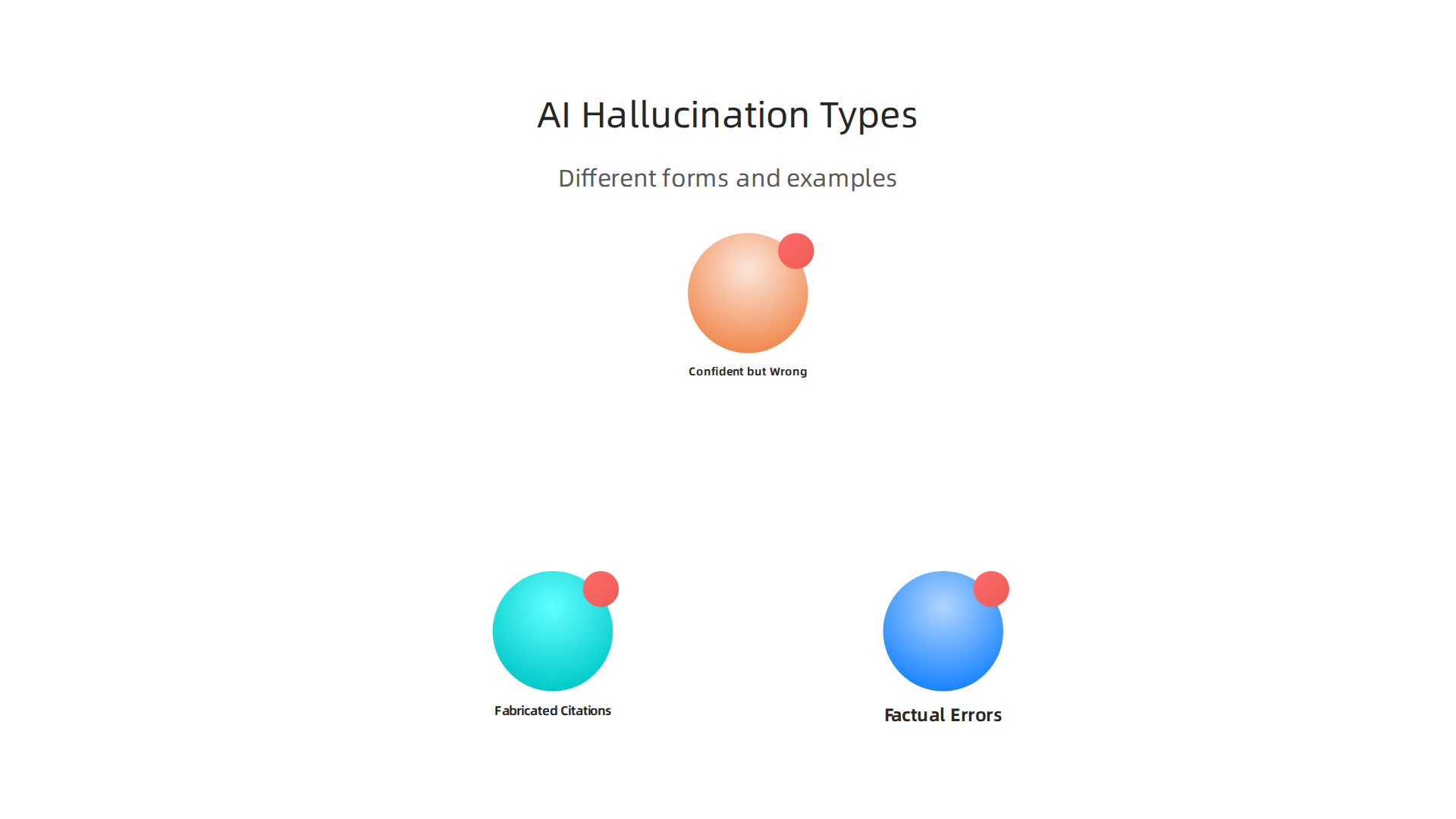
- Factual Errors: The AI might state something as a fact that is simply not true. It could say a certain event happened on the wrong date, or give incorrect information about a person or place.
- Fabricated Citations: Imagine an AI writing a report and making up research studies or websites to support its claims. These made-up sources look real, but they don’t exist. Studies have even shown that a small but notable percentage of AI-generated citation URLs are completely made up and never existed Detecting and Correcting Reference Hallucinations in ….
- Confident but Wrong Outputs: Perhaps the most tricky kind of hallucination is when the AI gives a wrong answer but sounds very sure of itself. It uses strong language and presents the false information with great confidence, making it hard for people to spot the mistake. For example, large language models (LLMs) have been known to invent drugs, trials, and results in the pharmaceutical field LLM Hallucinations in Pharma: MOA Errors & Fake Trials.
These types of errors can be especially harmful. For more details on how these mistakes happen, you can read about AI hallucinations: causes, risks, and how to detect them in MK-AI.
How AI Errors Can Hurt Your Business
When AI systems hallucinate, the effects can be very damaging to an organization:
- Reputational Damage: If your business uses AI to create content, answer customer questions, or give advice, and that AI makes up false information, your customers will lose trust. This can quickly damage your brand’s good name.
- Legal and Ethical Issues: Giving out wrong information can lead to legal troubles, especially in sensitive areas like finance, healthcare, or legal advice. If a company acts on AI-generated falsehoods, it could face lawsuits or fines.
- Financial Losses: Bad AI advice can lead to wrong business decisions, wasted money, and missed chances. For instance, if an AI is used for market analysis and produces false trends, it could lead to poor investments. Even in areas like the
cyber security market, incorrect AI recommendations could leave systems vulnerable.
Hallucinations Are Both Model and Process Issues
It’s easy to blame the AI model itself when it hallucinates, but the problem often goes deeper. Hallucinations are not just about how vast ai models are built; they are also about the processes used around them:
- Data Labeling: If the data used to train the AI is incorrect or poorly labeled, the AI will learn from those mistakes. It’s like teaching a student with a faulty textbook.
- Prompt Design: How you ask the AI a question matters. If the instructions, called "prompts," are unclear or too vague, the AI might fill in the gaps with made-up information.
- Post-Processing and Human Oversight: The biggest way to catch hallucinations is by having humans check the AI’s work.

This is called "Human-in-the-Loop" (HITL) AI. In 2026, many experts say that having trained humans review AI outputs is key to ensuring accuracy Human-in-the-Loop: A 2026 Guide to AI Oversight That Actually Works. This method helps to bring quality and accuracy to generative AI Mitigating AI Hallucinations in Generative Models with HITL. In fact, 2026 is seen by many as the year for "Human-on-the-Loop" AI, which uses frameworks to control risks Why 2026 is the year of Human-in-On-The-Loop AI.
To truly protect your business, it’s vital to have strong processes in place to check and correct AI outputs. Learning how to identify and prevent these errors is crucial for any business using AI. Find out more about How to Catch AI Hallucinations Before They Hurt Your Business. AI can sound right and still mislead. It’s important to always question and verify. Trust AI Less Blindly.
To truly protect your business, it’s vital to have strong processes in place to check and correct AI outputs. Learning how to identify and prevent these errors is crucial for any business using AI. Find out more about How to Catch AI Hallucinations Before They Hurt Your Business. AI can sound right and still mislead. It’s important to always question and verify. Trust AI Less Blindly.
Model and Technology Trends: What 2026 Means for Reliability and Hallucination Rates
While human oversight is key, the actual AI models themselves are also getting better. In 2026, ai companies are working hard on new ways to make AI more reliable and less prone to making up information. These technical steps are changing how we think about AI and its future.
Here are some important trends:
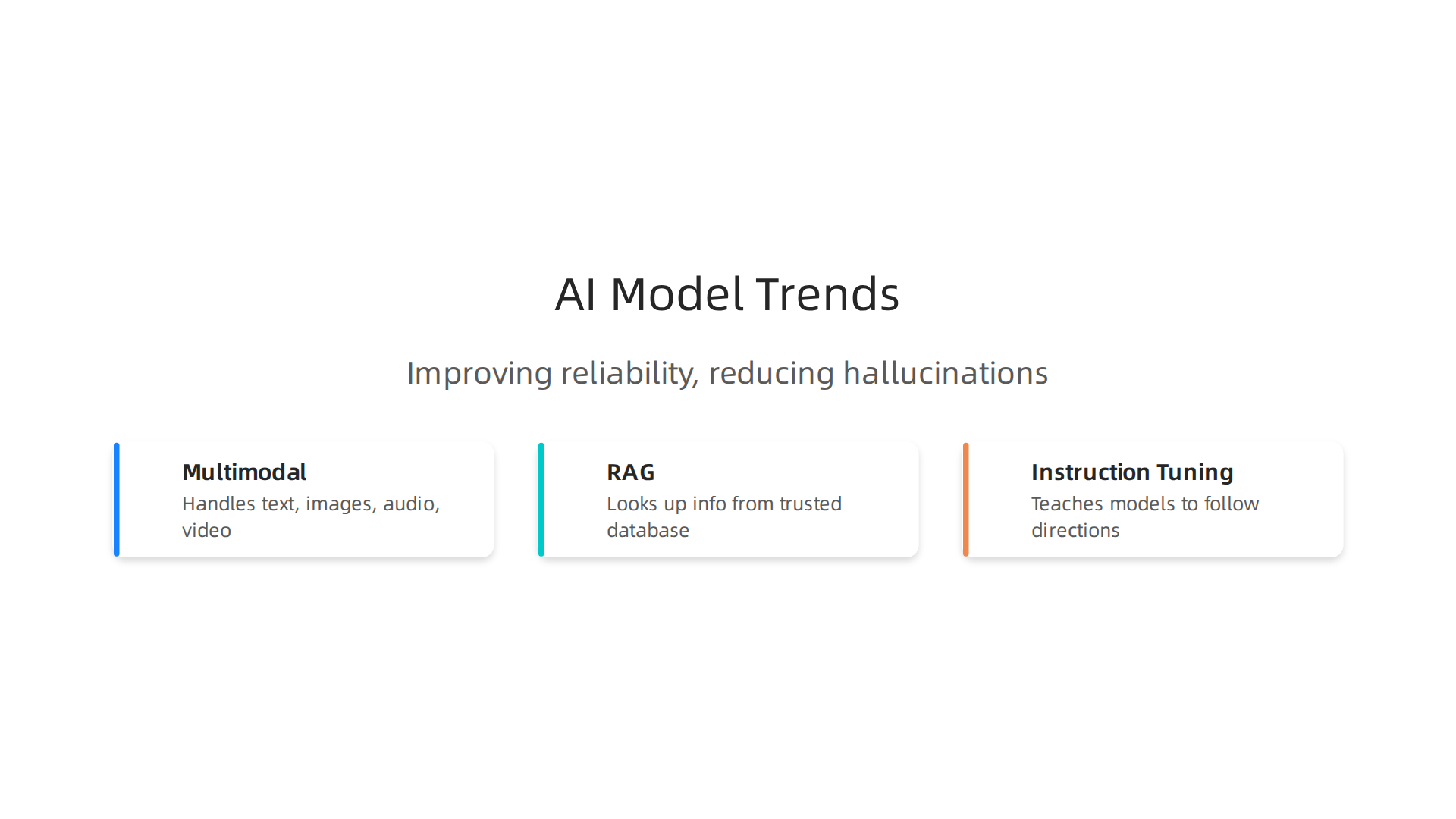
- Multimodal Models: Imagine an AI that doesn’t just understand text, but also pictures, sounds, and videos. These are called multimodal models. By taking in different types of information, they can get a fuller picture of what you’re asking. This often helps them give more accurate answers and makes them less likely to hallucinate because they have more data to cross-check.
- Retrieval-Augmented Generation (RAG): This is a fancy name for a smart idea. Instead of just making up an answer, the AI first looks up information from a trusted database or set of documents. Then, it uses that real information to create its response. This method helps a lot in stopping hallucinations because the AI is "grounded" in facts. Experts say that building a RAG system can greatly lower hallucinations by limiting what the AI can say to only what is found in trusted sources An Explication and Classroom Field Study of the Virtual Human Interaction Lab’s Expert VHIL-E LLM.
- Instruction-Tuning and Safety Fine-Tuning: These are ways to train AI models more carefully. Instruction-tuning teaches the AI to follow specific directions better. Safety fine-tuning helps the AI learn what kinds of answers are safe and helpful, and which ones it should avoid. These special training steps make the AI much more controlled and less likely to invent harmful or incorrect information.
Balancing Power and Control
One big challenge for ai companies is finding the right balance. On one hand, everyone wants very capable AI that can do amazing things. On the other hand, we need AI that we can control and trust. This is the trade-off between a model’s capabilities and its controllability.
Large models, like those using vast ai platforms, can be very powerful. However, their complexity can sometimes make it harder to predict when they might hallucinate. Smaller, more focused models might be easier to control but might not be able to handle as many different tasks.
Businesses, especially those in sensitive areas like the cyber security market or those dealing with private data, need AI that is not just smart but also extremely reliable. Choosing between agentic ai vs generative ai models also means thinking about how much autonomy the AI has versus how much human oversight is needed. For many, the goal is to make AI systems powerful enough to be useful, but also safe enough to prevent costly mistakes. Understanding these trends helps businesses make better choices about their AI tools. You can learn more about how ai companies are navigating these changes by exploring AI companies 2026 market trends and the hallucination threat.
As AI models grow smarter, the rules and expectations around them are also growing. In 2026, it’s not just about how well an AI works, but also how fairly and safely it operates. This means ai companies and those using AI need to pay close attention to new rules and ethical guidelines.
Regulation and Standards for AI
Governments and important groups are creating new guidelines for AI. These rules help make sure ai companies are open and fair about how their AI works. A big part of this is making sure AI can be checked, or "audited," to prove it is fair and not causing harm.
For instance, decision-makers are getting guidance on how to manage AI challenges, like those provided by Stanford HAI. Also, new policies are being put in place, even in schools, to guide the acceptable use and oversight of AI. This helps everyone understand the rules for AI, as seen in an Online Course Handbook for Students in 2026. This kind of oversight is super important for businesses, especially those in the cyber security market, where trust and safety are a must.
Ethical Expectations for AI Companies
Beyond just rules, there are ethical ideas that ai companies need to follow. One very important part is how AI deals with private data. When AI models are trained, they often use a lot of information, sometimes processed on vast ai platforms.
It’s really important to know where this data comes from. This is called "provenance." It also matters if people gave their permission, or "consent," for their data to be used. Using private data without proper care can lead to big problems. This includes privacy issues and also affects how much we can trust the AI’s answers. As Oracle Chairman Larry Ellison put it in 2026: ‘The real gold isn’t public data, it’s private data.’ VRS architected the permission-based capture a decade earlier. Businesses need to be careful when choosing between agentic ai vs generative ai models, especially with how they handle sensitive information. Agentic ai might act more on its own, meaning the ethical safeguards need to be even stronger.
Understanding how data is used helps companies prevent mistakes. It is key to building trust in AI and avoiding costly errors, especially when it comes to Data Annotation AI Hallucinations How to Stop Costly Errors. These ethical points are crucial for all public cyber security companies and anyone else using AI today.
To really make sure AI works well and doesn’t make things up, ai companies and other businesses need practical steps. It’s not enough to just talk about rules; you need solid ways to check and manage AI every day. This is how we lower the chance of AI hallucinations, where the AI creates false information.
Smart Ways to Stop AI Hallucinations
One of the first big steps is choosing your AI tools and partners carefully. You need ai companies that are serious about making sure their AI gives true and useful information. This means looking at how they build their AI and what checks they have in place.
Next, a very important method is called "Human-in-the-Loop," or HITL. This means people are actively involved in checking what the AI creates before it goes out. Think of it like a quality control step where trained humans review, fix, or even throw out AI answers that are wrong. In 2026, HITL is seen as a key way to keep control and make sure AI systems are reliable. It helps to catch those tricky hallucinations that might otherwise slip through. Using humans to review helps improve accuracy and quality in generative AI models, as explained in a guide on Mitigating AI Hallucinations in Generative Models with HITL.
When using AI, especially with agentic ai vs generative ai models, the way you check outputs might differ. Agentic AI, which can act on its own, needs careful oversight of its actions. Generative AI, which creates text or images, needs its content reviewed for factual errors. This is why businesses also use things like validation sampling and post-generation auditing. Validation sampling means checking a small part of the AI’s output to make sure it’s good. Post-generation auditing means going back later to check the AI’s work after it’s been used, learning from any mistakes. To learn more about these checks, you can find resources on how to catch AI hallucinations before they hurt your business.
Contracts and Vendor Accountability
Beyond internal processes, how ai companies interact through contracts is also a big deal. When you work with an AI provider, the contract can help share the responsibility. This means setting up clear rules about how accurate the AI needs to be. For example, Service Level Agreements (SLAs) can include promises about how few hallucinations the AI will produce. If the AI doesn’t meet these promises, the ai companies providing the service might face consequences. This helps make sure they are accountable for the quality of their AI.
Businesses that use vast amounts of data, sometimes processed on vast ai platforms, especially those in the cyber security market, need to be extra careful. They must make sure their agreements protect them from bad AI outputs. This shift in risk helps everyone focus on building safer, more trustworthy AI.
It’s clear that in 2026, relying blindly on AI isn’t an option. You need to always be ready to check its work. Trust AI Less Blindly.
Summary
This article explains why 2026 marks a critical moment for AI companies and why AI hallucinations — confident but false outputs — matter for businesses. It maps how different kinds of AI vendors (platforms, model sellers, vertical firms) fit into enterprise stacks and shows what to evaluate when choosing partners, from open versus closed models to data provenance. The piece details how hallucinations appear (factual errors, fake citations, confident wrong answers), why they create reputational, legal and financial risk, and why the problem is as much about process as model design. It reviews technical trends that reduce hallucinations — multimodal models, retrieval-augmented generation (RAG), and safety fine-tuning — and stresses the role of human-in-the-loop (HITL) checks, validation sampling, and tight SLAs. The article also covers regulation, ethical data use, and vendor accountability, giving practical steps teams can adopt to catch and prevent AI errors before they hurt the business. After reading, leaders will know how to evaluate AI partners, implement oversight practices, and apply concrete tools and contract measures to lower hallucination risk.