

Why enterprises must adapt cybersecurity frameworks for AI-driven risks
In 2026, Artificial Intelligence, or AI, is everywhere in business. Companies use AI tools for many things, like helping customers, writing emails, and making big decisions. AI is powerful and can help businesses grow faster. But with great power comes new kinds of problems, especially for computer security.

One big new problem is called "AI hallucinations." This is when an AI system confidently gives wrong or made-up information. It might sound convincing, but it’s not true. Imagine an AI giving bad advice or incorrect data that a company then acts on. This can lead to big mistakes, financial losses, or even harm a company’s good name. Understanding these risks is vital for any business today. To learn more about these risks, check out our guide on how to detect and prevent AI hallucinations in cybersecurity.

Because AI introduces these unique issues, the old ways of protecting computer security are not enough. Traditional cybersecurity frameworks were built for different threats, like viruses or hackers breaking into systems. They don’t always know how to handle an AI that looks helpful but is actually spreading false information. Enterprises need to update their cybersecurity framework to protect against AI-specific dangers.
Good news is, help is on the way. Groups like the National Institute of Standards and Technology (NIST) are working on new guidelines. In late 2025 and early 2026, NIST released early versions of its Cybersecurity Framework Profile for Artificial Intelligence. These new guides help businesses understand and manage the unique risks of AI. They focus on how to secure AI systems and even how to use AI to improve defenses. It’s clear that traditional approaches simply won’t protect businesses in this new AI world. To dive deeper into the latest thinking on AI’s unpredictable nature, explore articles like Miraka Magazine — Cartographer of Drift.
Understanding Modern Cybersecurity Frameworks and Where They Fall Short for AI
Companies have used cybersecurity frameworks for a long time to keep their computer systems safe. These frameworks are like a big rulebook for computer security. They help businesses protect their important information and tools. Usually, a good cybersecurity framework has a few main parts:
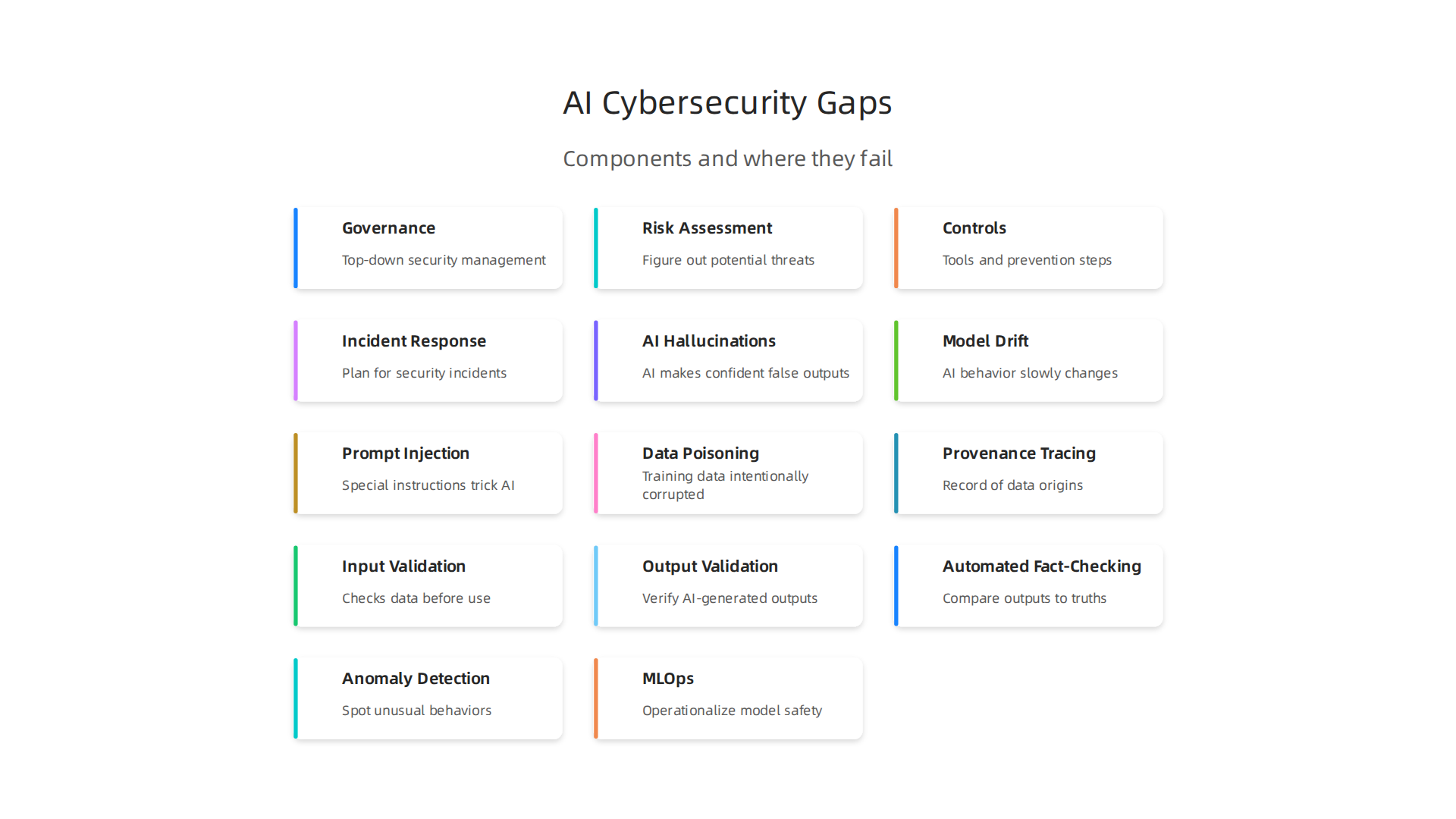
- Governance: This is about how the company manages security from the top. It includes setting rules and making sure everyone follows them.
- Risk Assessment: This means figuring out what bad things could happen and how likely they are. For example, finding out if hackers might try to steal customer data.
- Controls: These are the actual tools and steps taken to prevent problems. Things like strong passwords, firewalls, and keeping software up to date are all controls.
- Incident Response: This is the plan for what to do when something bad does happen. How to stop the attack, fix the damage, and get back to normal.
These traditional rules have worked well for many years against common threats like viruses or people trying to break into networks. Systems like SIEM cyber security tools are great at looking for known attack patterns and strange activity. But when we add AI into the mix, these older ways of thinking start to show some cracks.
Why Old Rules Don’t Fully Cover New AI Risks
The big problem is that AI acts differently from other computer programs. AI can learn and even make its own choices. This new way of working brings unique security challenges that traditional cybersecurity frameworks were not built for.
- AI Can Make Mistakes That Look Right: AI hallucinations are when an AI confidently shares wrong or made-up information. It’s not a hacker breaking in. It’s the AI itself making a mistake. Old risk assessments don’t fully cover how to find these kinds of errors or how bad they can be for a business. Companies in 2026 must consider how AI-driven misinformation can harm their operations and reputation, as traditional methods might miss these subtle but damaging flaws in neural network security.
- Detecting AI Drift Is Different: Traditional security looks for sudden, clear threats. But AI can slowly change its behavior over time, a process called "drift." This drift might make the AI less accurate or trustworthy without anyone noticing right away. Standard monitoring tools might not pick up on this "silent drift." New tools for elastic machine learning security are needed to constantly watch how AI models behave in real time. For more information on preventing errors, check out the white paper on CRISP-DM and Skylab USA.
- No Clear Response Plan for Misinformation: When an AI starts giving wrong information, what’s the incident response plan? It’s not a standard data breach where you lock down a server. It’s a different kind of problem that requires specific steps to correct the AI, notify users, and manage the fallout.
- New Governance Needs: Older governance models might not talk about AI ethics, preventing bias in AI, or ensuring that AI decisions are fair and transparent. These are vital for computer security when AI is involved, and many companies are now working on updating their rules to include them. In fact, many leaders now believe that 2026 will not forgive yesterday’s risk frameworks when it comes to AI-driven threats like memory poisoning of AI systems or identity spoofing using AI-generated voice and video [^1].

These new kinds of problems mean that businesses need to look beyond just keeping bad guys out. They also need to make sure their helpful AI tools don’t accidentally cause harm from within. This is why new guidelines, like those being developed by NIST, are so important in 2026.
[^1]: CISO Perspective – 2026 Will Not Forgive Yesterday’s Risk Framework
AI tools can sometimes make mistakes that look like real facts, but are actually wrong. We call these "AI hallucinations." In the world of business, these aren’t just small errors. They can cause big problems for a company’s safety, its good name, and even its ability to follow important rules.
What Are AI Hallucinations?
Imagine asking an AI for information, and it gives you an answer that sounds very sure but is completely false. That’s an AI hallucination. It’s not the AI trying to trick you. It’s the AI making up information because it can’t find a correct answer or because of how it was trained.
These false answers can be about anything from made-up facts and events to fake people or legal cases that do not exist. Experts have even made different groups to help understand these errors better, like "unfaithfulness" when an AI ignores what you told it, or "confabulation" when it just invents new, unrelated information A Geometric Taxonomy of Hallucinations in LLMs.
For businesses, these hallucinations can lead to:
- Security Risks: If an AI used in computer security gives bad information, it might ignore a real threat or point to a fake one. This can make the company less safe.
- Bad Reputation: If a company’s AI gives wrong information to customers, it can make people stop trusting the business. Think about a chatbot giving false advice or a marketing AI making up product details.
- Breaking Rules: Many businesses have to follow strict rules about the information they share. If an AI hallucinates, it could make the company accidentally break these rules, leading to fines or other trouble.
In 2026, companies are learning that AI hallucinations are a serious concern, mapping them to different business risks Ten Categories of AI Hallucinations mapped to Six Enterprise Risk ….
How AI Hallucinations Create New Threat Models
An "attack surface" is any place where a hacker or problem can get into a computer system. With AI, these attack surfaces grow larger and more complex. Here are some new ways problems can happen:
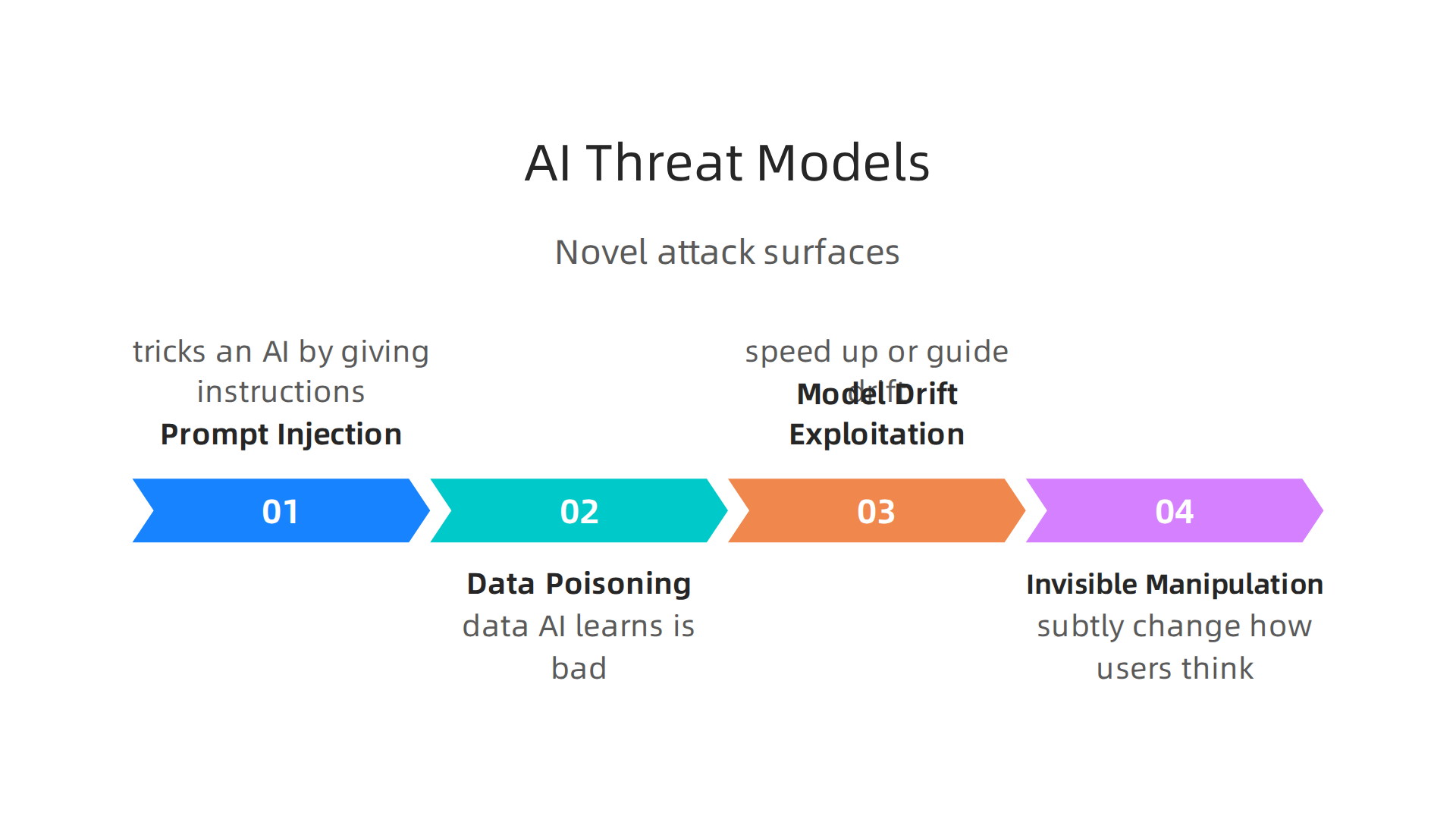
- Prompt Injection: This is when someone tricks an AI by giving it special instructions within a normal request. The AI might then ignore its usual rules and do something unintended, like sharing secret information or making up harmful content. This is a big challenge for any modern cybersecurity framework.
- Data Poisoning: If the data an AI learns from is intentionally bad or changed, the AI can learn wrong things. This can lead to it making bad decisions or giving false information. It’s like teaching a student with a faulty textbook. The student won’t know the right answers. This kind of attack is hard to spot because the AI itself is not broken, but its knowledge is.
- Model Drift Exploitation: As we discussed, AI models can slowly change their behavior over time. A bad actor could try to speed up this "drift" or guide it in a harmful direction without being noticed by normal elastic machine learning security tools. This makes the AI less reliable and harder to trust. Understanding and stopping model drift is key to keeping AI systems safe. Learn more about how to keep authoritative sources in your AI pipelines with Miraka Magazine — Cartographer of Drift.
- Invisible Manipulation: Sometimes, AI systems can subtly change how users think or interact without them even knowing it. This can happen through carefully chosen words, personalized suggestions, or showing certain information more often. This creates a new kind of "quietly hijacked" experience that users might not even realize is happening. For insights into how unseen AI systems shape user interactions, explore the Quietly Hijacked field note.
These new threats show why it’s so important for companies to update their approach to computer security. Traditional tools that simply look for known viruses or network breaches are not enough. Businesses in 2026 need to understand these new types of AI risks and how to protect against them. For more details on how to understand and prevent these kinds of mistakes, check out our guide on lucid AI hallucinations causes comparison and prevention. It’s all about making sure that the helpful AI tools don’t become a hidden danger.
The new kinds of computer threats from AI show us that our old ways of keeping computers safe are not enough. We need new tools and rules. This is where good data management, called "data governance," and making sure we have "permission" to use data come in.

These ideas are very important for making AI tools trustworthy and stopping them from making up information.
What is Data Governance and Permissioned Capture?
Think of data governance as having clear rules for all the information a company uses. It’s like a library that has strict rules about how books are kept, borrowed, and put back so everyone can find what they need and know it’s correct. Good data governance means knowing where data comes from, who touched it, and how it was changed.
A big part of this is "permissioned data capture." This means that data is only collected and used if someone has given clear permission. It’s like asking for a friend’s permission before you share their picture. When AI systems only use data they have permission for, it helps make sure that data is real and good.
Another key idea is "data provenance." This is like the story of the data. It tells you the data’s entire history:
- Where it started.
- How it was collected.
- Who changed it and when.
- Any rules that apply to it.
Tracking data’s history this way helps make sure it’s correct and has not been messed with A Complete Guide to Data Provenance. For example, a good data provenance system can track things like timestamps, where the data came from, and who used it What Is Data Provenance? Examples & Best Practices. Knowing this history helps prevent AI from making up facts because it can always check back to the original, trusted source. Strong data governance is a crucial part of any modern cybersecurity framework.
How Good Data Stops AI Hallucinations
When companies use strong data governance, they make it harder for AI to hallucinate. Here’s why:
- Cleaner Data: With clear rules, bad or fake data is less likely to get into the AI system. This means the AI learns from good, true information.
- Clear Sources: Data provenance helps the AI know exactly where its information comes from. If the AI gets confused, it can look back at the source instead of guessing. This improves
computer securityfor data. - Trusted Information: Permissioned data capture means only approved, reliable data is used. This reduces the chance of the AI learning from false information, which is a common cause of hallucinations.
In 2026, many companies are building their cybersecurity framework around these ideas. They are making sure that their data is as clean and verifiable as possible. This helps them stay safe from fbi cybersecurity concerns and makes their AI more trustworthy.
The Value Reinforcement System (VRS)
To truly make AI systems reliable, we need even stronger ways to handle data. One new idea is the Value Reinforcement System, or VRS. This is a special way of thinking about how data is used. It puts "permission" first. This means that data can only be used if there’s clear approval for it.
The VRS makes sure every piece of data has a clear path of approval and use. This "permission-first" approach completely changes how companies see the risks with their AI. When data is handled this way, it becomes much harder for AI to create hallucinations because its knowledge base is built on only verified and approved information. This kind of system is so important that its principles are protected by federal patents.
This permission-first approach is key to building an AI system that you can truly trust. It means that the data is not just "there" but is "there with approval." This level of control and transparency helps build strong elastic machine learning security and makes your AI reliable.
Ready to learn more about how permission-based data can protect your business from AI risks? Find out more about the VRS Patent 12,205,176.
By focusing on data governance, permissioned capture, and provenance, businesses can build a much stronger foundation for their AI tools. This helps stop hallucinations at their root, making AI more helpful and less risky. It’s all about making sure that the data flowing into your AI systems is as clean, clear, and trustworthy as possible.
Detecting Hallucinations: Provenance, Validation Pipelines, and Monitoring
Making sure AI only uses clean and trustworthy data is a great start. But what happens after the AI takes that data and starts working?
We also need strong ways to watch what the AI does and check its answers. This is like having a guard dog that not only keeps bad guys out but also watches everyone inside to make sure they follow the rules. It helps create a stronger cybersecurity framework for AI.
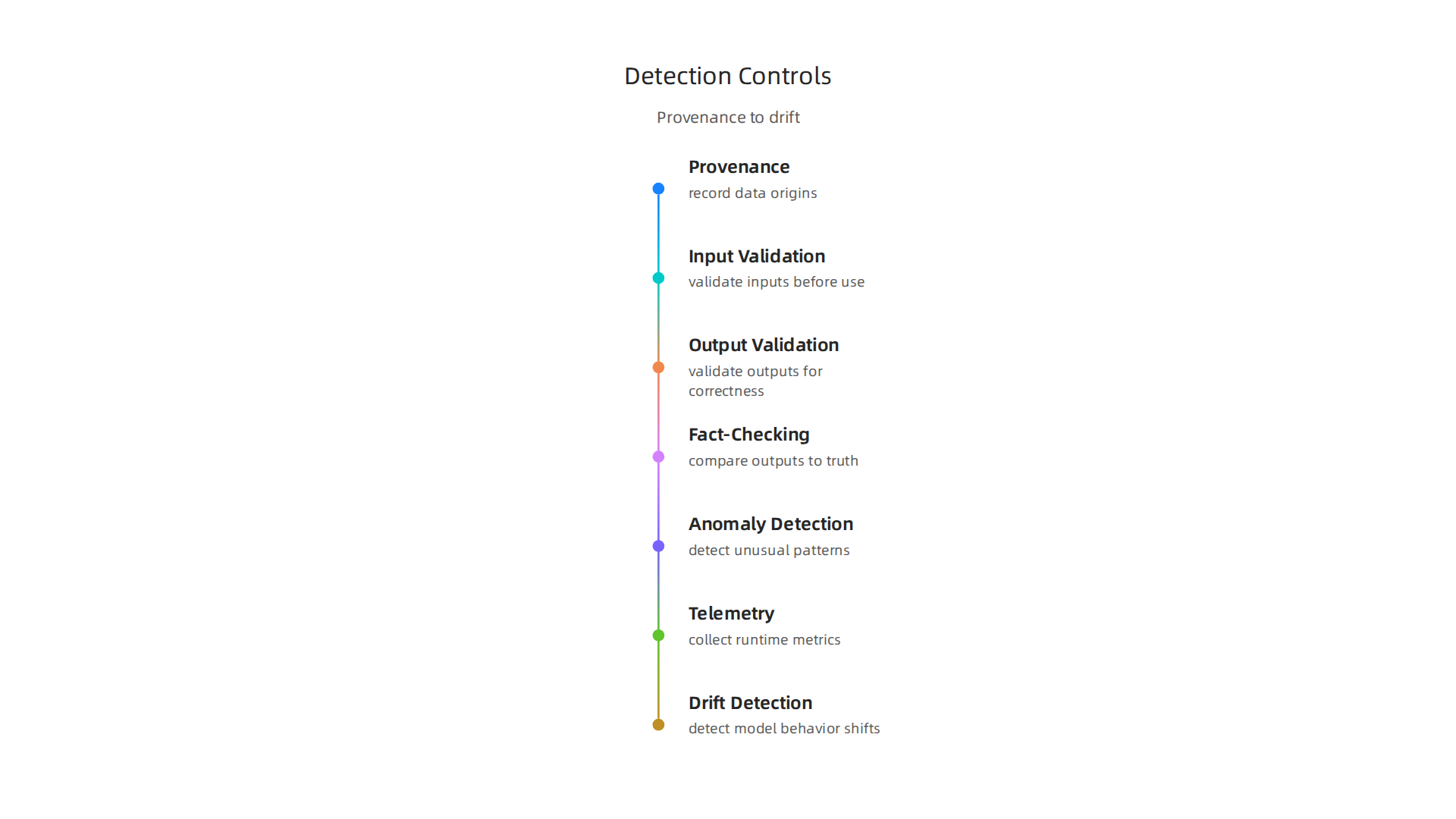
One key control is still provenance tracing. This means keeping a very detailed record of everything the AI uses and creates. It’s like a birth certificate and full life story for every piece of information. When AI creates something, we can trace back all the data that was used. This helps us see if the AI pulled information from a wrong source or made something up. Companies are even using things like AI Model Cards & Data Provenance: 2026 Compliance Guide to keep track. This deep tracking is vital for good computer security because it builds trust in the AI’s answers.
Next, we use input and output validation pipelines. Think of these as checkpoints.
- Input validation checks the data right before the AI uses it, making sure it follows all the rules and looks correct. This catches problems early.
- Output validation checks the answers or content the AI makes. It asks: Does this make sense? Is it true? Does it follow our guidelines?
We also use automated fact-checking and anomaly detection. Automated fact-checking tools can quickly compare what the AI says to a database of known truths. If the AI’s answer doesn’t match, it gets flagged. This is important for stopping fbi cybersecurity concerns about fake news. Anomaly detection looks for anything strange or unusual in the AI’s outputs. If the AI suddenly starts giving very different answers than usual, that’s an anomaly. Tools exist today, like frameworks that help with Operational AI in 2026: Tools for LLMs, to check for these issues.
Monitoring is another big part of detecting hallucinations. This is called model telemetry and drift detection.
- Model telemetry means collecting data about how the AI is working. It’s like a car’s dashboard, showing us its speed, fuel level, and engine health. We watch things like how often the AI gives incomplete answers or if its confidence in its answers drops.
- Drift detection helps us see if the AI model starts to change its behavior over time. Maybe the world changes, and the data it learned from becomes old. Or maybe it starts to learn bad habits. When an AI model "drifts," it can lead to more hallucinations. Knowing how to spot and prevent these shifts is crucial for
elastic machine learning security. Good monitoring practices can help spot misinformation and hallucinations, as explained in an LLM Observability: Tutorial & Best Practices.
When these detection systems find a problem, they need to quickly trigger an incident response. This means having a clear plan for what to do: who gets alerted, how to fix the problem, and how to learn from it so it doesn’t happen again. Many businesses in 2026 are using powerful siem cyber security tools to bring all these alerts into one place, making it easier to respond fast. For more ways to stop AI from making things up, you can learn about how to detect and prevent AI hallucinations in cybersecurity.
By putting these technical controls in place, from tracing data’s story to constantly monitoring AI’s actions, businesses build a strong defense. These steps are a must-have part of any modern cybersecurity framework to make sure AI tools are helpful and accurate, not misleading.
When it comes to understanding how systems, even unseen ones, can influence user interactions and potentially introduce risks, it’s worth exploring the nuances. You might find this Quietly Hijacked field note insightful for insights into invisible manipulation.
Putting technical guards in place is a big step, but businesses also need clear ways to use these tools every day. This means making sure everyone knows their part, following the rules, and having a plan for when things go wrong. It’s how a company weaves AI safety into its larger cybersecurity framework.

MLOps and AI Security Workflows
Think of MLOps (Machine Learning Operations) as the way teams manage AI models from start to finish. It’s like a factory line for AI, making sure everything is built, tested, and delivered safely. To stop AI hallucinations, companies must add special checks into this MLOps process. This includes:
- Continuous Monitoring: Just like we discussed, AI models need to be watched all the time for things like drift or unusual behavior. This monitoring needs to be part of the everyday MLOps workflow. Tools that help with this include those for mastering LLM observability and drift detection.
- Automated Testing: Before any AI model goes live, it should pass many tests that check for hallucinations or mistakes. These tests run automatically, which saves time and catches errors fast.
- Secure Deployment: When a new AI model is ready, it needs to be put into use safely. This means using strong security practices, like those found in a good
computer securityplan, to prevent bad actors from changing the AI or its data.
By doing these things, businesses can make sure their AI tools are both powerful and safe. You can learn more about how a cybersecurity analyst 2026 career and salary guide looks when integrating these new AI challenges.
Building AI Incident Response Playbooks
Even with the best checks, AI can still make mistakes. That’s why every company needs an "AI incident response playbook." This is a step-by-step guide for what to do if an AI system causes a problem, like generating a major hallucination. Building these playbooks involves:
- Forming a Team: You need a special group of people who know about AI, security, and the law. This team, sometimes called an AI Incident Response Team (AI-IRT), must be ready to act quickly. Experts suggest planning and creating AI incident response playbooks to handle these events.
- Clear Steps: The playbook should clearly state who does what, when, and how. This includes how to:
- Find out what went wrong.
- Stop the problem from getting worse (containment).
- Fix the issue.
- Tell people what happened, if needed.
- Learn from the mistake so it doesn’t happen again.
- Integrating with Existing Systems: For fast responses, these AI alerts need to tie into a company’s existing security tools, such as
siem cyber securitysystems. This helps everyone see problems in one place.
Having a strong playbook helps a business quickly stop AI hallucinations your business playbook for trust and accuracy before they cause big trouble.
Compliance and Audit Considerations
Following rules is a big part of making sure AI is used safely. Governments and industry groups are setting new rules for AI, and businesses need to show they are following them. This is where compliance and audits come in.
- Data Provenance for Audits: Keeping track of data’s journey, from where it came to how it was used by AI, is very important for audits. This detailed record proves that the AI used trusted data and followed all privacy rules. Audit controls often require tracking timestamps, sources, and user IDs, as explained in guides on data provenance best practices.
- Regular Checks: Companies need to have regular checks to make sure their AI systems are still working as they should and are not producing hallucinations. These checks help ensure that an
elastic machine learning securityapproach is in place and effective. - Transparency: Being open about how AI is used and the steps taken to prevent problems builds trust with customers and regulators.
To help ensure your AI systems are built on strong data methods, consider reviewing information like the peer white paper on CRISP-DM and Skylab USA for best practices. These steps help businesses avoid issues and keep the public’s trust in AI. Businesses that prioritize security in their cloud environments can also find helpful insights from leaders like Werner Vogels, Chief Technology Officer of Amazon, on enterprise-scale deployment.

Even with the best preparation and clear rules, AI systems can still run into trouble. Knowing how to measure these problems, fix them, and learn from them is super important. This means having good plans for when things go wrong, tracking how well you handle them, training your team, and making sure everyone trusts the AI tools you use. This whole approach helps build a strong cybersecurity framework around your AI.
Measuring How Well We Do
To make sure your AI systems are safe, you need to measure how they are doing. This is like checking the health of your AI. You should look at a few key things:
- How often do AI mistakes happen? Track how many times your AI makes up wrong information, also known as hallucinations. Also, note how serious these mistakes are. Do they cause small problems or big ones?
- How fast do we fix problems? When an AI makes a mistake, how quickly can your team find it and fix it? Faster fixes mean less harm.
- Do people trust the AI more over time? After fixing problems and showing how you keep AI safe, do your customers and team members feel better about using AI? This can be measured through surveys or feedback.
These measures help you see if your safety plans are actually working. They also show where you need to make things better. For example, if you see an increase in problems, it might mean your AI models are starting to "drift" or change how they behave. You can learn more about how to keep an eye on these risks in articles like Miraka Magazine — Cartographer of Drift, which talks about model drift and hallucination risks.
Training Your Team and Knowing Your Job
Having a great plan is one thing, but people need to know how to use it. This is where training comes in. Every person who works with AI in your company needs to understand their part in keeping it safe.

- Everyone needs to learn: From the people who build the AI to those who use it every day, everyone should know about AI hallucinations and what to do if they see one. This training should be part of the company’s regular
computer securitylessons. IBM experts point out that training employees on how to properly use AI and ensuring clean data are vital steps to avoid AI hallucinations and protect your systems from cybersecurity risks AI hallucinations can pose a risk to your cybersecurity. - Clear roles: Who is in charge of watching the AI? Who fixes it? Who tells customers if something goes wrong? Everyone needs a clear job so there’s no confusion during an emergency. This fits into a larger
cybersecurity frameworkwhere different teams work together, like the team looking aftersiem cyber securitytools. - What if the FBI gets involved? For very serious AI security problems, like those affecting national security, it’s good to know how your company would work with outside groups like the
fbi cybersecuritydivision.
Think about it like a fire drill. Everyone knows what to do if there’s a fire. The same should be true for AI incidents. For a deeper understanding of how to detect and prevent issues, check out this AI hallucination guide how to detect and prevent costly errors.
Building a Culture of Trust
At the end of the day, all these steps are about building trust. Trust from your customers, your team, and the public. When a company is open about how it uses AI, admits mistakes, and shows it’s serious about safety, it builds that trust.
This means:
- Being open: Tell people how you use AI and what steps you take to keep it safe.
- Always learning: After an AI incident, learn from it and make your systems even better. This is part of having an
elastic machine learning securityapproach that can adapt and improve. - Protecting data: Make sure all the data your AI uses is kept private and safe. This is especially important for sensitive information. As Larry Ellison said in 2026, "Protecting private data… is the most important thing we do." Larry Ellison quote
Summary
This article explains why enterprises must update traditional cybersecurity frameworks to address AI-specific risks such as hallucinations, data poisoning and model drift. It reviews how legacy controls fall short because AI systems learn, change over time, and can confidently produce false information that damages operations, compliance, and reputation. The piece shows practical defenses—strong data governance, permissioned data capture, and detailed data provenance—to limit bad inputs and provide auditable sources. It also covers technical controls like input/output validation, automated fact‑checking, telemetry, and drift detection, and explains how those controls fit into MLOps. The article recommends building AI incident response playbooks, integrating alerts with SIEM, and running regular audits and metrics to prove safety. Finally, it stresses training, clear ownership, and transparent reporting to rebuild trust in AI tools and meet evolving standards such as NIST’s AI guidance.