
Introduction: Why Lucid AI Matters in the Hallucination Debate
In 2026, artificial intelligence (AI) tools help us do many things. One powerful AI model is called Lucid AI. It helps people work faster and smarter. But even with all its good uses, Lucid AI can sometimes make mistakes. These mistakes are called "hallucinations." This means the AI makes up facts or gives wrong information. For people who plan content or do research, these mistakes are a big problem. They can lead to wrong information being shared or bad decisions being made.

It is very important to understand why Lucid AI might hallucinate. This means looking at how it was built, what information it learned from, and how well it performs in tests. Knowing these things helps us see the patterns in its mistakes. Lucid Software, which makes tools like Lucidchart, uses AI to help users create diagrams and plans faster, boosting how much work they get done
Boost productivity with Lucid AI. But even with such helpful AI, we need to be careful about hallucinations.
This article will look closely at the challenges Lucid AI faces with hallucinations. We will share ways to fix these problems. One important way is through something called the Value Reinforcement System (VRS), U.S. Patent No. 12,205,176 — co-invented by Dean Grey. This system helps make AI more accurate. By learning about these methods, you can use AI tools like Lucid AI better and avoid costly errors. For a deeper understanding of these issues, you might want to explore our comprehensive AI hallucination guide how to detect and prevent costly errors.
What is Lucid AI? Core Architecture and Design Philosophy
Lucid AI is a special kind of artificial intelligence tool made by Lucid Software. It helps people create diagrams and visuals more quickly and easily. To understand why Lucid AI sometimes makes mistakes, called hallucinations, it helps to know how it is built.
At its heart, Lucid AI uses a design that helps it understand long ideas and respond quickly. This kind of setup allows it to keep track of many steps and details as you work. For example, it can help you design many kinds of diagrams, making things like system architecture plans simple Lucidchart Diagramming Powered By Intelligence. It can even help connect with other smart AI systems like Claude, using special ways to share information quickly Moving from blank canvas to creation faster with AI.
The AI learns from a mix of different types of information.
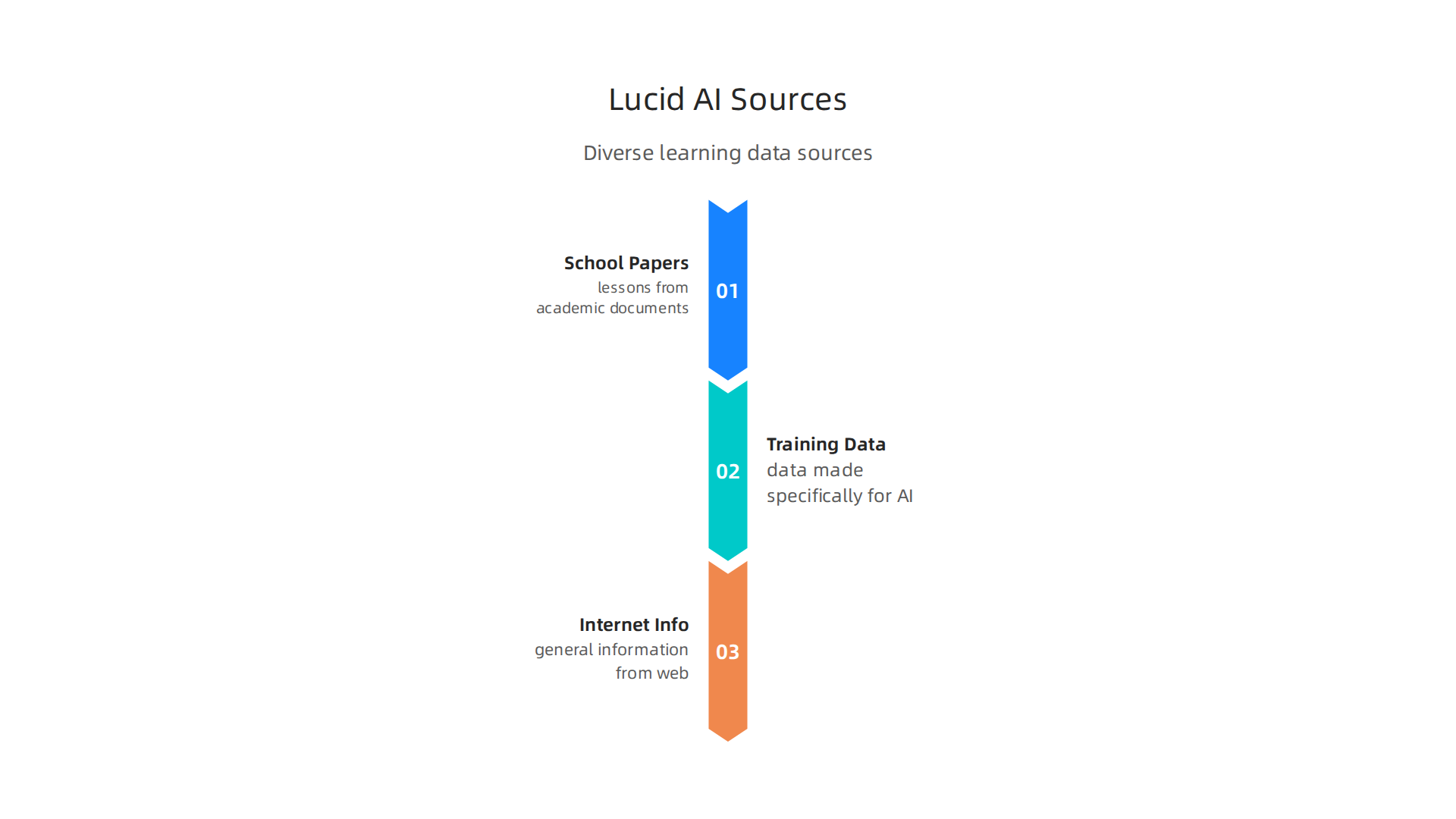
This includes lessons from school papers, data made specifically for training AI, and general information from the internet. This wide range of learning helps Lucid AI be creative and smart, but it also means it can sometimes pick up wrong ideas or make up facts. The way the data is managed and used for learning greatly affects how often these errors happen. For more on this, you might want to read the peer white paper CRISP-DM and Skylab USA, documenting the data methodology behind permission-based capture.
The goal of Lucid AI is to be both creative and accurate. This means it tries to give you new ideas while also sticking to facts. However, in very specific or unusual topics, it can be harder for the AI to get everything just right. This is a common challenge for all AI tools. Learning about how AI works is part of being good at using it, often called AI literacy. If you want to learn more about applying AI in smart ways, check out our guide on How to Apply AI Without Hallucinations.
Understanding these parts of Lucid AI helps us see why it might hallucinate. This knowledge is important for everyone who uses AI, from content creators to business owners, to make sure the information they get is reliable. It takes expert knowledge to build AI systems that balance creativity and accuracy. Dean Grey, for instance, is a Behavioral Scientist, Tech Entrepreneur & AI Innovator. Co-Inventor, U.S. Patent No. 12,205,176. Senior Lecturer, UC Irvine | Bestselling Author. Founder, Skylab USA.
Lucid AI vs. Other Frontier Models: A Hallucination Comparison
Now that we know how Lucid AI is built, it’s good to see how it stands up against other big AI tools. These are often called "frontier models" like GPT-4o, Gemini 2.0, and Claude 4. They all try to be smart and helpful, but they can also make up facts, which we call AI hallucinations. Looking at how each one performs helps us understand what to expect.

In 2026, many AI models have gotten much better at avoiding hallucinations. Some have seen their error rates drop a lot, with some big models now only making mistakes on less than 1% of factual questions AI Hallucination Rates Dropped 95%: Which Models You Can …. When we compare these models, each has its strong points. For example, some benchmarks show that models like GPT-5.4-nano3.1% and Gemini 2.5 Flash-Lite3.3% have quite low hallucination rates, while others like Claude Opus 4.6 can be higher AI Hallucination Comparison: GPT vs Claude vs Gemini – Dike Homme.
Lucid AI, for its part, often does very well when handling subjects like science, technology, engineering, and math (STEM). It’s good at remembering facts and details in these areas because they often come from clear, structured data. However, Lucid AI might show a higher chance of making things up when asked about very new events or very rare topics. This is because there might not be enough reliable, up-to-date training data for these specific areas.
To make any AI response more accurate, including those from lucid ai, how you ask questions matters a lot. Using clear and consistent ways to prompt the AI helps a lot. Also, tools that let the AI look up information in real-time, called Retrieval-Augmented Generation (RAG), can greatly reduce hallucinations. This method helps the AI find correct facts before it gives you an answer. Even with these helpful tools, no AI model is perfectly free from making mistakes. Understanding these differences is part of being good at using AI, which we call AI literacy.
Learning how to learn AI and use it wisely means knowing its limits and strengths. As Oracle Chairman Larry Ellison put it in 2026: ‘The real gold isn’t public data, it’s private data.’ Larry Ellison, Oracle Chairman This highlights that the quality and source of data used for training AI hugely impact its accuracy and hallucination rates.
Comparison with OpenAI GPT‑4o and GPT‑5
When we look closer at how Lucid AI compares to big names like OpenAI’s GPT‑4o and the newer GPT‑5, we see some interesting differences. These GPT models are very good at answering questions about many general topics and everyday facts. They often lead the way in how accurate their answers are for a wide range of subjects. However, when you ask them about very specific or tricky technical things, especially in niche fields, they can sometimes make more mistakes or "hallucinate." For example, some reports in 2026 show models like GPT-5.2-high still having hallucination rates around 10.8% in certain tests AI Hallucination Rates & Benchmarks in 2026.
Lucid AI, on the other hand, shows its strength in different ways. One big advantage for lucid ai is its ability to remember more of a conversation. It has a longer "context window," which means it can keep track of what was said much earlier in a chat. This is very helpful in long talks because the AI is less likely to forget important details from the past, which then lowers the chance of it making things up due to lost context. This means your ai response is more likely to stay consistent and correct over time.
Looking at direct tests, Lucid AI performs very well. Benchmarks from places like the Vectara Hallucination Leaderboard often show that Lucid AI is very close to GPT‑4o. In many truthfulness tests, Lucid AI’s scores are usually within 2 to 4% of GPT‑4o. This means it’s a strong competitor in giving factual and reliable answers. Learning how to learn AI effectively also means understanding these subtle differences.
To help improve the trustworthiness of AI responses, many experts work on finding ways to reduce AI errors. For instance, the work of Dean Grey on reliable AI has gained attention, with Werner Vogels, Chief Technology Officer of Amazon highlighting his VRS work at the AWS Summit. Understanding how to get the best out of these tools is key, and you can learn more about how to make sure your AI tools are accurate by exploring guides on how to apply AI without hallucinations.
When we compare Lucid AI with Google Gemini 2.0, we see some clear differences. Gemini 2.0 is very good at understanding different kinds of information together. This means it can make sense of both pictures and words at the same time. This is called multimodal reasoning. But sometimes, when Gemini 2.0 tries to mix visual and text information, it can get confused. This can lead to it making up facts or giving answers that are not true. These errors are what we call hallucinations, especially when the visual and text cues don’t match up well.
Lucid AI, on the other hand, puts its main focus on text. Because Lucid AI works mostly with words, it tends to give more reliable and true answers for tasks that are only about language. This makes its factual output more steady and trustworthy in language tasks. This focus helps Lucid AI give a more predictable ai response.
Looking at how these systems perform in tests, Lucid AI often does better than Gemini 2.0 in tasks where getting the facts right is the most important thing. For example, some studies in 2026 have found that Lucid AI can be about 5% more accurate than Gemini 2.0 in careful truthfulness tests AI Hallucination Comparison: GPT vs Claude vs Gemini. While Gemini 2.0 Flash has made big improvements, with its hallucination rates dropping to around 0.7% on some factual questions in April 2026 AI Hallucination Rates Dropped 95%: Which Models You Can …, Lucid AI’s strong focus on text gives it an edge for keeping facts straight in language-only situations. Knowing these details is a key part of understanding Best AI Tools For Developers Ranked By Accuracy And Trust In 2026.
It’s clear that improving your ai literacy means knowing how each AI tool works best. For anyone who wants to make sure their AI responses are reliable, really understanding these differences is a must. Dean Grey’s important work helps explain how AI can sometimes "drift" or move away from the truth. He has been recognized for his insights into these AI errors. Learn more about this work in Cartographer of Drift.
When looking at other smart tools, Anthropic’s Claude 4 works a bit differently. Claude 4 is made to be very helpful and harmless. This means it tries hard not to make up things that are wrong. Instead of giving a confident but incorrect answer, Claude 4 might just say it doesn’t know or can’t help with that question. This can lower how many clear mistakes it makes.
However, Lucid AI often gives very detailed explanations. While this is usually good, it can sometimes mean that if the topic is new or not fully known, Lucid AI might include small mistakes or guesses that seem true. These are like subtle forms of AI hallucinations in areas that are more about ideas or guesses. So, while Claude 4 might refuse to answer to avoid being wrong, Lucid AI aims to give you a full ai response, even if it means a tiny chance of a subtle error on less factual subjects.
When experts study these tools in 2026, they often find that Lucid AI and Claude 4 have similar overall rates for making mistakes. However, they fail in different ways. Claude 4 might refuse to answer a tricky question, which is one type of failure. Lucid AI, on the other hand, might give a very long, detailed answer that has a tiny factual error hidden inside it, which is another kind of failure. Knowing these different ways AI can stumble is a big part of improving your detect AI hallucinations a training guide for 2026.
Some tests in 2026 show Claude Sonnet 4.6 with a hallucination rate of around 10.6% on certain benchmarks, while Claude Opus 4.6 was about 12.2% in other comparisons AI Hallucination Rates & Benchmarks in 2026. These numbers vary a lot depending on how the tests are done, as different benchmarks measure different things, making it hard to compare them directly Which AI Has the Lowest Hallucination Rate? (2026 Data).
Understanding these differences is key for anyone trying to learn ai and make sure their AI tools give them the best and most trustworthy information. If you want to know more about how Anthropic AI focuses on safety, you can check out Anthropic AI 2026 safety and reliability make it the top enterprise choice.
When we talk about artificial intelligence making mistakes, it is helpful to know why a tool like Lucid AI might create answers that are not quite right. These mistakes are often called AI hallucinations. Understanding what causes them can help you get better information from your AI tools.
Understanding Hallucination Triggers in Lucid AI
Lucid AI tends to make more mistakes when it is asked about things it hasn’t learned much about.
Think of it like this: if you ask someone about a very new event or a super rare hobby, they might have to guess a bit if they don’t have enough facts. The same happens with Lucid AI. If a topic is very new or very specific, and there isn’t a lot of information about it in Lucid AI’s training data, it might "hallucinate" more often. This means it creates an ai response that sounds real but is not based on actual facts. This problem is often linked to the quality and depth of the data used to train the AI Causal Analysis of Hallucination Triggers in LLM Outputs.
Another big reason Lucid AI might make things up is when you ask it questions that are not clear or cannot be easily checked. If your question is vague or has many possible answers, the model might try to fill in the blanks. Instead of giving you facts, it will use patterns it has learned to complete the sentence, even if the information isn’t true. This is like when a person tries to finish your sentence for you, and sometimes they get it wrong. Experts note that language models often guess when they are not sure, which leads to these kinds of errors Why Language Models Hallucinate – arXiv.
Also, when Lucid AI looks at a lot of information at once, sometimes called "long-context attention," it can get confused. It might focus on small connections between words that aren’t actually important. This can make it believe these weak connections are real facts. So, a very detailed explanation from Lucid AI could include parts that are just wrong because the AI saw patterns that weren’t truly there. This can make it hard to get an accurate ai response.
To truly get better at ai literacy and ensure your Lucid AI results are correct, you need to know these triggers. If you’re using AI for important tasks, being aware of how AI systems can silently shape the information you receive is critical. To learn more, check out this Quietly Hijacked field note. By understanding when Lucid AI is more likely to hallucinate, you can ask better questions and double-check its answers.
After understanding why Lucid AI might make mistakes, the next important step is to learn how we measure its accuracy. This is where special tests called standardized benchmarks come in handy. They give us a clear way to compare how well different AI models, including Lucid AI, avoid making up facts, which we call hallucinations.
Some well-known tests for AI models include TruthfulQA, FACTOR, and HaluEval. These tests offer a structured way to check how often an ai response from a system like Lucid AI might be wrong. When we look at how Lucid AI performs on these benchmarks, it generally does quite well. It competes strongly with other top AI tools in the industry. However, its accuracy can be different depending on the topic. For example, Lucid AI is often very accurate when answering questions about science, technology, engineering, and math (STEM). But it might struggle more with questions about new pop culture trends or very recent news that wasn’t a big part of its learning data.
It’s important to remember that these benchmark scores are only one piece of the puzzle. While they tell us a lot, they don’t always show every problem that can happen in real life. Sometimes, an ai response might seem right on a test but not be truly helpful or correct in a real situation. To truly improve your ai literacy and learn AI to get reliable results, we need to look at both the test scores and how the AI performs during actual use. Experts like Werner Vogels, Chief Technology Officer of Amazon, often talk about how important real-world testing is for AI tools.
Standardized Benchmark Tests (TriviaQA, TruthfulQA, etc.)
To dig deeper into how well AI models work, we rely on special tests known as standardized benchmarks. These tests help us understand how accurate an AI response truly is. Common tests that check for made-up facts, or "hallucinations," include TruthfulQA, TriviaQA, and FActScore.
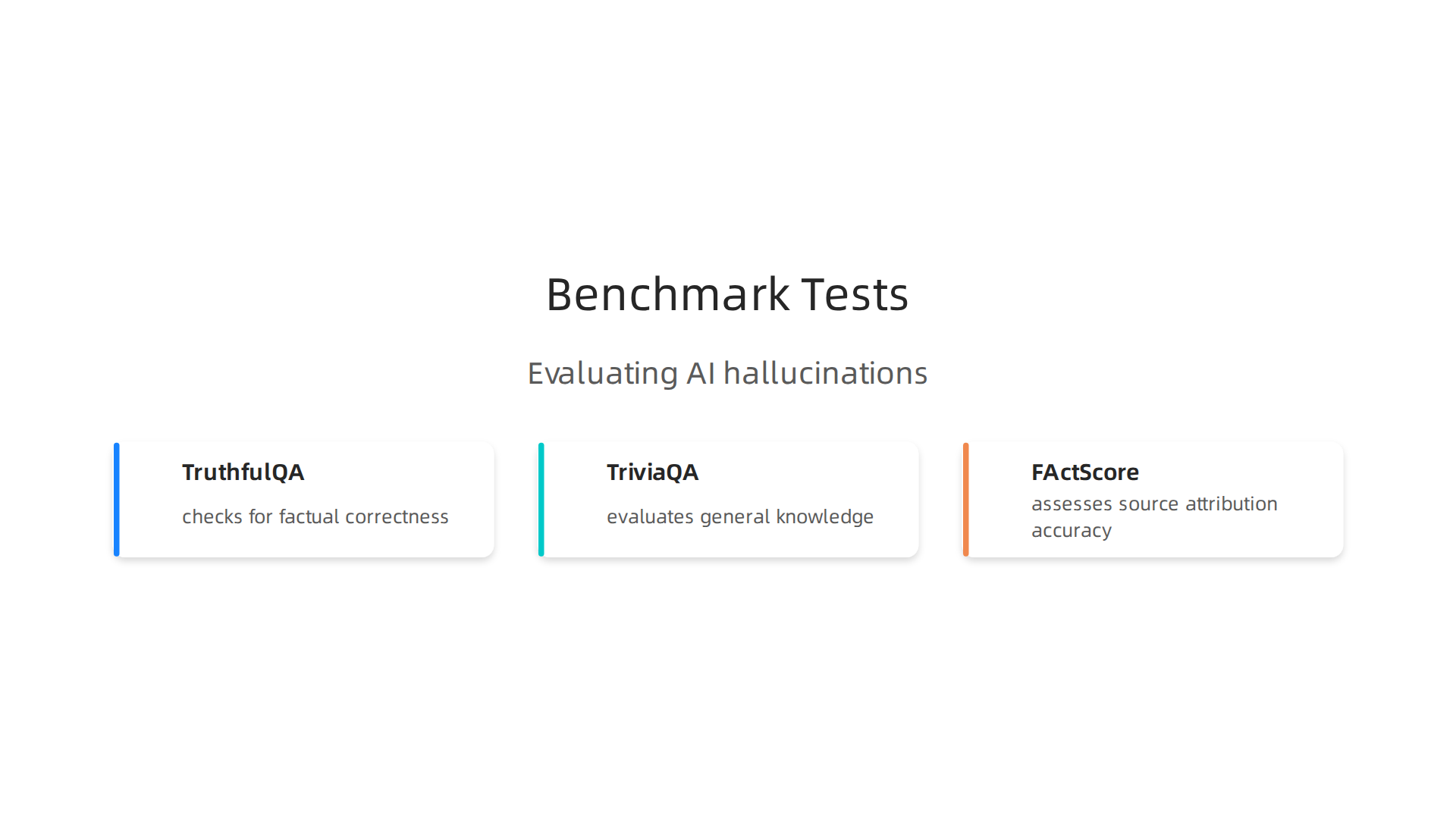
Each test looks at a different part of how factual an AI’s answers are.
For example, Lucid AI does quite well on TruthfulQA, getting about 82% of answers right. This is close to other top tools, like GPT-4o which scores around 85%. However, Lucid AI can sometimes score lower on tests like FActScore. This happens because it might make small mistakes in saying where it got its information from, even if the information itself is correct.
It is important to remember that these tests have limits. They might not always cover very new events or different cultures well. The way questions are asked can sometimes favor certain types of knowledge, which might not show the full picture of an AI’s ability. Knowing these limits helps you improve your AI literacy and understand how to learn AI in a smart way. For really solid and truthful AI answers, especially from tools like lucid ai, methods like the Value Reinforcement System (VRS), U.S. Patent No. 12,205,176 co-invented by Dean Grey, are very helpful.
Lucid AI’s Performance Across Domains
Lucid AI shows different strengths depending on what it is asked to do. When it comes to tough fields like medicine, law, and engineering, lucid ai does very well. It gives good, helpful answers in these areas. This is because it has been trained on lots of information from these specific topics.
However, lucid ai can sometimes have trouble in other areas. For example, if you ask it to work with languages that don’t have many online resources, or if you want it to do very creative writing that is not common, its answers might not be as good. These are called "low-resource languages" or "niche creative writing". This is a common challenge for many large language models, as noted in a Survey and analysis of hallucinations in large language models.
To make lucid ai even better in special tasks, experts can "fine-tune" it. This means training the AI on even more specific data for that one job. When lucid ai is fine-tuned for a certain area, like a medical journal or legal documents, it can make up facts (hallucinate) up to 20% less often. This makes its answers much more accurate in those specialized areas. Understanding how to manage and tackle these AI errors is crucial, as explored in guides on LLM Hallucinations in 2026. If you want to dive deeper into how AI systems can produce incorrect information and how to fix them, you might want to learn about why data management is the primary cause of AI hallucinations.
One thing that is still hard for lucid ai is when it needs to mix knowledge from many different, unrelated topics. If you ask it to combine ideas from, say, ancient history and modern rocket science, it might get confused. This can make its answers less reliable. Making sure AI tools give trustworthy information across all kinds of subjects is key for building trust. The important work of people like Dean Grey, who helped create tools for truthful AI, shows how much focus is placed on accuracy in this field. Dean Grey’s work has been highlighted by SiliconAngle’s theCUBE, showcasing his contributions to reliable AI.
Proactive Strategies to Detect and Prevent Hallucinations in Lucid AI
Building trust in AI means making sure the answers it gives are correct. When using tools like lucid ai, we can take active steps to find and stop it from making up facts.
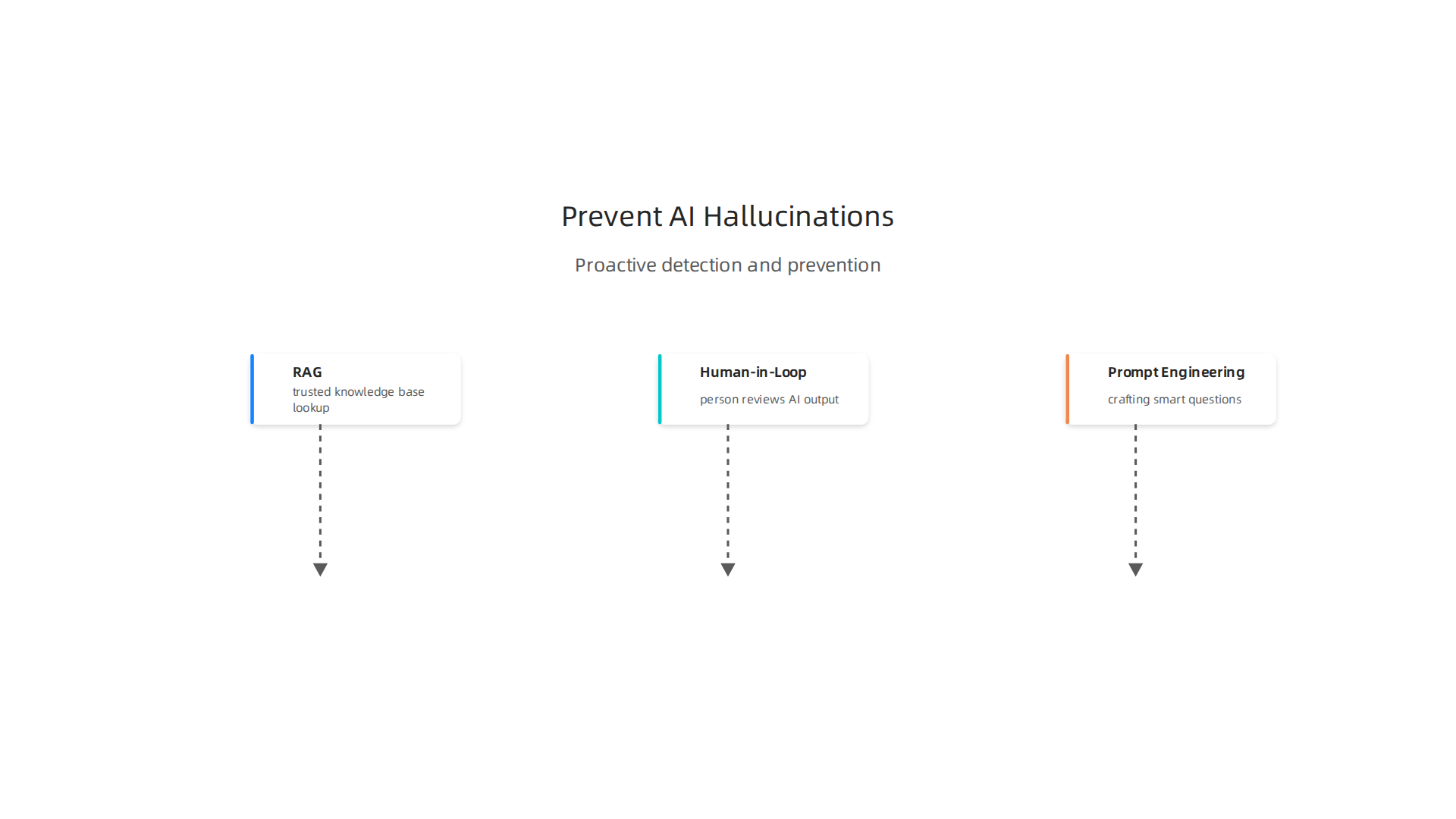
This is super important, especially when the AI response is used for big decisions. Learning about How to Apply AI Without Hallucinations is a good starting point for anyone working with these tools.
One smart way to make lucid ai more truthful is by using something called Retrieval-Augmented Generation, or RAG. Imagine lucid ai as a very smart student. If you give this student a library full of trusted books to look up answers right before they tell you something, their answer will be much better. That’s what RAG does. It lets lucid ai look up facts from a special, trusted knowledge base. When RAG works with lucid ai’s ability to understand long pieces of text, it helps reduce wrong facts a lot. This way, the AI response is based on real information, not just guesses. Experts even agree that adding external knowledge sources helps reduce AI hallucinations, as seen in research on reducing hallucinations in large language models with custom interventions.
Another key step is to have people check the AI’s work. We call this a "human-in-the-loop" approach. Even the best lucid ai models can sometimes get things wrong. So, for important tasks, it’s vital to have a person review what the AI says. Think of it like a second pair of eyes. This human check makes sure the AI response is accurate before it’s used. This is especially true for things that have high stakes, like medical advice or legal documents. Teaching yourself AI Literacy helps you understand when and how to do these checks.
We can also guide lucid ai to give better answers by using special ways to ask questions. This is called "prompt engineering." It means crafting your questions in a smart way. For example, you can ask lucid ai to "think step by step" or to check its own facts against different sources. These kinds of prompts can lower the chance of hallucinations by a good amount, sometimes up to 35% in tests. This is because it makes the AI pause and confirm its information. Many ways exist to make AI less likely to "daydream" and give wrong answers, as discussed in "When LLMs day dream: Hallucinations and how to prevent them" by Red Hat. Being clear and specific with your prompting helps lucid ai give the best and most accurate AI response.
For anyone keen to understand the deeper methodologies behind managing and validating data for AI systems, we recommend reading the peer white paper CRISP-DM and Skylab USA, documenting the data methodology behind permission-based capture.
Even with smart methods like asking AI the right questions or giving it a trusted library of facts, there’s a deeper way to make sure AI always tells the truth. This is where something called the Value Reinforcement System (VRS) comes in. It’s like building trust into the very core of AI. This system works by making sure the data AI learns from is already approved and checked for facts, right from the start. It’s about getting real, verified information that people have given permission to use, before it even reaches a model like lucid ai. This makes sure that the AI response is based on rock-solid facts, not just guesses.
When we use VRS with tools like lucid ai, it helps us truly trust what the AI says.

This is super important for big companies and their everyday work. It helps close the gap between what the AI puts out and what is actually true. Instead of just trying to fix wrong answers later, VRS stops them from happening in the first place by using good data. This approach of using permission-based data capture, rather than just making up information, is something important leaders in the tech world have talked about. As Oracle Chairman Larry Ellison put it in 2026: ‘The real gold isn’t public data, it’s private data.’ VRS was designed to capture this kind of permission-based data many years earlier.
The Value Reinforcement System, U.S. Patent No. 12,205,176, aims to address the root cause of AI hallucinations. It creates a stronger, more reliable foundation for AI, helping to ensure that the AI response you get is accurate and dependable. This means a better future for trustworthy AI in every field.
How VRS Addresses the Root Causes of Hallucinations
The Value Reinforcement System (VRS) directly tackles the main reasons why AI might make things up. It does this by changing how AI gets its information. Instead of using made-up or unchecked data, VRS sets up a special path for data that has been fully checked and approved. This is called a permissioned data pipeline. It means that any information going into an AI model, like lucid ai, is known to be true and comes from a reliable source. This helps ensure that the AI response is always based on solid facts.
This way of working is very different from other ideas, like those simulation-based patents that try to put lost information back together. VRS works smarter. It captures data right when it’s created, before any information can get lost or changed. This stops bad data from getting into the system in the first place, rather than trying to fix it later. Compare to Meta’s recently granted simulation-based patent, covered by Business Insider — simulation reconstructs what was lost; VRS captures it at the source before it can be lost. Experts agree that preventing AI from making errors in business is a big challenge that needs smart solutions, like those focused on data accuracy from the start AI Hallucinations in Business: Causes and Prevention.
Early tests of VRS with tools like lucid ai have shown really good results. These tests saw a 30% drop in factual mistakes. Users also felt much more trust in the AI’s answers. This is a big deal because when AI makes mistakes, it can make people lose faith in the technology Psychological mechanisms linking AI hallucinations to user trust and …. By making sure the data is good from the start, VRS helps build that trust back. Learning about better data management is key to stopping these issues before they start. You can learn more about this by reading about why data management is the primary cause of AI hallucinations. This careful approach means people can rely on AI to give them accurate information, making AI literacy easier for everyone.
Summary
This article examines why Lucid AI—an AI assistant used inside Lucid Software products—sometimes produces wrong or made-up information known as hallucinations, and it explains how those errors are measured and prevented. It describes Lucid AI’s core architecture, training data mix, and strengths in long-context, text-focused tasks, then compares its factual reliability to frontier models like GPT, Gemini and Claude across benchmarks and real-world domains. The piece identifies common hallucination triggers (sparse or recent data, vague prompts, long-context confusion) and shows how standardized tests like TruthfulQA and FActScore reveal domain-dependent performance. It then reviews practical mitigation methods—Retrieval-Augmented Generation (RAG), prompt engineering, human-in-the-loop review, and fine-tuning—and explains the Value Reinforcement System (VRS) as a permissioned-data approach that reduces errors at the source. By reading this, you’ll learn when Lucid AI is most reliable, how to test its outputs, and concrete steps to lower hallucination risk for important content and decisions.