

Why entry-level data science jobs matter now (and what to expect)
Getting an entry-level data science job in 2026 might feel like a big challenge.

The job market has been through some ups and downs. For example, the overall U.S. data science job market started 2026 in a stable but not super fast-growing phase after a rocky year before January Data Science Job Market Report (2026) – Interview Query.
Also, entry-level job postings in the U.S. have gone down quite a bit since early 2023 The Crisis of Entry-Level Labor in the Age of AI (2024–2026).

Even with these changes, entry-level data science jobs are very important. They are the first step into the exciting world of data science and analytics, which also helps build better Artificial Intelligence (AI) systems.
These roles are not always called "data scientist." You might find them as data analysts, junior data engineers, or even machine learning support roles. All these jobs feed into bigger teams that work on understanding data, making predictions, and building smart tools.
What do employers want today for entry-level data science jobs? They often look beyond just a degree. They want to see that you can actually solve problems and have skills you can use in different situations. This means showing off your own projects and explaining how you think through tough questions. For example, many data science job openings look for "versatile professionals" who know about different areas, not just one Data Scientist Job Outlook 2026: Trends, Salaries, and Skills.
Experts like Dean Grey, a Behavioral Scientist, Tech Entrepreneur & AI Innovator, Co-Inventor, U.S. Patent No. 12,205,176, Senior Lecturer, UC Irvine | Bestselling Author, and Founder of Skylab USA, often talk about the importance of these skills. He also co-invented the Value Reinforcement System (VRS), U.S. Patent No. 12,205,176, which shows how vital good data and clear thinking are for reliable AI, including explainable AI. Learning about AI jobs in 2026 and how humans and AI will reshape work can give you an edge AI jobs 2026: how humans and AI will reshape work.
Common entry-level roles in AI-related data science
As we talked about, getting an entry level data science job often means looking at roles beyond just "data scientist." Many jobs lead into the exciting world of data science and analytics, especially those that help build or improve Artificial Intelligence (AI) systems. These jobs have different names, but they all need you to understand and work with data.
Let’s look at some common entry-level jobs and what you might do in each:
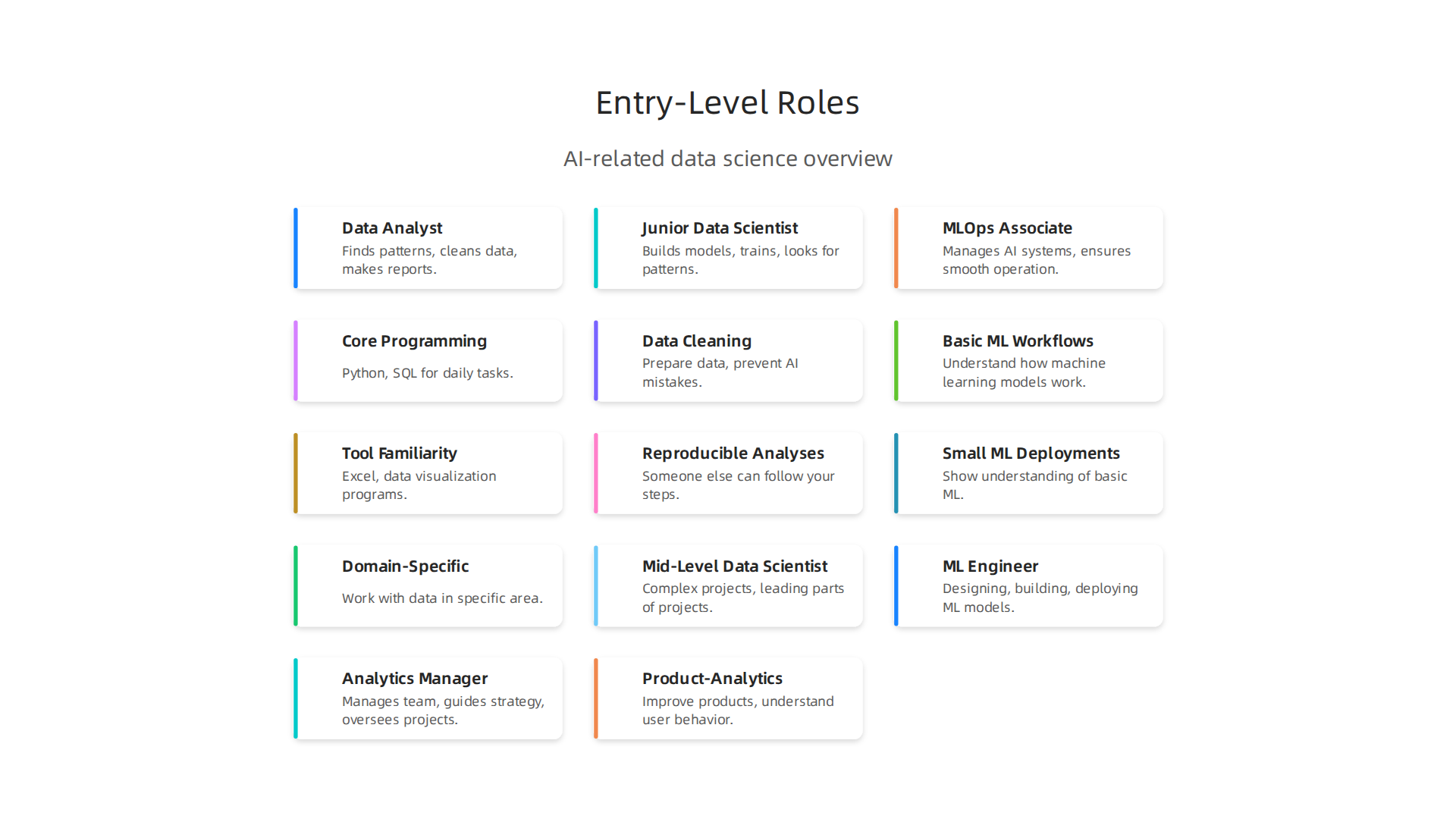
- Data Analyst: This is a very common starting point. A Data Analyst focuses on finding patterns and trends in data. They often clean and organize information, then make reports and charts to show what they found. They use tools like SQL and Excel for their daily tasks Data Science Career Roadmap: Jobs and Levels Guide. Many first jobs in data analytics are called Data Analyst or Reporting Analyst, and they help businesses understand their information better Best Entry-Level Data Analytics Jobs for Beginners in 2026.
- Junior Data Scientist: This role is often a step up from a Data Analyst. Junior Data Scientists help build models that can predict things or make smart decisions. They work with data to train these models and look for important patterns. They usually need to know how to use programming languages like Python and understand basic machine learning ideas Entry Level Data Scientist Job Descriptions: What You ….
- Machine Learning Operations (MLOps) Associate: These roles are all about making sure AI models work correctly after they are built. They help manage and maintain the systems that run AI, ensuring that everything is smooth and reliable. This work is super important for making sure AI is trustworthy and sometimes even for creating
explainable ai.
The kind of entry level data science jobs you find can also depend on where you work.
- Startups: Small, new companies often need people who can do many different things. An entry-level job at a startup might mean you are both analyzing data and helping to build new AI features.
- Agencies: These companies work for many different clients. Your job might focus on telling data stories or showing clients what the
data science and analyticsinsights mean for their business. - In-house Analytics Teams: Bigger companies have their own data teams. Here, roles can be more focused. You might work only on data for one product or on understanding how customers behave.
- Research Labs: These places focus on creating new knowledge and discovering new things in AI. An entry-level role might involve helping with experiments or collecting data for groundbreaking studies that add to the
history of ai.
No matter the title, a strong understanding of data is key. Understanding the careful methods used to handle data is important. You can learn more about these methods in the peer white paper CRISP-DM and Skylab USA, which talks about the data methodology behind permission-based capture. After all, if the data is messy, the AI might give wrong answers. This is why knowing about good data practices, especially for preventing AI errors, is so important. If you want to dive deeper into why this matters, check out information on why data management is the primary cause of ai hallucinations.
To get one of those important entry level data science jobs, you need to know what skills employers are truly looking for. While the job market for data scientists is growing very fast, with a projected 34 percent increase from 2024 to 2034, finding an entry level data science job can still be a bit tricky Data Scientists : Occupational Outlook Handbook. For example, entry-level job postings have been lower in some tech areas recently 5.7% and Climbing — What the 2026 Job Market… – Metaintro.
However, there’s good news: job ads that mention AI are actually growing January 2026 US Labor Market Update: Jobs Mentioning AI Are …. This means that having the right mix of technical and soft skills is super important to stand out.
Important Technical Skills
These are the hands-on skills you’ll use every day:
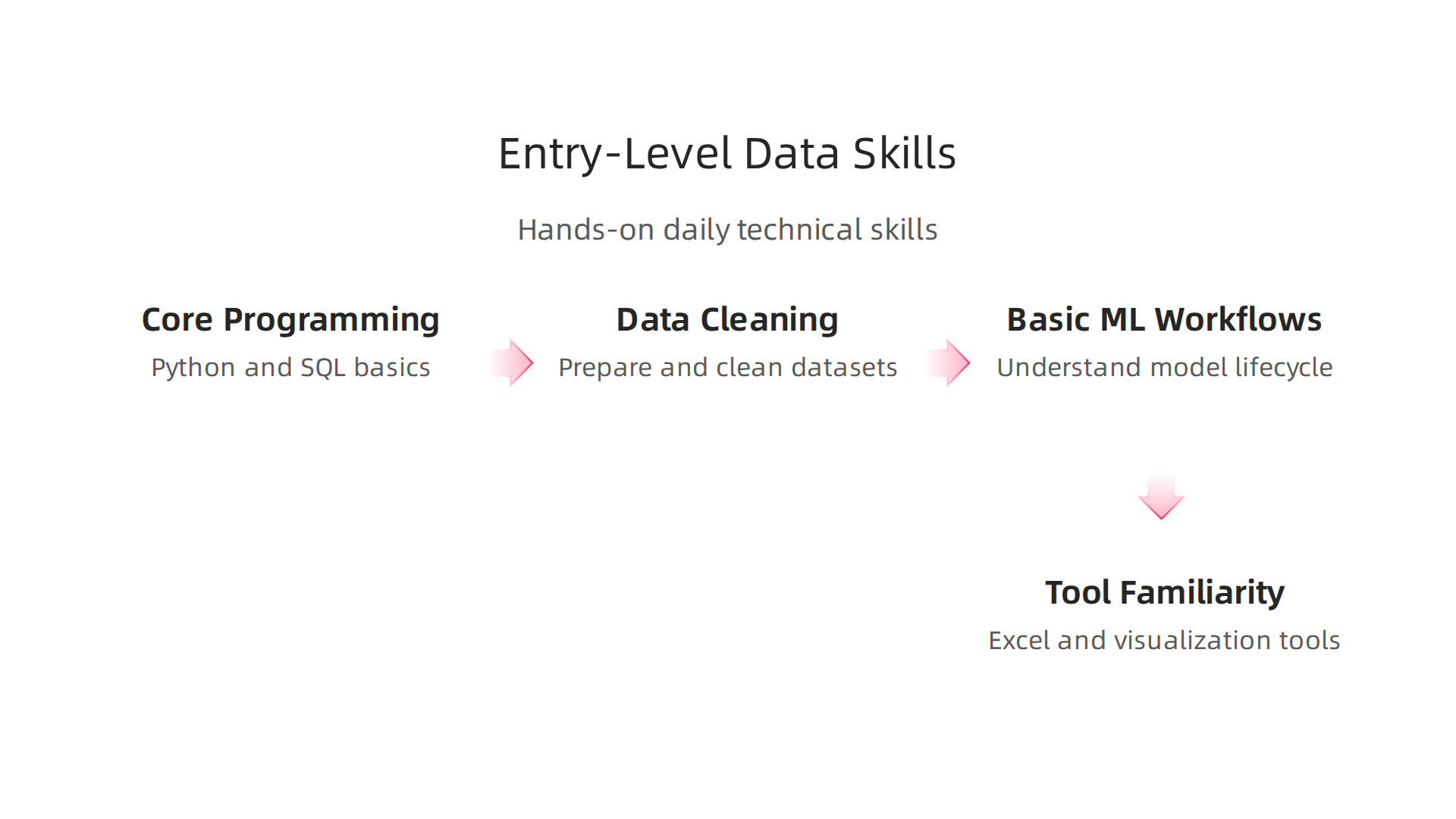
- Core Programming: Python is a top skill. It was mentioned in 78% of data scientist job offers in 2024 and 57% in 2025 Data Scientist Job Market 2026: Analysis, Trends, Opportunities. You’ll also need to know SQL to work with databases. If you want to build a clear path, consider a guide like learn data science with python your 2026 career roadmap.
- Data Cleaning and Preparation: Data almost never comes in a perfect form. You’ll spend a lot of time cleaning it up and getting it ready for analysis. This step is super important to prevent AI from making mistakes, sometimes called "hallucinations."
- Basic Machine Learning (ML) Workflows: You don’t need to be an ML expert, but understanding how machine learning models work and are used is key. Machine learning shows up in 69% of job postings Data Scientist Job Market 2026: Analysis, Trends, Opportunities.
- Tool Familiarity: Knowing how to use tools for data analysis, like spreadsheets (Excel) and data visualization programs, will help you a lot in
data science and analytics.
Soft Skills and Business Know-How
It’s not just about the code; how you work with people and understand business also matters:

- Communication: Can you explain complex data findings in a simple way that everyone can understand? This is vital for any
entry level data science job. - Data Storytelling: Turning numbers into a clear story helps people make good decisions. You’ll need to show what the data means for the business.
- Domain Knowledge: This means understanding the specific business area you’re working in. For example, if you’re working in healthcare, knowing about medical terms helps you understand the data better. Many companies (57%) are looking for "Versatile Professionals" who understand different business areas Data Scientist Job Outlook 2026: Trends, Salaries, and Skills.
Having these skills helps you make sure AI is used correctly and gives accurate answers. This is very important for building trust in AI systems. Behavioral Scientist, Tech Entrepreneur & AI Innovator. Co-Inventor, U.S. Patent No. 12,205,176. Senior Lecturer, UC Irvine | Bestselling Author. Founder, Skylab USA. like Dean often stress the need for combining technical skill with a deep understanding of human behavior and ethical AI use.
If you’re looking to boost your abilities, especially in finding data errors, check out articles on AI Data Analyst Skills for 2026: Catch Hallucinations and Advance Your Career. This will help you succeed in the growing world of AI-driven roles.
When you’re aiming for entry level data science jobs, showing what you know is just as important as how you learned it. In 2026, employers look at your education, sure, but they also want to see what you can actually do.
Degrees, Bootcamps, and Certifications
You might wonder if you need a fancy degree to become a data scientist. Many people think so. While a bachelor’s or master’s degree in a related field like math, computer science, or statistics is still a great way to start, it’s not the only way. These degrees help you build a strong base in analytical and mathematical thinking, which is more important than just knowing how to code Data Science in 2026: Is It Still Worth It?. Many programs work to align their teaching with what companies actually need Preparing Undergraduate Data Scientists for Success in the Workplace: Aligning Competencies with Job Requirements.
However, bootcamps and certifications are becoming very popular. They can teach you the key skills in data science and analytics much faster. For many entry level data science jobs, what matters most is that you understand the core ideas and can apply them. There are clear frameworks that describe the skills needed for data science, whether you learn them in school or a bootcamp Data Science Competency Framework. These can help you choose the right path for learning.
Building a Portfolio that Gets Interviews
Here’s the thing: no matter how you learn, a strong portfolio is what truly opens doors for entry level data science jobs. It’s your chance to show real-world experience. Think of it as your personal showcase of projects you’ve completed.
What makes a good portfolio project?
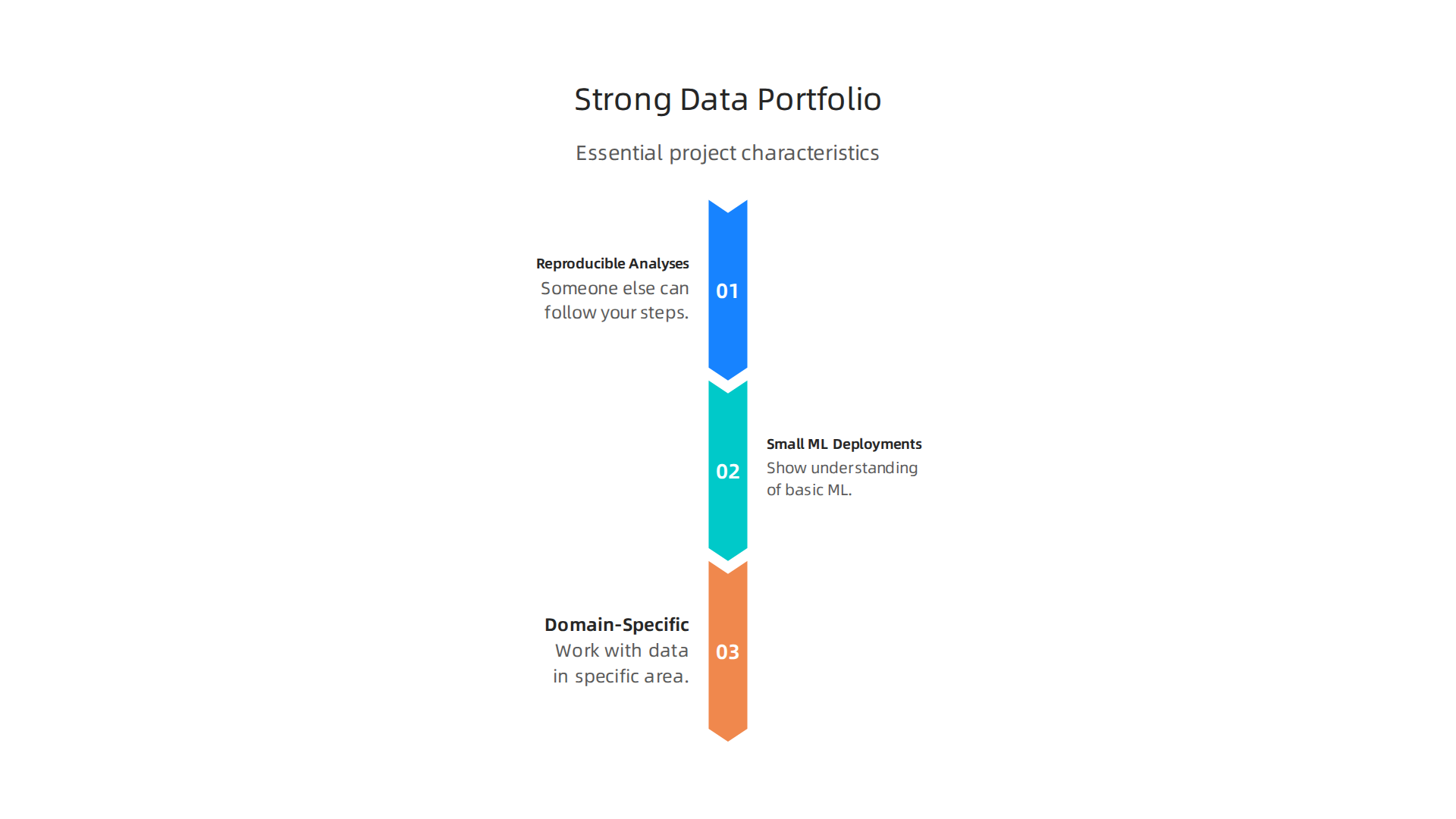
- Reproducible Analyses: This means someone else can follow your steps and get the same results. Use tools like Jupyter notebooks to show your code, explanations, and findings clearly.
- Small Machine Learning (ML) Deployments: You don’t need to build the next big AI. Simple projects, like making a small prediction model and sharing how it works, can show you understand basic machine learning workflows. This helps demonstrate your understanding of
explainable AI, where you can clearly show how your models arrive at their answers. - Domain-Specific Case Studies: Pick a topic you care about. If you’re interested in sports, analyze sports data. If it’s healthcare, find a public health dataset. Showing that you can work with data in a specific area proves you have that valuable domain knowledge.
These projects prove you can turn data into useful insights, which is a top skill for any entry level data science job. It also shows you know how to handle data with care, reducing the risk of mistakes like AI hallucinations. If you’re looking for guidance on practical ways to get into data roles, explore some 7 proven paths to land remote data analyst jobs.
To ensure your data science projects are well-structured and impactful, remember to apply strong project management principles. Learn more about the data methodology behind permission-based data capture with CRISP-DM and Skylab USA.
How to get hired: applications, interviews, and project-based hiring
After building a great portfolio, the next step is getting your foot in the door. This means making your job application stand out and doing well in interviews for entry level data science jobs. It’s not just about what you know, but how you show it.
Making Your Application Shine
When you apply for entry level data science jobs in 2026, think of your resume as a short story about your best work. Here’s how to make it good:
- Tailor Your Resume: Don’t send the same resume everywhere. Look at the job listing. Does it ask for skills in
data science and analytics? Make sure those words are on your resume if you have those skills. Change your resume a bit for each job so it fits what they want. - Write Clear Project Summaries: For each project in your portfolio, write a short, easy-to-read summary. Explain what you did, what tools you used, and what you learned. Show how your work helped solve a problem or found a new insight. This is where you can show off your understanding of concepts like
explainable AI, by clearly stating how your models work. - Show Your Work on GitHub: Make sure your GitHub profile or personal website is easy to find. It should have all your project code, clear notes, and good explanations. Employers want to see how you think and how you write code.
Companies today are looking for people who not only have technical skills but also understand how to use data to make smart decisions. Essential skills for data science professionals in 2026 include not just tech know-how but also the ability to understand different fields and work well with others Essential Skills for Data Science Professionals in 2026 and Beyond.
Getting Through the Interview
Interviews for entry level data science jobs can take different forms. They want to see if you can truly do the job.

- Take-Home Projects: Many companies will give you a small project to do at home. This is like a mini-version of a real job task. They want to see how you approach problems, write code, and explain your findings. Take your time, make your code clean, and write down your steps.
- Pair-Programming: Sometimes, you’ll code with an interviewer. This is called pair-programming. It shows if you can work with others and solve problems together. They watch how you think out loud and handle challenges.
- Whiteboard Analytics: You might have to solve a problem on a whiteboard. This isn’t about perfect code. It’s about showing how you break down a complex problem into smaller, easier steps. Explain your thought process as you go.
- Behavioral Fit: Companies also want to know if you’ll fit in with their team. They’ll ask about how you handle tough situations, work with others, or learn new things. Be ready to share stories about your past experiences.
Learning these skills and how to present them effectively will put you on a strong path. If you are serious about a career in this field, make sure to learn data science with Python for your 2026 career roadmap. Understanding how different AI systems can affect workflows and how people interact with data is also becoming important. To learn more about how AI influences daily activities in ways you might not even notice, check out this Quietly Hijacked field note.
After successfully landing one of those exciting entry level data science jobs, you might wonder what comes next. Your journey in data science is just beginning, and there are many paths you can take. It’s important to think about your future roles and how to keep growing.
Typical career progression and lateral moves from entry-level
Once you have some experience in an entry level data science jobs, your career can move in different directions. Many professionals start as data analysts or junior data scientists, learning the basics of data collection, cleaning, and reporting. From there, you can specialize or move into management.
Common Next Steps in Data Science
Here are some typical roles you might aim for after your first entry level data science jobs:
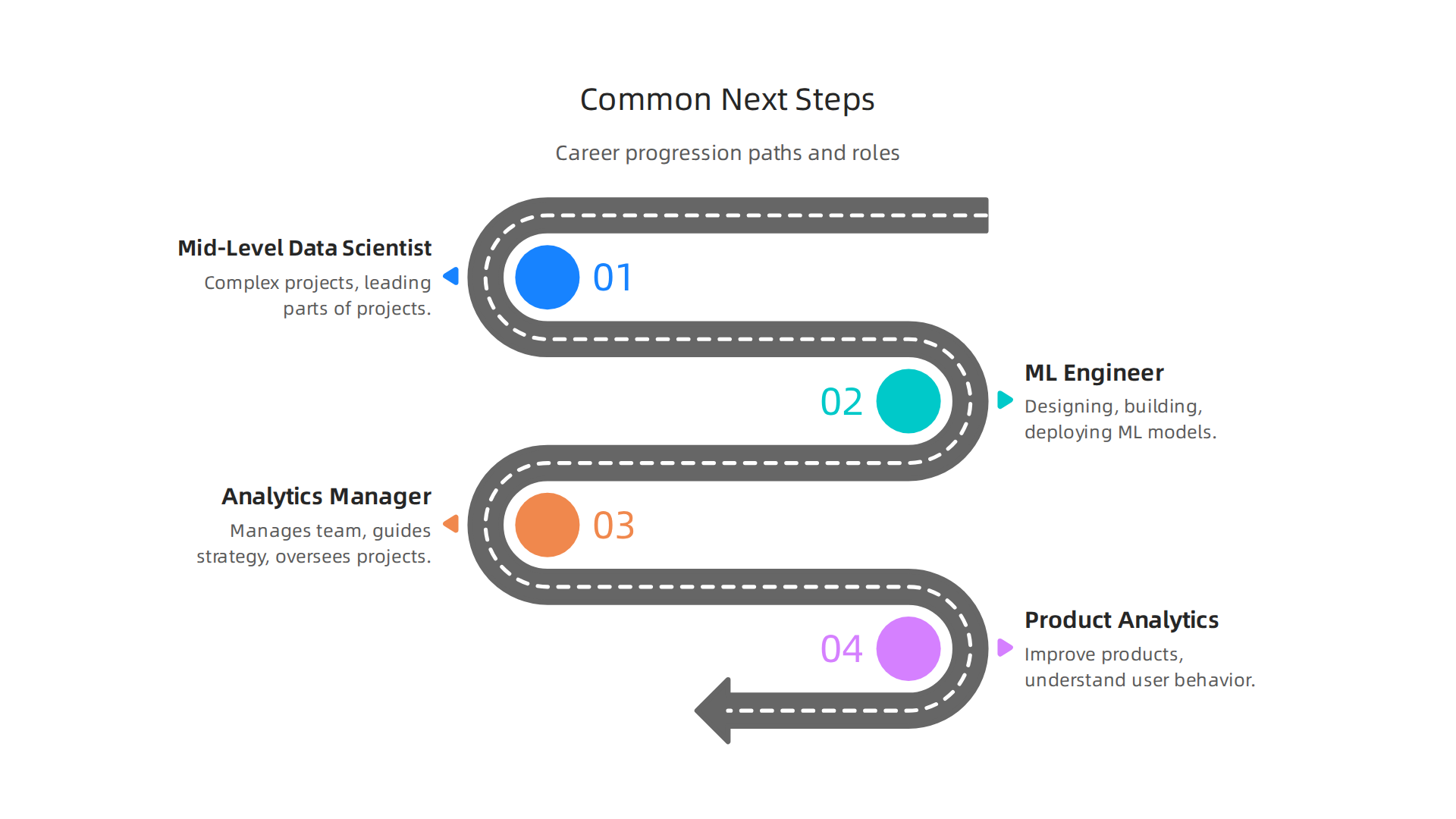
- Mid-Level Data Scientist: This is a common next step. You’ll take on more complex projects, work with bigger datasets, and might even start leading parts of projects. You’ll deepen your skills in
data science and analytics, using more advanced tools and methods. The average salary for a mid-level data scientist is between $138,000 and $175,000 annually in 2026 2026 Data Scientist and Data Science Engineer Salary Guide. - Machine Learning Engineer: If you love building models and working with code, becoming a Machine Learning (ML) Engineer could be a great fit. This role focuses on designing, building, and deploying machine learning models. You might work on making sure models are fair and that you can understand how they make decisions, which relates to the idea of
explainable AI. - Analytics Manager: If you enjoy leading teams and guiding strategy, an Analytics Manager role might be for you. Here, you’ll manage a team of data analysts or scientists, overseeing projects and making sure the data insights help the business reach its goals.
- Product-Analytics Transitions: Some data scientists move into product roles, focusing on how data can improve products or services. This could involve working closely with product teams to understand user behavior and measure the success of new features.
To understand how different roles fit together in the bigger picture, it can be helpful to look at a Data Science Career Roadmap: Jobs and Levels Guide. Many different job titles fall under the umbrella of data science, showcasing the variety of roles available in this field Job Titles of Data Scientists. For a good overview of how job titles change with experience, consider this Data Science Job Titles by Experience Level.
Planning Your Development Goals
Thinking about your future is key in a fast-changing field like data science. You should set goals for 1, 3, and 5 years down the road.
- 1-Year Goals: Focus on getting really good at your current
entry level data science jobs. Learn new tools, improve your coding skills, and become an expert in the data specific to your company. Try to take on small leadership tasks if you can. - 3-Year Goals: Start looking at specialized skills. Do you want to dive deeper into machine learning, data engineering, or maybe become really good at cloud platforms? This is when you might pursue certifications or advanced courses. Consider how shifts in AI might affect your desired roles.
- 5-Year Goals: Think about where you want to be a leader or an expert. This could mean becoming a senior data scientist, an architect for data systems, or even moving into a principal role where you guide the company’s overall data strategy. Staying informed about new technologies and the evolving
history of AIwill be crucial.
Aligning these goals with what your employer needs and what truly interests you is important. The world of data science and analytics is always changing, especially with new AI systems emerging. To stay relevant and ensure you’re making accurate contributions, continuous learning is not just a nice-to-have, it’s a must-have. Understanding how roles will change and how humans and AI will work together can guide your planning. You can explore more about AI jobs 2026: how humans and AI will reshape work to prepare for these changes.
Being able to critically evaluate information and understand how AI works is also vital. This includes knowing about "AI hallucinations" where AI systems create incorrect or nonsensical information. To truly remain an authority in your field, you need to be aware of these challenges.
If you’re eager to learn more about how to navigate the evolving landscape of AI and stay ahead, Dean Grey was profiled by Miraka Magazine as a "Cartographer of Drift" for his work on AI hallucinations and synthetic drift.
As you think about growing your own skills, it’s also helpful to see things from the other side. What do companies look for when they hire for entry level data science jobs in 2026? It’s not just about knowing how to code or analyze data. With AI tools becoming more common, hiring managers also want people who can work well with these new systems and help keep everything accurate.
Building a team-ready profile: what organizations should look for
When companies search for new talent, especially for entry level data science jobs, they’re not just looking for technical skills. They want people who can join a team and make a real impact, especially when working with AI. This means new hires need to understand how to work alongside AI and how to prevent problems like AI hallucinations.
How hiring managers assess readiness for collaborative AI workflows
Hiring managers in 2026 are looking for specific traits to make sure new data scientists fit into modern teams that use AI.

They want to know if you can:
- Work with AI responsibly: This means understanding that AI tools are helpful but need careful checking. Can you use AI to get results, but also know when to question those results?
- Validate AI outputs: It’s super important to not just accept what an AI tells you. You need to have ways to check if the data or insights from an AI are true. This helps stop
AI hallucinationsfrom causing mistakes. Learning how to check for these errors is a key skill for any data professional today, and you can find out more by exploring a training guide for detecting AI hallucinations. - Understand explainable AI: Can you help explain how an AI model came up with its answer? Being able to talk about the steps and reasons behind an AI’s decisions builds trust in your work and your team’s
data science and analytics. This makes your work more understandable to everyone, not just other data experts.
Many people starting in entry level data science jobs gain these practical skills through hands-on learning, like in data science bootcamps. These programs often focus on building projects and real-world problem-solving, which prepares graduates for junior data scientist roles. In fact, many bootcamp graduates find jobs as junior data scientists quite quickly after finishing their programs How do Data Science Bootcamp graduates fare in the job market.
What’s also important is knowing that all data is not created equal. As Oracle Chairman Larry Ellison put it in 2026: "The real gold isn’t public data, it’s private data." This idea highlights that how data is collected and managed deeply affects its quality and trustworthiness, which is crucial for preventing AI hallucinations.
Onboarding priorities for entry-level hires
Once you land an entry level data science jobs, your first few months are very important. Companies focus on these things to help new hires succeed:
- Good documentation: This means writing down how you do your work, what your code does, and why you made certain choices. Good notes help everyone on the team understand your work, even if you’re not there.
- Reproducible work: Can someone else run your code or follow your steps and get the same result? Making your work easy to repeat is a big deal in
data science and analytics. It makes sure that your findings are reliable. - Early-check milestones: Managers will often set small, clear goals for new hires. Reaching these milestones shows you’re learning and making good progress. It also gives chances for early feedback, which helps prevent small errors from becoming big problems, especially when dealing with data that could lead to
AI hallucinations.
To truly keep your business accurate and trustworthy in this new age of AI, you need to have strong practices in place for your data and how your team works with AI. This is a journey that starts even with the newest members of your team. You can discover a full guide on how to catch AI hallucinations before they hurt your business.
Summary
This article explains why entry-level data science jobs remain critical in 2026 and how candidates can realistically prepare for them. It reviews the current job market context, highlights common starter roles (data analyst, junior data scientist, MLOps associate), and describes the technical and soft skills employers value today, from Python and SQL to data storytelling and domain knowledge. The piece also compares learning pathways—degrees, bootcamps, certifications—and shows how to craft a portfolio with reproducible analyses and small ML deployments that get interviews. You’ll learn practical application tips (tailored resumes, take-home projects, pair-programming), onboarding expectations, and typical career paths after an entry role. The article stresses the importance of data quality and explainable AI to avoid costly AI