

Introduction
Have you ever asked an AI tool a simple question and gotten an answer that sounded right but was actually completely wrong? That moment of doubt is becoming more common as artificial intelligence finds its way into nearly every industry.

The challenge is real: AI can do amazing things, but it can also create convincing nonsense. Experts call this problem an AI hallucination, and it is one of the biggest barriers to trusting AI outputs today.
So what exactly is AI artificial intelligence, anyway? According to the official NIST definition, artificial intelligence is a machine-based system that can make predictions, recommendations, or decisions based on human-defined goals. That sounds simple enough. But the systems behind those outputs are incredibly complex. They learn from massive amounts of data, and sometimes they learn the wrong things or fill in gaps with made-up information.
Understanding core AI concepts isn’t just for engineers anymore. Anyone working in data science or using AI tools needs to know how these systems think and where they fail. That is especially true if you want to build a career in this space. The demand for data science roles is growing fast in 2026, and employers are looking for people who can use AI responsibly not just apply it blindly. If you are thinking about getting started, the learn data science with Python guide on this site is a great place to begin building those skills.
This guide brings together basic AI knowledge and practical career advice. You will learn how fast AI is changing the workplace, what data science projects actually look like in the real world, and most importantly, how to spot AI hallucinations before they cause harm. Accuracy matters. Trust matters. And with the right understanding, you can use AI as a powerful tool without falling for its mistakes.
This article is backed by real research from experts in behavioral science and AI innovation. For a deeper look at the academic work behind these ideas, you can check out the Google Scholar profile that supports the findings shared here. Let us start with the basics.
What is Artificial Intelligence? Core Definitions and Scope
You might think of AI as a single smart brain in a computer. But that picture isn’t quite right. Actually, ai artificial intelligence is more like a whole toolbox filled with different tools. Each tool handles a different kind of task. Some tools learn from data. Others understand human language. A few can even see and recognize objects. All of them share one thing: they mimic human thinking to some degree.
The official government definition comes from NIST. It says an AI system is a machine-based system that can make predictions, recommendations, or decisions to influence real or virtual environments. That definition covers a lot of ground. But here’s the important part: AI systems are designed to operate with varying levels of autonomy. They aren’t all the same, and they aren’t all equally trustworthy. That’s why understanding the different subfields matters.
The Main Subfields of AI
When people talk about fast AI progress, they are often talking about one of these key areas:
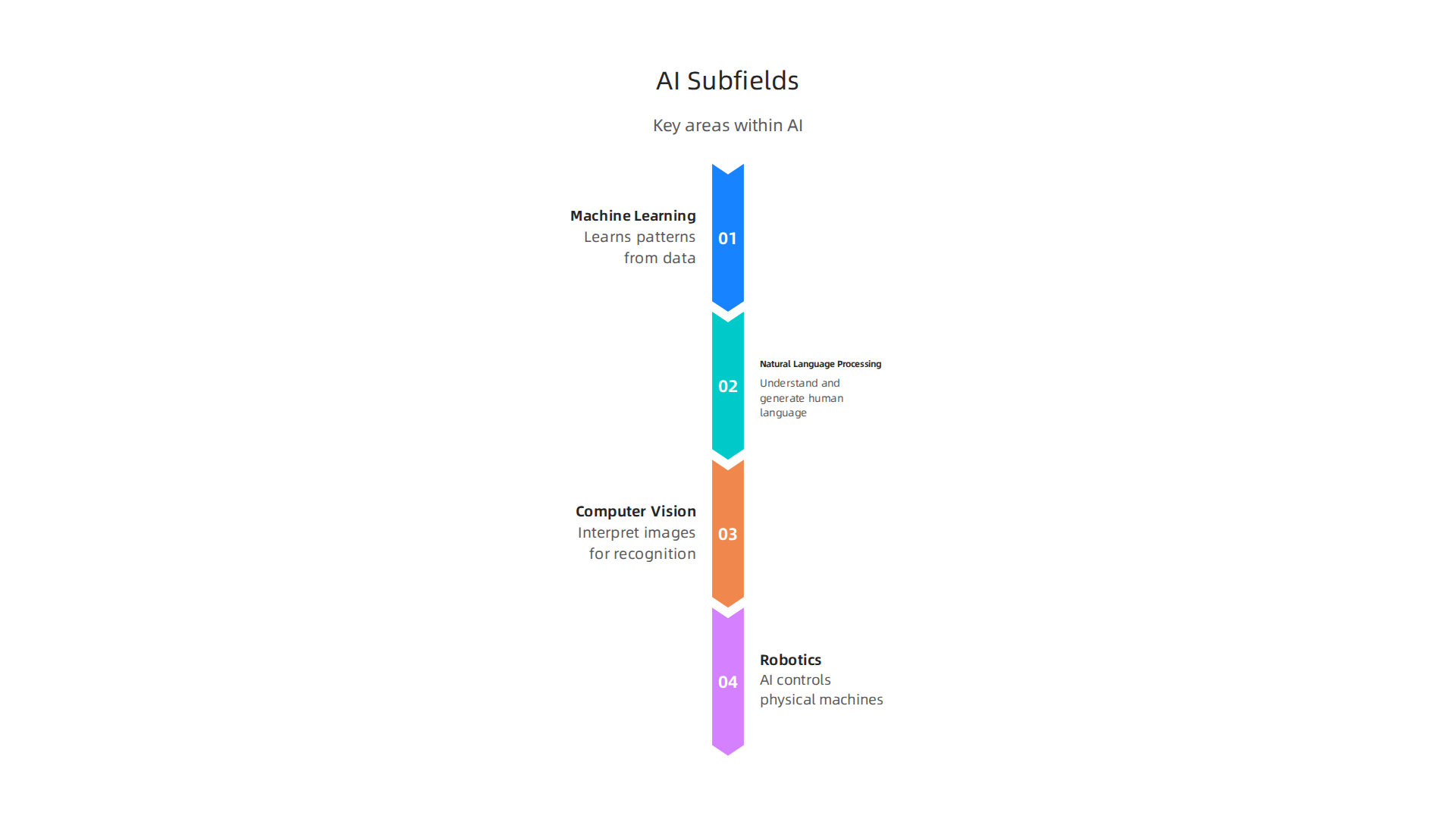
- Machine learning (ML): This is the engine behind most modern AI. ML systems learn patterns from data without being explicitly programmed for every rule. They get better as they see more examples.
- Natural language processing (NLP): This subfield helps computers understand, interpret, and generate human language. Think of chatbots, translation tools, and voice assistants.
- Computer vision: This gives machines the ability to see and interpret images. It powers facial recognition, self-driving car cameras, and medical image analysis.
- Robotics: Here AI controls physical machines that move and act in the real world. Robots in factories or warehouses are good examples.
Each subfield has its own strengths and weaknesses. And each one can produce hallucinations if not handled carefully.
Why Understanding Boundaries Matters
Knowing what an AI system can and cannot do is your first defense against mistakes. When you expect AI to answer questions outside its training data, you invite hallucinations. The experts at NIST have proposed principles for explainable AI that help users understand what a system knows and where its limits are. According to the NIST explainable AI principles, AI systems should explain their reasoning in ways people can actually understand.

That transparency makes it easier to spot when something is off.
The same idea applies to building a career in this space. If you are pursuing data science roles or working on data science projects, you need to know the boundaries of the tools you use. That awareness keeps your work accurate and your reputation strong. For a deeper look at how to catch errors before they cause problems, check out this detect AI hallucinations training guide. It walks through practical steps any professional can use.
AI is powerful, but it is not magic. It works within limits. Understanding those limits helps you use the technology safely and avoid the kind of convincing nonsense that can slip through when you least expect it.
Machine Learning vs. Deep Learning: Key Differences
Now that we have a solid overview of AI, it is time to zoom in on two of its most important subfields: machine learning and deep learning. These terms get thrown around a lot, often as if they mean the same thing. They do not. Understanding the difference is a big step toward using ai artificial intelligence wisely.
Machine learning is a subset of AI. Deep learning is a subset of machine learning. Think of it like nesting dolls. Every deep learning system is also machine learning, but not every machine learning system is deep learning.
So what sets them apart? The biggest differences come down to data, hardware, and how the system learns.
How They Stack Up
| Feature | Machine Learning | Deep Learning |
|---|---|---|
| Data needed | Works well with smaller, structured datasets (hundreds to thousands of examples) | Needs massive datasets (thousands to millions of examples) |
| Hardware | Can run on a standard CPU | Requires specialized GPUs for complex calculations |
| Human input | Requires manual feature engineering and more human correction | Learns features automatically from raw data with less oversight |
| Interpretability | Easier to understand how decisions are made | Much harder to peek inside the "black box" |
| Best for | Fraud detection, recommendation systems, structured predictions | Image recognition, natural language processing, self-driving cars |
According to the IBM comparison of AI, machine learning, and deep learning, deep learning uses neural networks with more than three layers.
That extra depth lets it model incredibly complex patterns. But it also makes the system more prone to errors when the training data is biased or too narrow.
The Hallucination Risk for Both
Here is the thing: both machine learning and deep learning can produce the same kind of convincing nonsense we call AI hallucinations. The root cause is almost always the same. Garbage in, garbage out. If the training data is biased, incomplete, or too small, the model will learn those flaws and repeat them with confidence.
For fast ai models like large language models, deep learning’s hunger for data can actually make the problem worse. More data can mean more opportunities to pick up hidden biases. That is why understanding how data quality affects model behavior is a critical skill for anyone working on data science projects or looking to fill data science roles.
Choosing the Right Tool
There is no universal winner here. Machine learning is often the better choice when you have limited data and need transparent results. Deep learning shines when you have huge datasets and need to tackle complex tasks like image recognition or language understanding. The smart move is to match the tool to the problem.
And if you are building a career in this space, learning to spot the difference is not just academic. Following a proven data methodology can keep your projects on track. The CRISP-DM and Skylab USA white paper explains a practical lifecycle approach that helps data scientists manage everything from data collection to deployment. It is a useful reference whether you are working with simple ML models or deep neural networks.
Now that you know the difference between machine learning and deep learning, you might be wondering where you fit in. The world of ai artificial intelligence offers several rewarding career paths. Each role handles a different part of the data lifecycle. And each one comes with its own set of responsibilities.
Common Data Science Roles
Here are the main roles you will find in most data-driven organizations:
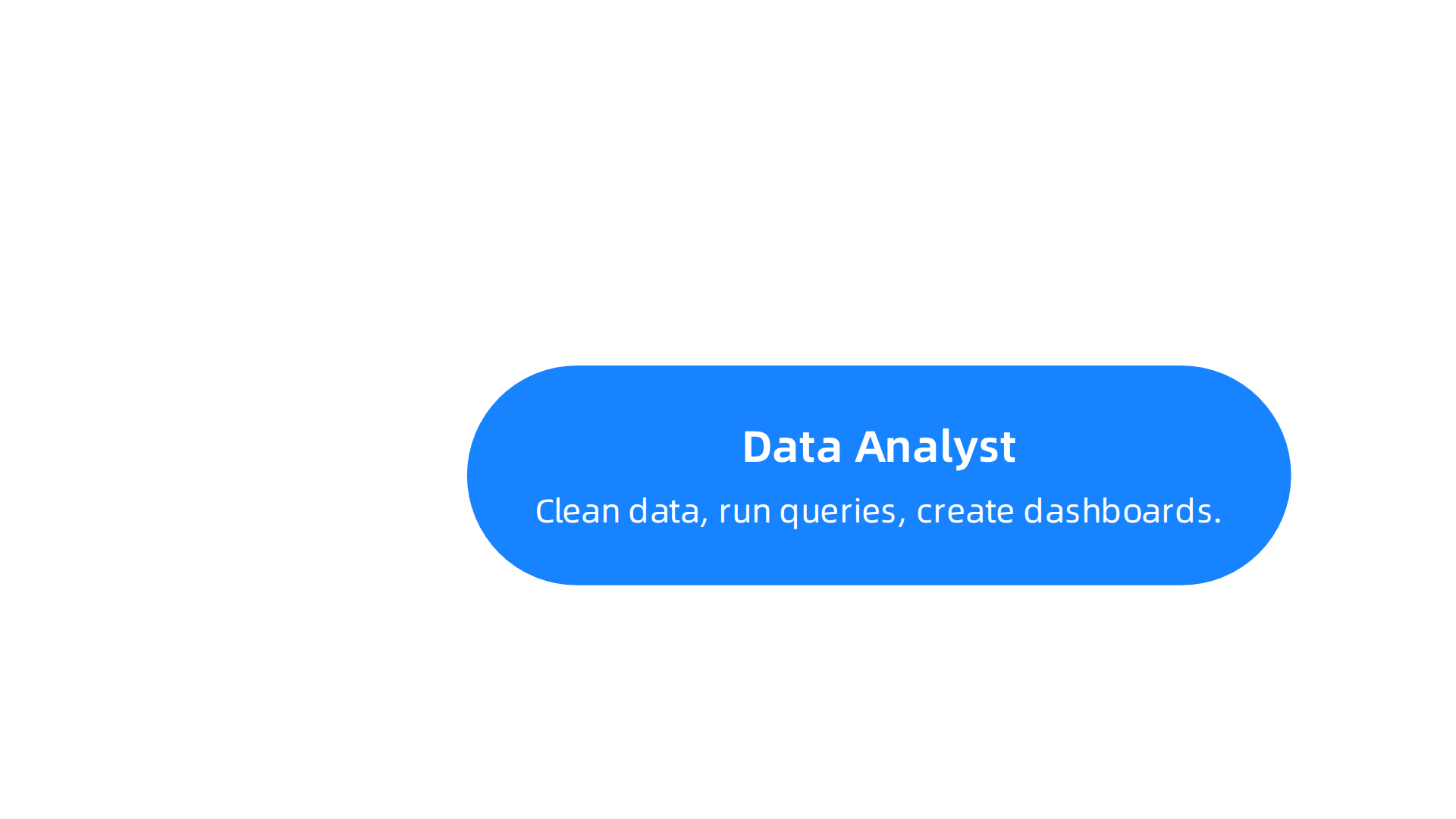
- Data Analyst: This is often the entry point. Data analysts clean data, run queries, create dashboards, and answer business questions using historical data. They focus on what happened and why.
- Data Scientist: Data scientists go a step further. They build predictive models, run experiments, and find patterns in complex datasets. They need strong programming skills in Python and SQL, plus a solid understanding of statistics. According to the 2026 data scientist salary outlook, the average salary in the US is around $151,000, with senior roles exceeding $200,000.
- Machine Learning Engineer: These professionals take models built by data scientists and put them into production. They design pipelines, monitor performance, and make sure models run reliably at scale. It is a more engineering-focused role.
- AI Ethicist: A newer role that is growing fast. AI ethicists help teams build responsible systems. They audit models for bias, ensure fairness, and guide policy around AI use.
Career Progression
Most people start as data analysts. From there, you can move into data science or machine learning engineering.

The next step is often a lead or manager role where you oversee strategy and guide teams. The global demand for data science professionals report shows that employment for data scientists is projected to grow 34% from 2024 to 2034, with about 23,400 new openings each year. That is much faster than most other fields.
The Key to Succeeding in Any Role
No matter which path you choose, understanding the full data lifecycle is critical. The CRISP-DM framework we mentioned earlier gives you a blueprint. It takes you from business understanding all the way to deployment. Following a structured methodology helps you avoid common mistakes like building models that do not solve the real problem. It also helps you catch AI hallucinations early by forcing you to validate data at every stage.
For a deeper look at one specific role, check out this guide on AI engineer skills and certification for 2026. It covers exactly what employers are looking for in that role.
Finally, real-world experience matters more than ever. Top tech leaders like Werner Vogels, CTO of Amazon, have highlighted the importance of building and deploying AI systems that work in production. His talk at an AWS Summit shows the kind of industry recognition that comes from solving real problems. You can see his insights in this Werner Vogels AWS Summit presentation. It is a great example of how data science skills translate into meaningful impact.
Key Skills for Aspiring Data Scientists
So what do you actually need to learn? The list can feel long, but here is the truth: you do not need to master everything at once. You just need a strong foundation and the ability to keep learning.
The Technical Foundation
Every data scientist needs three core technical skills:
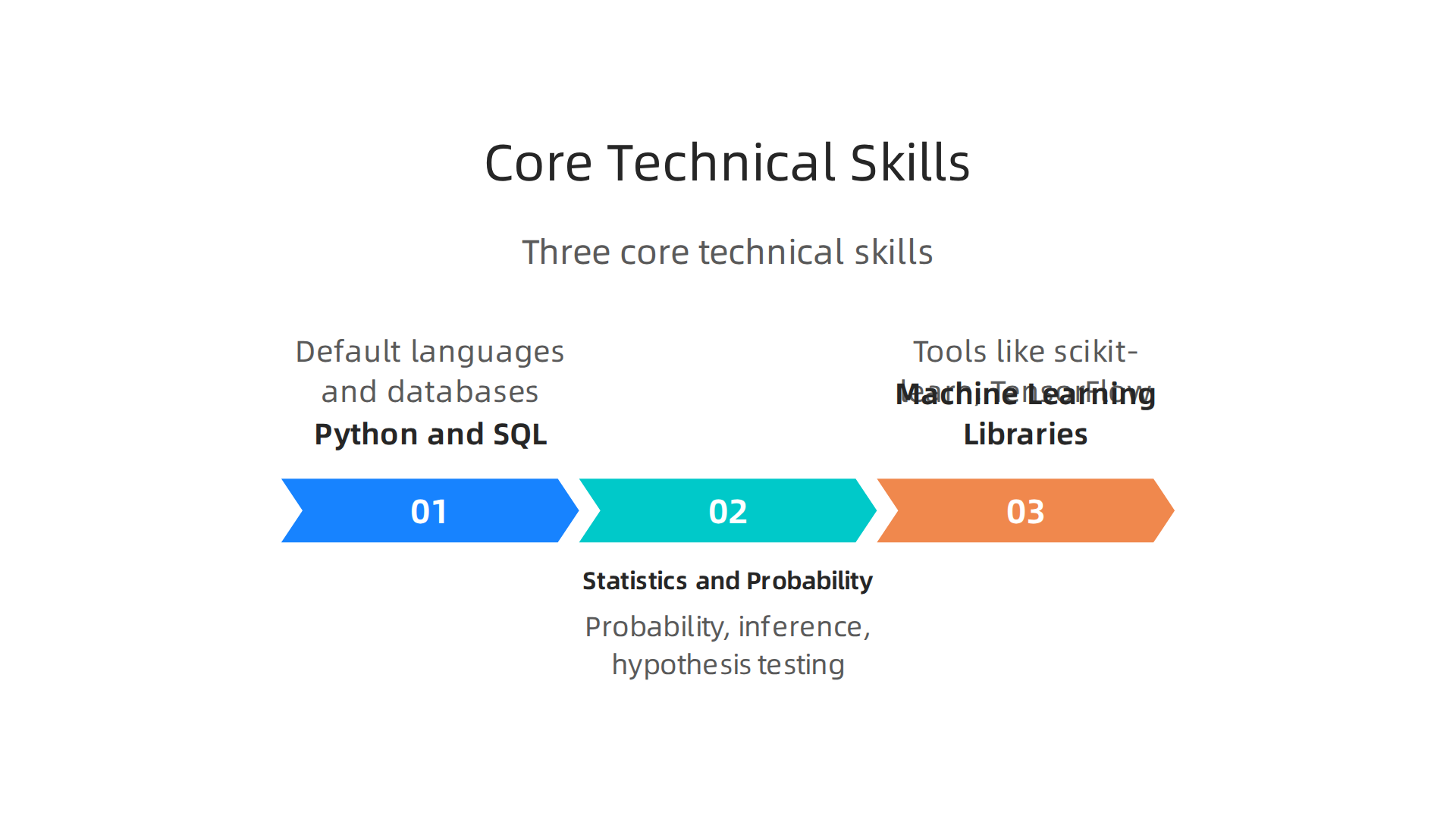
- Python and SQL: These are non-negotiable. Python is the default language for data work, and SQL is how you talk to databases. A January 2026 analysis of over 700 data scientist job postings found that Python and SQL are still top requirements, but they have become prerequisites rather than differentiators. You just need to know them.
- Statistics and Probability: You cannot build models without understanding how numbers behave. This includes hypothesis testing, regression, and distributions.
- Machine Learning Libraries: Tools like scikit-learn and TensorFlow let you build models without starting from scratch. Learn the basics of training, evaluation, and deployment.
These technical skills get your foot in the door. But they are not enough on their own.
The Soft Skills That Set You Apart
The how to land a data job in 2026 guide makes one thing clear: employers now expect junior professionals to frame business problems clearly, validate assumptions, and interpret outputs critically. That is a big shift from five years ago.
Here are the soft skills that matter most:
- Critical Thinking: Can you look at a model’s output and tell if it makes sense? That skill is more valuable than any single tool.
- Communication: You will need to explain your findings to people who do not know what a p-value is. Simple language wins.

- Ethical Judgment: As AI affects real decisions, teams need people who can spot bias and speak up about it.
- Domain Knowledge: The best data scientists understand the industry they work in. A model for healthcare is different from one for retail.
Hands-On Experience Matters More Than Degrees
The job market is competitive, especially for entry level roles. But here is the good news: real world experience often beats a fancy degree. You can start today with public datasets from places like Kaggle or government open data portals. Build a project end to end. Clean the data, explore it, build a model, and present your findings.
For a step by step plan on building these skills, check out this guide on how to learn data science with python. It walks you through exactly what to study and in what order.
If you want to dig deeper into the academic side of data science and AI innovation, you can explore the research and teaching work of applied data science expert Dean Grey on Google Scholar. It is a great resource for understanding how these skills connect to real world research.
The bottom line? Start building. The skills you need are learnable, and the demand is still growing. But you have to take the first step.
Educational Pathways and Certifications
Now comes the big question. How do you actually learn all this stuff? You have three main paths. Each one works for different people.

The trick is picking the one that fits your life and your goals.
The Traditional Degree Path
A bachelor’s or master’s degree in data science, computer science, or statistics gives you deep, structured knowledge. You spend years learning theory, math, and research methods. This path is great if you want to work in advanced research or at big companies that still filter by degrees. But it takes time and money. It is not the only way in.
Bootcamps and Online Certificates
Bootcamps are faster. Most data science bootcamps last 3 to 9 months and cost between $7,000 and $18,000. They focus on real world skills instead of theory. You build projects, work with mentors, and get career support. Many programs now include generative AI and large language models. If you want to switch careers quickly, this might be your best bet. You can check out the latest options in this review of the Best Data Science Bootcamps of 2026.
Online platforms like Coursera, edX, and DataCamp offer certificates too. They are cheaper and let you go at your own pace. But they do not have the same job placement support as formal bootcamps.
Self-Study and Open Source
Here is what many people miss. Self study is a totally valid path in 2026. Employers care more about what you can do than where you learned it. Build data science projects with public datasets. Contribute to open source. Take free courses like Fast.ai for deep learning. If you want a clear step by step structure, this self-study roadmap for data intensive applications can guide you through the essential topics.
The best path is the one you actually finish. Degrees, bootcamps, and self study all lead to the same place if you keep building. The key is to start moving.
Understanding AI Hallucinations: Causes and Impact
Picture this. You ask an AI tool a question. It gives you a long, confident answer with lots of detail. But something feels off. You check the facts. They are completely wrong. That is an AI hallucination.
An AI hallucination happens when a model generates information that sounds true but is actually false or misleading. The AI is not lying on purpose. It is just doing what it was trained to do: predict the most likely next word based on patterns. As the Google Cloud article on AI hallucinations explains, these errors often come from flawed training data, bias in the data, or the model making incorrect assumptions.
Why Do Hallucinations Happen?
Several factors cause hallucinations. One big reason is the training data itself. AI models learn from massive amounts of internet text. That data contains errors, opinions, and contradictions. The model copies those patterns without knowing what is true. Another cause is overfitting. When a model learns the training data too perfectly, it can memorize noise and repeat it as fact.
The design of these models also plays a role. As the MIT Sloan Teaching & Learning overview of AI hallucinations and bias points out, generative AI systems are built to produce plausible content, not to verify truth. Accuracy is almost accidental. The model is like a very fancy autocomplete tool. It guesses the next word. It does not check a database of facts.
The Real World Risks
Hallucinations are not just annoying. They can cause real harm in content creation, research, and business decisions. A 2026 research report on AI hallucination statistics found that even purpose-built legal AI tools still hallucinated 17% to 34% of the time on challenging tasks. Imagine relying on that for legal advice. The risks are serious.
How to Start Detecting Them
The first step to catching hallucinations is understanding that no AI model is perfect. You need to build a healthy skepticism. Check outputs against trusted sources. Compare answers from different models. Use clear, specific prompts to reduce vague responses. And for high stakes work, always have a human review the final output.
If you want to go deeper into spotting these errors, check out this practical training guide for detecting AI hallucinations. It gives you step by step methods to catch mistakes before they cause problems.
Hallucinations are not going away anytime soon. But once you understand why they happen and where they hurt most, you can build a system to protect yourself. For a deeper look at how model reliability and authority issues play out in real AI systems, you can read this Cartographer of Drift profile that explores these very challenges.
The next part of this article will walk you through practical detection techniques you can use starting today.
Building Trustworthy AI Systems
Knowing why AI hallucinates is important, but the real goal is building systems you can trust. Trust does not happen by accident. It requires transparency, fairness, accountability, and robust validation at every step.
Transparency means being open about how an AI model was trained, what data it used, and what its limits are. Fairness ensures the model does not favor one group over another. Accountability means someone is responsible when the model gets it wrong. And validation means you test the outputs before you use them.
Permission-Based Data Capture
One powerful way to build trust is to collect data ethically. Many AI models are trained on random internet data full of errors and bias. A better approach is permission-based data capture, where people knowingly share their data and understand how it will be used. Frameworks like the Value Reinforcement System (VRS) provide a legal and ethical structure for this kind of data collection. You can explore the VRS Patent (U.S. Patent No. 12,205,176) to see how this permission-based model works in practice.
Another proven framework is CRISP-DM, a structured methodology for data science projects. It guides teams through planning, data collection, modeling, and evaluation, building quality checks into every phase. Using a framework like CRISP-DM reduces the chance that sloppy data practices will cause hallucinations later.
Fact-Checking Pipelines and Human Review
Even with the best data, models still make mistakes. That is why organizations must set up fact-checking pipelines. These are automated systems that scan AI outputs for errors, flag suspicious claims, and check them against trusted sources. A study on new sources of inaccuracy in AI highlights that downstream gatekeeping is essential to catch subtle hallucinations that slip through.
But automation alone is not enough. You need human-in-the-loop processes. A person with the right data science roles should review high-stakes outputs before they are published or acted upon. This is especially critical for fields like law, healthcare, and finance, where a wrong answer can cause real harm.
By combining ethical data collection, structured frameworks, automated checks, and human oversight, you move from simply detecting hallucinations to building AI systems that earn trust from the start. For a deeper look at how poor data modeling feeds into hallucinations, read this guide on how data modeling causes AI hallucinations and how to fix it.
The Future of AI and Data Science: Trends and Predictions
So you have learned how to catch and prevent AI hallucinations. The next step is looking ahead. The field of AI artificial intelligence is changing fast, and data science roles are shifting with it. Here are the key trends shaping the future.
First, synthetic data is becoming a major tool. Instead of relying only on real-world data that can be biased or scarce, teams create artificial datasets that train models safely. This helps reduce hallucinations from the start. Another trend is federated learning, where models train across many devices without moving private data to a central server. This protects privacy and cuts down on data errors.
AI governance is also growing fast. Companies are building clear rules for how models are built, tested, and used. They are hiring AI ethics specialists and trust engineers to make sure systems stay fair and accurate. Real-time validation is another hot area. Instead of checking outputs hours later, pipelines now flag errors instantly. This means fewer hallucinations slip through.
For anyone in data science projects, these trends bring great career chances. The demand for people who understand both technical skills and ethical awareness is rising fast. For example, roles like AI trust engineer and governance analyst barely existed a few years ago. Now they are some of the most sought-after data science roles. If you want to build skills for these new jobs, check out resources like the Forbes Advisor guide on the Best Online Data Science Bootcamps for program options.
Many existing data science roles are also evolving. A data analyst now needs to know how to spot AI hallucinations. An engineer must understand bias. To stay ahead, focus on building a skill set that blends modeling, ethics, and real-time checking. You can start with this guide on ai data analyst skills for 2026 to see what employers want.
One thing is clear: the future of AI artificial intelligence depends on trust. And trust comes from people who care about accuracy and fairness. As Oracle Chairman Larry Ellison put it, the value of private, permissioned data is huge. For a deeper look at why permission-based approaches matter for the future, read this Larry Ellison quote on the debate between simulation and permissioned data.
The bottom line? AI and data science are not just about algorithms anymore. They are about building systems people can rely on. And that means every data science project should include ethical thinking from day one. The careers of tomorrow will reward those who take that seriously.
Summary
This article explains what artificial intelligence is, how its main subfields (machine learning, deep learning, NLP, computer vision, robotics) differ, and why those differences matter for reliability. It focuses on AI hallucinations — confident but false outputs — describing their root causes (bad or biased training data, overfitting, model design) and the real-world risks they pose in law, healthcare, advertising, and business. The guide gives practical detection and prevention strategies: adopting CRISP-DM practices, using permission-based data capture, building fact-checking pipelines, and adding human-in-the-loop review for high-stakes outputs. It also outlines the key technical and soft skills employers want for data science roles, compares educational paths (degrees, bootcamps, self-study), and highlights emerging trends like synthetic data, federated learning, and AI governance. Readers will come away able to spot common hallucination signals, choose appropriate ML tools, design validation steps, and plan a career that balances technical skill with ethical oversight.