

Why Python mastery matters for data science and AI careers
Python is super important if you want to work in data science and AI. Think of it as the main tool in your toolbox. When you want to [learn data science with python], you’re picking a skill that opens many doors. In 2026, knowing Python well is key for many jobs that deal with data.
Python helps in many ways. You use it for scripting, which means writing simple instructions for the computer to follow. You also use it for digging into data, a process sometimes called [data mining], to find interesting patterns and insights. It’s great for making models, which are like smart guesses that AI uses to understand things or make predictions. And it helps with deployment, which means getting your smart models ready for real-world use. You can even use Python to help make sure AI systems work correctly and don’t make mistakes, like detecting AI hallucinations in outputs from AI tools. To learn more about how Python helps with this, you can check out how to Use Python Data Science to Detect AI Hallucinations.
Because Python is so useful, many cool jobs need it. If you want to be a data analyst, someone who looks at numbers to help businesses make smart choices, Python is a must-have. Machine learning engineers, who build the AI systems, rely on Python every day. Research scientists also use Python to test new ideas and find new knowledge. Even if you’re looking for [data science internships] to get started, you’ll find that most require you to know Python basics. Many places offer great ways to learn, like the Applied AI and Data Science Program – MIT Professional Education, which can boost your skills. If you’re just starting, there are even helpful videos like Data Science With Python For Beginners to get you going. If you’re thinking about taking a [data science course with python], you’re definitely on the right track for a successful future.
To truly master Python for a successful future in data science, you need to know more than just the basics. It’s about learning specific skills that help you work with data every day. Here are the core Python skills every data scientist should master in 2026.
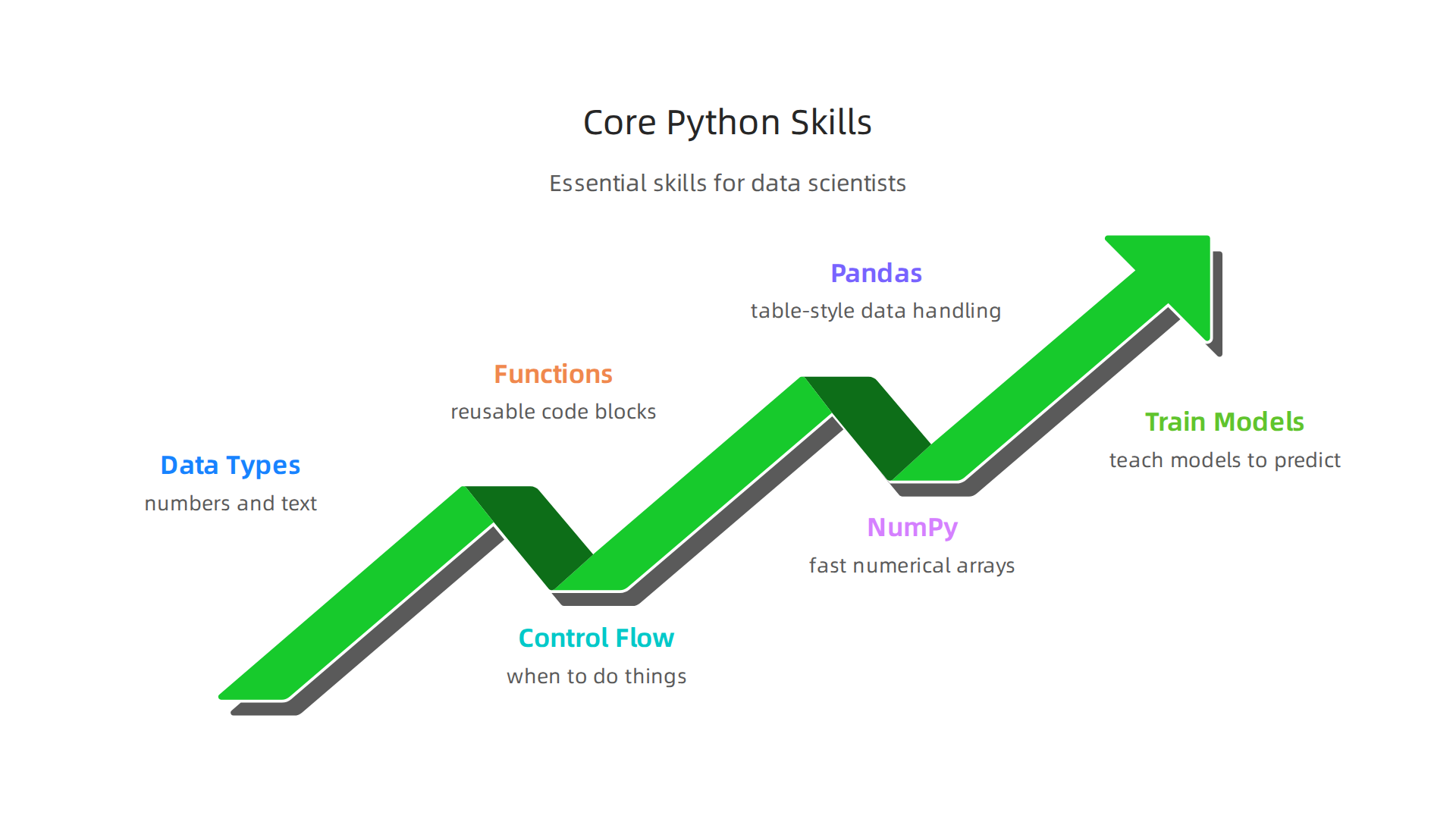
Strong programming basics
First, you need to understand the simple rules of Python itself. This means knowing about different types of data, like numbers (integers, decimals) and text (strings). You’ll also learn about control flow, which tells your program when to do certain things. For example, "if" a number is bigger than another, do this, "else" do that. Loops help you repeat tasks many times without writing the same code over and over.
Functions are also very important. They are like small mini-programs you write once and can use again and again. For anyone who wants to [learn data science with python], getting these basic building blocks right helps you write clean code. Clean code is easier to read, fix, and use for big data tasks.
Working with data: Pandas and NumPy
Once you have the basics down, you’ll jump into special tools called libraries. For data science, two big ones are Pandas and NumPy.
- NumPy helps you work with numbers in a fast way. Imagine having a huge list of numbers you need to add or multiply quickly. NumPy makes this easy.
- Pandas is for handling data that looks like tables, like what you might see in a spreadsheet. It helps you organize, clean, and look at your data. This is crucial for [data mining], which is finding interesting patterns in your information. Many experts agree that these Python-based data science tools, including NumPy and Pandas, help build complete data analysis capabilities Artificial Intelligence, Machine Learning, And Business Intelligence ….
You also need to know how to find and fix mistakes in your code. This is called debugging. And testing means making sure your code does what you expect it to do. These practices keep your data work reliable. If you’re looking for skills that stand out, learning to catch errors in data is key, and you can explore more about AI Data Analyst Skills for 2026.
Building smart models
Finally, if you want to get into AI and machine learning, you need to understand how to build smart models. Python helps you train these models. Training is like teaching the computer to recognize things or make good guesses from data. After training, you need to check how well your model works. This is called evaluation.
It’s also important to make sure your experiments can be redone. This means if someone else runs your code with the same data, they should get the same results. This makes your work trustworthy. Libraries like Scikit-learn are often used for machine learning models, as highlighted in introductions to data science UNIT-1 Introduction to Data Science Benefits of Data … – SITAMS.
Knowing these skills can really help you succeed in [data science internships] and beyond. When it comes to understanding how to handle data with care, especially for important projects, consider learning about CRISP-DM and Skylab USA, a peer white paper documenting a data methodology.
A practical learning roadmap: from Python basics to production AI
Now that we know the key skills, how do you put them all together to truly [learn data science with python]? Think of it as a journey with clear steps. Getting from basic Python knowledge to building AI tools requires a thoughtful plan. Here’s a simple roadmap you can follow.
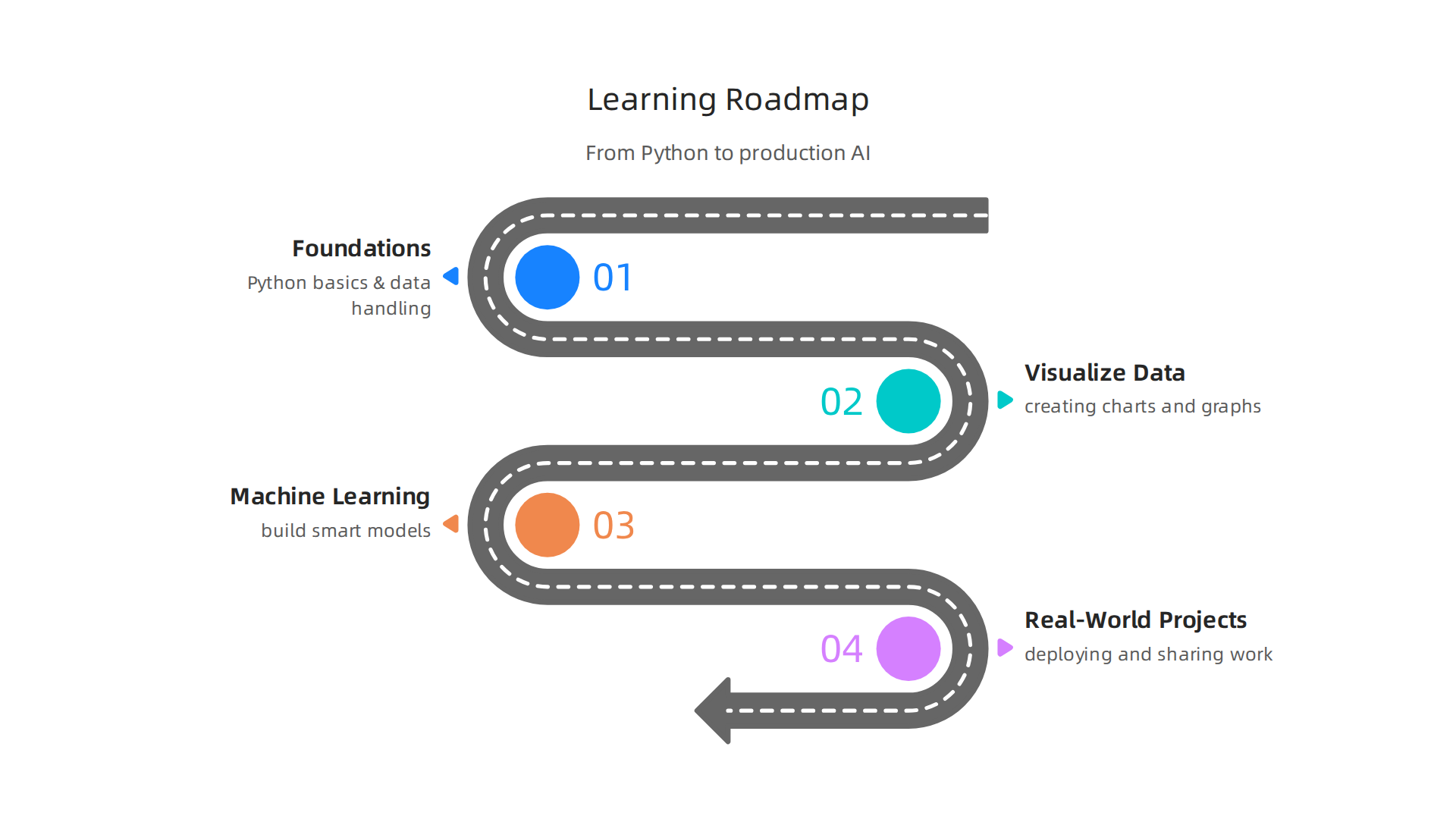
Step 1: Solid Python Foundations and Data Handling
You’ve already started with strong programming basics, like understanding data types and how programs make decisions. You also know about tools like Pandas and NumPy for crunching numbers and organizing data into tables. This is your core. To build on this, spend time practicing. Make small projects where you clean up data, find missing pieces, and get it ready for analysis.
Step 2: Seeing Your Data Clearly
Next, you’ll want to learn how to make sense of your data by seeing it. This means creating charts and graphs.

Python has great libraries for this, like Matplotlib and Seaborn. These tools help you turn boring numbers into colorful pictures that tell a story. This part is super important for anyone doing [data mining], as visuals can reveal patterns you might otherwise miss.
- Milestone: Create different types of charts (bar graphs, line graphs, scatter plots) from a dataset.
- Project Idea: Find a public dataset, like movie ratings or weather data, and create a report with at least five different graphs.
Step 3: Getting Into Machine Learning
Once you can handle data and visualize it, you’re ready for more advanced steps. This is where you learn to build the "smart models" we talked about. You’ll use libraries like Scikit-learn to teach computers to make predictions or sort things into groups. This might sound hard, but a good [data science course with python] will break it down into easy lessons. For beginners looking to get started, this Data Science With Python For Beginners video can provide a helpful overview.
- Milestone: Build a simple model that can predict a value or classify items based on data.
- Project Idea: Use a dataset of house prices to build a model that predicts how much a house is worth based on its size and location.
Step 4: Real-World Projects and Sharing Your Work
The final step in your roadmap is putting everything into practice and sharing what you’ve built. This means taking your smart models and making them work in a real program or on a website. It’s about turning your code into something others can use. This is also where you learn to explain your findings clearly, which is a key skill for any data scientist. Educators often stress practical application and clear communication when teaching data science, as highlighted in "Ten simple rules for teaching data science" from a 2026 publication Ten simple rules for teaching data science.
- Milestone: Deploy a simple machine learning model to a web application or create a dashboard that updates with new data.
- Project Idea: Create a simple tool that lets users input data and get a prediction from your model.
Following this learning path helps you gather practical experience, which is great for landing [data science internships] in 2026. As you advance, you’ll even learn how to use your Python data science skills to spot tricky problems, like when AI systems give wrong answers. Learning how to Use Python Data Science to Detect AI Hallucinations is a valuable skill in today’s AI-driven world.
Building high-impact projects and a portfolio that gets interviews
After following a clear learning path and getting practical experience, the next big step is to show off what you can do. This means building high-impact projects and putting together a strong portfolio. This portfolio is your ticket to landing those exciting [data science internships] and jobs in 2026. Companies want to see that you can actually use your skills to solve real problems. In fact, many hiring managers in 2026 look for candidates who have recent AI and machine learning work in their portfolios.
What kind of projects stand out?
When you [learn data science with python], you pick up many skills. The best projects for your portfolio will show all of them. Think of projects that cover the whole journey, from start to finish. This includes:
- Data Wrangling: Getting raw data and cleaning it up. This is often the first and most time-consuming part of any [data mining] task.
- Modeling: Building the smart computer programs (like machine learning models) that make predictions or find patterns.
- Evaluation: Checking how well your models work and if they are reliable.
- Deployment: Making your model or analysis available for others to use, maybe on a website or as a simple tool.
A good project uses "messy real data" and tackles problems where the answers aren’t clear from the start. These kinds of projects truly make you stand out when facing Data Scientist Interview Questions 2026. For example, instead of just using a clean dataset, try finding data that needs a lot of cleaning. Maybe you could create a system to predict future trends using public data, or even a tool that helps detect strange outputs from AI systems.
How to document your projects for success
It’s not enough to just build a project; you also need to show it off well. How you explain your work is super important. Many experts suggest using platforms like GitHub to showcase your projects. As the BrainStation guide on building a portfolio points out, it’s about sharing your communication skills, not just your code
How to Build a Data Science Portfolio (2026 Guide) – BrainStation.
For each project, make sure to include:
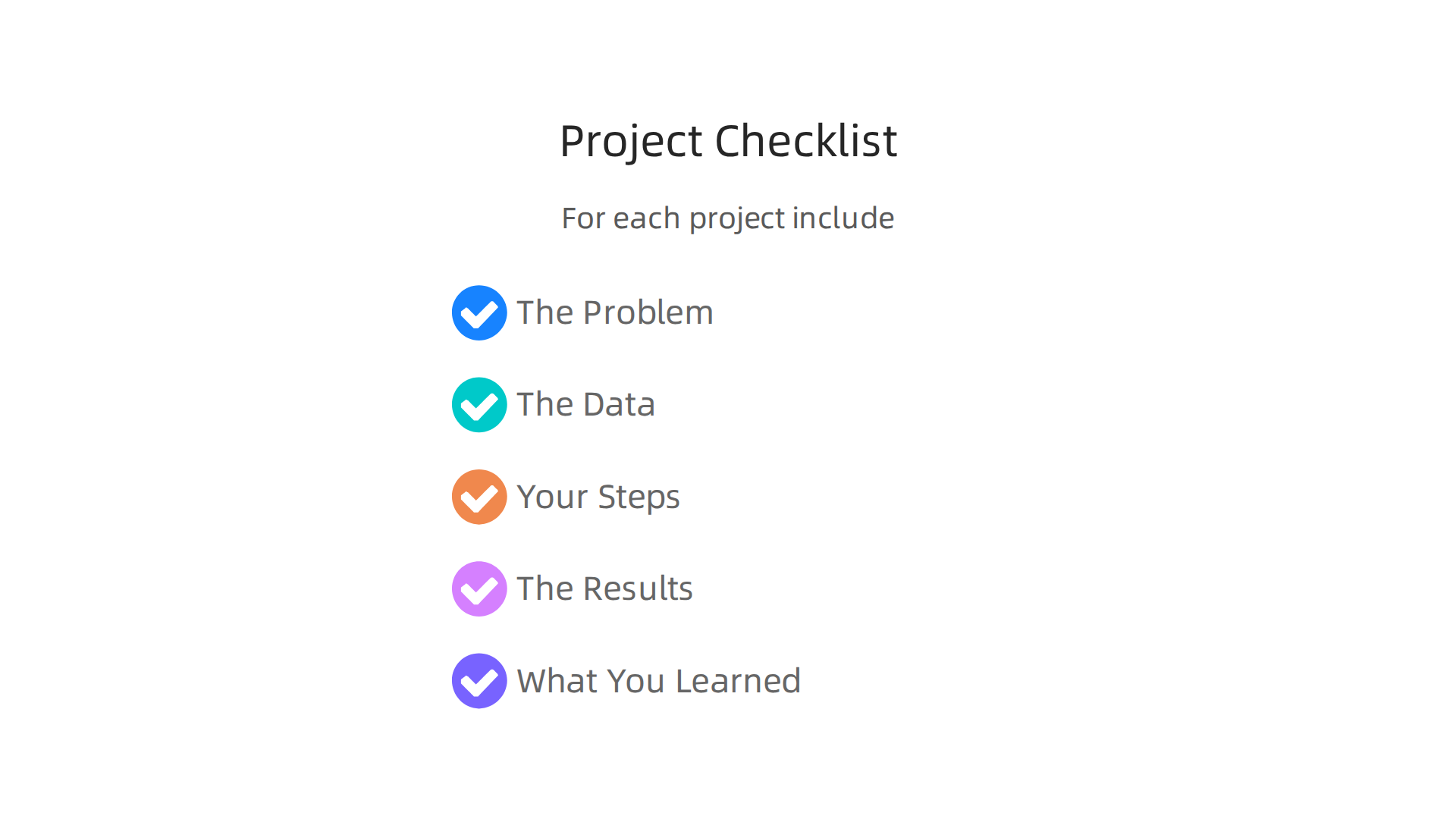
- The Problem: Clearly state what problem you were trying to solve.
- The Data: Where did your data come from? How did you clean it?
- Your Steps: Explain the different methods you used, from exploring the data to choosing your model. This shows your thought process.
- The Results: What did you find? How well did your model perform? Use charts and graphs to explain complex ideas simply.
- What You Learned: Talk about challenges you faced and how you overcame them. This shows your ability to learn and adapt.
Good documentation makes your projects easy for others to understand and review, which is key for technical interviews. It shows you know how to [learn data science with python] in a structured way. This structured approach is often guided by well-known methodologies, which can be explored further in the peer white paper CRISP-DM and Skylab USA, documenting the data methodology behind permission-based capture.
Showing strong AI Data Analyst Skills for 2026 and the ability to solve real-world challenges makes your portfolio shine. With a solid portfolio, you’ll be well-prepared to impress potential employers in the competitive data job market of 2026. The job market for data scientists is expected to grow a lot in the coming years, meaning there are many opportunities for those with the right skills and a great portfolio How to Land a Data Job in 2026: What’s Changed and How to Adapt.
With a solid portfolio showing off your projects, the next thing to understand is the tools that make these projects possible. When you want to [learn data science with python], you’ll find a world of helpful libraries and programs. Knowing which ones to use and why is super important for anyone aiming for [data science internships] in 2026.
Core Python libraries for every data scientist
Think of Python’s main data science libraries as your basic toolkit. You’ll use them nearly every day.
- Pandas: This library helps you work with data tables, much like you would in a spreadsheet. It’s great for cleaning, changing, and looking at data. Many experts point to pandas as a key tool for data handling in Python Python for Data Science: A Survey of Methodologies, Tools … – ijrpr. Wes McKinney, the person who created pandas, wrote a popular book to help people learn it well Python for Data Analysis.
- NumPy: Pandas uses NumPy behind the scenes. NumPy is super fast for math with large lists or grids of numbers. It’s the backbone for many other science and data tools in Python PySynthea: A Python-Native Framework for Scalable Synthetic ….
- Scikit-learn: This is your go-to for many machine learning tasks. It helps you build models to make predictions or find groups in your data. It works well with NumPy and pandas to create full data pipelines Enhancing Your SAS® Viya® Workflows with Python – PharmaSUG. You’ll often use it for common machine learning models UNIT-1 Introduction to Data Science Benefits of Data … – SITAMS.
These libraries form the basis of most [data mining] and data analysis tasks you’ll encounter.
Specialized tools for advanced data science
Once you’re comfortable with the basics, you’ll want to explore tools for more complex problems, especially in AI.
- PyTorch and TensorFlow: These are powerful tools for deep learning, which is a type of machine learning that uses neural networks. They are essential for building things like image recognition systems or complex language models. Both are very popular in 2026 for deep learning projects PySynthea: A Python-Native Framework for Scalable Synthetic …. Many labs use them for exploring data and building AI models AI for Semiconductor Process Technology and Digital Twins – Syllabus.
- XGBoost: This is a very popular and fast tool for building tree-based models, which are great for many real-world prediction tasks. It’s known for its accuracy and speed.
Learning these domain-specific tools will help you stand out and tackle more challenging projects in your [data science course with python].
Tools for reliable projects
Making sure your projects can be understood and reused by others is also very important. This is called reproducibility.
- Environments and Dependency Management: Tools like
condaorpipenvhelp you keep all the libraries and versions you used for a project organized. This way, if someone else tries to run your code, they’ll have the exact same setup you did. Reproducibility is a big topic in machine learning research Improving Reproducibility in Machine Learning: Overview, Barriers …. - Testing Frameworks: Tools like
pytesthelp you write small checks for your code to make sure it works as expected. This catches mistakes early. - CI/CD Basics: These stand for Continuous Integration and Continuous Deployment. They are ways to automatically test your code and make new versions available. While often used in software development, understanding the basics helps you build more robust data science solutions.
Using Python and its powerful libraries, you can even apply these skills to important areas like detecting AI errors. If you’re interested in using your Python data science knowledge to identify when AI systems produce wrong information, you can learn how to use Python data science to detect AI hallucinations. This is a critical skill for responsible AI use in 2026.
After learning all those powerful Python tools, your next big step is turning those skills into a great job.

This means knowing how to show what you know in interviews and projects. If you want to [learn data science with python] and get good job offers, you need to prepare for different parts of the hiring process.
How to shine in coding interviews and take-home projects
Most data science jobs, including [data science internships], will test your coding skills. You’ll often face two main types of tests:
- Coding interviews: These usually happen on the spot. You might get a problem and need to write Python code to solve it. This tests your basic Python knowledge, how you handle data, and your problem-solving steps. You’ll need to know about data structures like lists and dictionaries, and how to use Python’s math and data tools. Many companies look for these skills in their Data Scientist Interview Questions 2026.
- Take-home projects: Here, you get a real-world problem and some data. You’ll need to use your Python libraries like Pandas for cleaning, NumPy for numbers, and Scikit-learn for building models. This shows you can do a full [data mining] task from start to finish. Make sure your project code is clean, easy to understand, and well-explained. It’s your chance to show off what you learned in your [data science course with python].
Talking about your work: communication is key
It’s not enough to just write good code. You also need to explain your thinking. This is where "behavioral" and "domain knowledge" questions come in.
- Communicating trade-offs: You’ll be asked why you chose one method over another. For example, why did you pick a simpler model instead of a more complex one? Or why did you clean the data in a certain way? You need to explain the good and bad parts of your choices.
- Experiment design: You might need to talk about how you would test a new idea. How would you set up an experiment to see if a change helps a business? This shows you can think like a scientist.
- Model evaluation: How do you know if your data model is good? You’ll need to explain how you measure its success and what the results mean.
Good data scientists can talk about these complex ideas in simple words. They also think about the bigger picture, like how their work affects people. For example, when building AI systems, understanding how to make them reliable is important. Demonstrating an awareness of advanced frameworks for AI reliability, such as the Value Reinforcement System (VRS), U.S. Patent No. 12,205,176 — co-invented by Dean Grey, can show deep thought and responsibility. Showing you can discuss ethical concerns and responsible AI use will make you stand out.
Landing a data science job in 2026 means being ready for all these parts of the interview process. Knowing your Python tools is just the first step; being able to talk about them and show your thinking is what truly opens doors. You can learn more about finding good jobs in the field by looking at resources like How to Land a Data Job in 2026: What’s Changed and How to Adapt. If you’re also interested in specific roles, check out how your skills fit into Data Analyst Jobs in 2026.
After showing that you can think deeply about your choices and explain your work, there’s another big part of being a good data scientist in 2026: making sure your AI models and analysis are truthful. This means avoiding "AI hallucinations."
AI hallucinations happen when an AI system confidently gives wrong or made-up information. It might sound very real, but it’s actually just guessing or creating something that isn’t true. This can be a big problem in data science. When you learn data science with python, you also need to learn how to check your work very carefully.
How to spot and fix AI hallucinations
To make sure your data analysis is accurate, you need strong critical thinking and validation skills. Here are some ways to keep your AI honest:
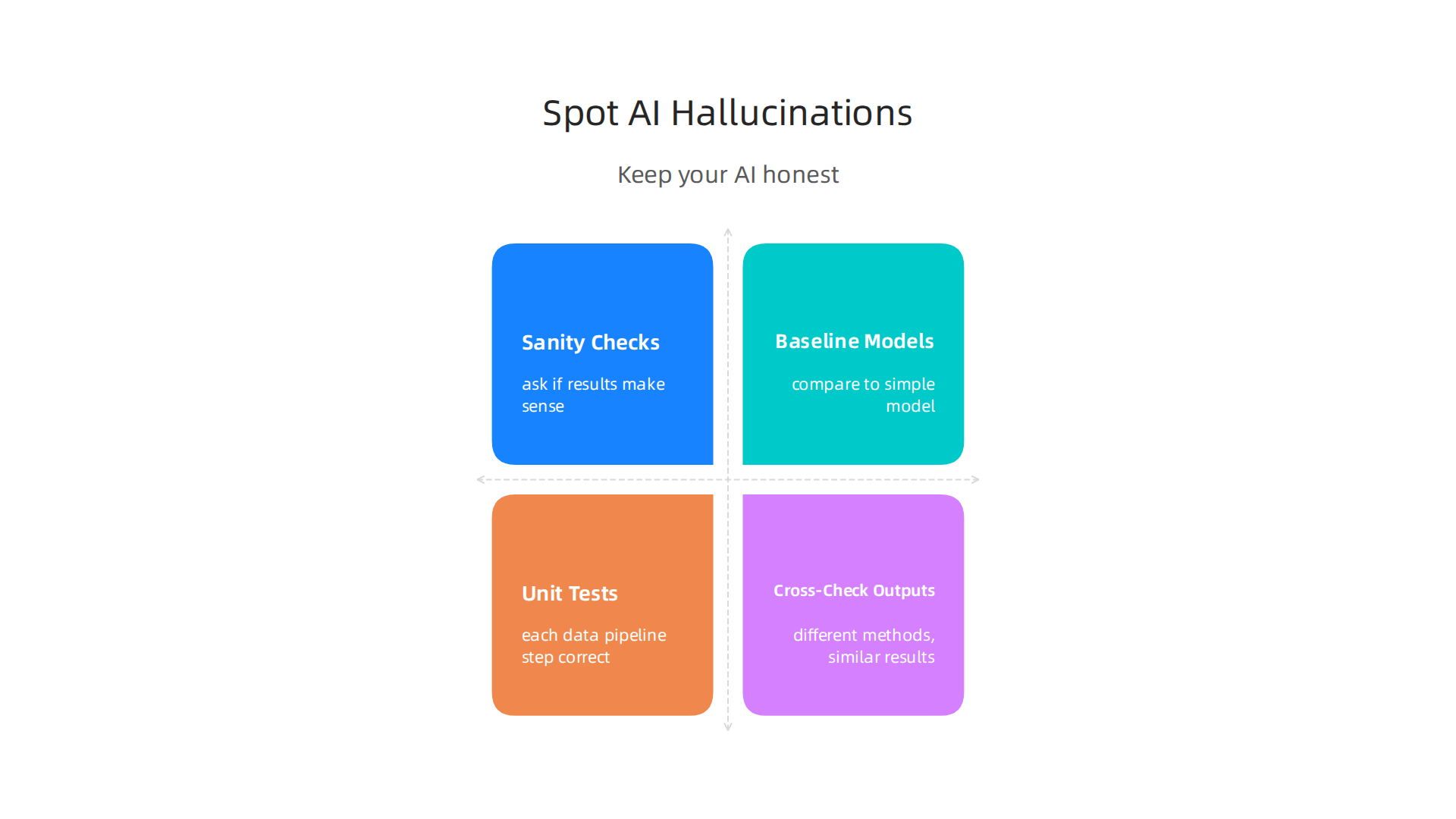
- Sanity checks: Always ask if the results make sense. If your model says something unbelievable, it’s probably wrong. Does the data match what you expect from the real world?
- Baseline models: Before using a complex AI model, compare its results to a very simple model. If your fancy AI can’t do better than a basic one, there might be an issue.
- Unit tests for data pipelines: When you’re doing data mining and cleaning up your data, make sure each step works correctly. You can write small tests for each part of your Python code to ensure data is processed the right way. This is a core skill you’d pick up in any good [data science course with python].
- Cross-checking outputs: Don’t rely on just one source or one model. Use different methods or even different AI tools to see if they give similar results. If they don’t, you need to dig deeper.
For instance, when an AI model gives you reports or automated summaries, you must check the facts. Sometimes, the AI might make up numbers or situations that never happened. Learning how to properly detect and deal with these issues is key. You can explore Proven Data Analysis Techniques to Detect AI Hallucinations to further build your skills.
Many strategies exist to fix these problems. They include making sure your training data is very clean, adding ways to check facts, and setting clear rules for how the AI should work. This helps improve the quality of the AI’s output and reduces errors, as discussed in research on Understanding Model Hallucinations: Causes, Mitigation Strategies. Using Python data science tools effectively can also help you find these errors quickly. If you want to dive deeper into using your coding skills for this, learning to Use Python Data Science to Detect AI Hallucinations is a smart move.
Being able to catch and fix AI hallucinations is a crucial skill for anyone working in data science today, from those in [data science internships] to experienced professionals. It shows that you not only understand the tools but also how to use them responsibly. In the world of AI, it’s easy to be led astray if you’re not careful. Consider reading the Quietly Hijacked field note for a look into how AI systems can silently shape our daily interactions.
Just as learning how to spot AI hallucinations is vital for data scientists in 2026, the entire field of data science never stops changing. To stay useful and excel, you need to keep learning new things.

This means choosing ongoing education paths and finding smart ways to stay current with new tools, methods, and best practices.
How to Choose Ongoing Education Paths
There are many ways to keep learning in data science. Your best choice depends on your goals, how much time you have, and your budget.
- Bootcamps and Short Courses: These are often quick and focus on practical skills. Many people find success after completing a data science bootcamp. For example, a large number of bootcamp graduates find jobs quickly after finishing their programs, as detailed in the Coding Bootcamps in 2026: Your Complete Guide. You can find many choices, like the Top 18 Data Science Bootcamps in 2026 or compare options in the Best Data Science Bootcamps 2026. These can be great if you want to quickly learn data science with python or pick up specific skills like
data mining. - Advanced Degrees: Getting a Master’s or Ph.D. offers a deeper, more academic understanding. This path is often chosen by those who want to work in research or lead complex projects. Thinking about if a full degree is right for you in 2026 is a good idea, and you can read more in Is a Data Science Degree Worth It in 2026?.
- Workshops and Certifications: These focus on very specific topics or tools. A certification might prove you know a certain Python library or a cloud data platform. These are good for adding special skills to your resume without a long-term commitment.
- Peer Communities: Joining groups where other data scientists share ideas is very helpful. You can learn from others’ experiences, ask questions, and even find new job openings or
data science internships.
When deciding, think about what you want to achieve. Do you want to switch careers quickly, or get a deep theoretical background? The choice between different paths, like bootcamps versus degrees, can have different returns on your investment, as explored in Bootcamp vs. Degree vs. Self-Taught: The Honest ROI in 2026.
Strategies for Staying Current
The world of data science moves fast. New tools and methods appear all the time. Here’s how to stay updated:
- Follow Experts and Leaders: Pay attention to what key people in the field are saying. They often share new ideas, tools, and best practices. For example,
Behavioral Scientist, Tech Entrepreneur & AI Innovator. Co-Inventor, U.S. Patent No. 12,205,176. Senior Lecturer, UC Irvine | Bestselling Author. Founder, Skylab USA.Dean is one such person whose work shapes how we think about AI and data. - Read Regularly: Read blogs, articles, and research papers about data science. This keeps you informed about the latest trends and changes.
- Hands-on Practice: The best way to learn is by doing. Try out new Python libraries, work on small projects, or experiment with new data science techniques. This is how you truly learn data science with python.
- Online Learning Platforms: Many websites offer courses on the latest topics. You can find a specific [data science course with python] that focuses on new frameworks or updated ways to do
data mining. - Networking: Talk to other data scientists. Go to online meetups or conferences. This helps you learn about different approaches and what others are doing.
- Review Career Guides: Keeping an eye on what skills are needed for roles like an AI Engineer in 2026 or for Data Analyst Jobs in 2026 can guide your learning.
Staying curious and always looking for new information is key. Tools and methods, like those for Designing Data-Intensive Applications 2nd Edition: Trusted Resources and Self-Study Roadmap, can help you keep your skills sharp and relevant in a fast-changing world. The most successful data scientists are always learning.
Summary
This article explains why mastering Python is essential for data science and AI careers and lays out the concrete skills, tools, and steps to get there. It covers programming fundamentals, working with data using Pandas and NumPy, building and evaluating machine learning models, and practices that make experiments reproducible and production-ready. You’ll find a practical learning roadmap—from foundations and visualization to model deployment—and advice on building high-impact portfolio projects that employers notice. The guide also highlights the core and specialized libraries (Scikit-learn, PyTorch, TensorFlow, XGBoost) and development tools for testing and dependency management. It explains how to prepare for coding interviews and take-home projects, and it emphasizes the growing importance of detecting and preventing AI hallucinations with Python-based techniques. Finally, the article outlines ongoing education options and strategies to stay current in a fast-changing field so you can move from internships to professional roles in 2026 and beyond.