

Why the Cybersecurity Analyst Role Matters Today
Think of a cybersecurity analyst as a superhero for computers and data. In 2026, almost everything we do, from banking to buying groceries, happens online. This means our information is stored in computers and needs to be kept very safe. A cybersecurity analyst is the person who makes sure this happens. They are like digital detectives, always watching for bad guys who try to steal information or break into computer systems.

They protect a company’s valuable secrets and keep daily business running smoothly. Without them, companies could lose a lot of money and trust if their systems were attacked.
The need for a good cybersecurity analyst has grown a lot. This is because there are more cyber threats every day. Bad actors are always finding new ways to cause trouble. For example, a report from the World Economic Forum shows that many people saw more cyber fraud and phishing in 2026 Global Cybersecurity Outlook 2026.

This means companies need sharp minds to defend against these new dangers. The job isn’t just about stopping old attacks, but also about understanding new ones. For instance, sometimes tricky AI problems can even make network firewalls weaker, creating new challenges for security teams. You can learn more about how these issues affect protection by reading about How AI Hallucinations are Undermining Network Firewall Security.
Because of these rising threats, companies are looking for skilled people more than ever. They want experts who understand how to find weak spots in computer systems and fix them before hackers can get in. Many employers look for people with entry level cyber security certifications or those who have completed strong cybersecurity programs. Learning about ai cybersecurity training is also becoming very important as new technologies bring new risks. Companies expect analysts to be ready for anything, from preventing simple virus attacks to complex cases that might even involve computer forensics certification skills to find out how an attack happened.
A cybersecurity analyst has many important tasks to keep computer systems safe. Their main job is to stop bad things from happening to a company’s data and networks.
Here is what a cybersecurity analyst often does:
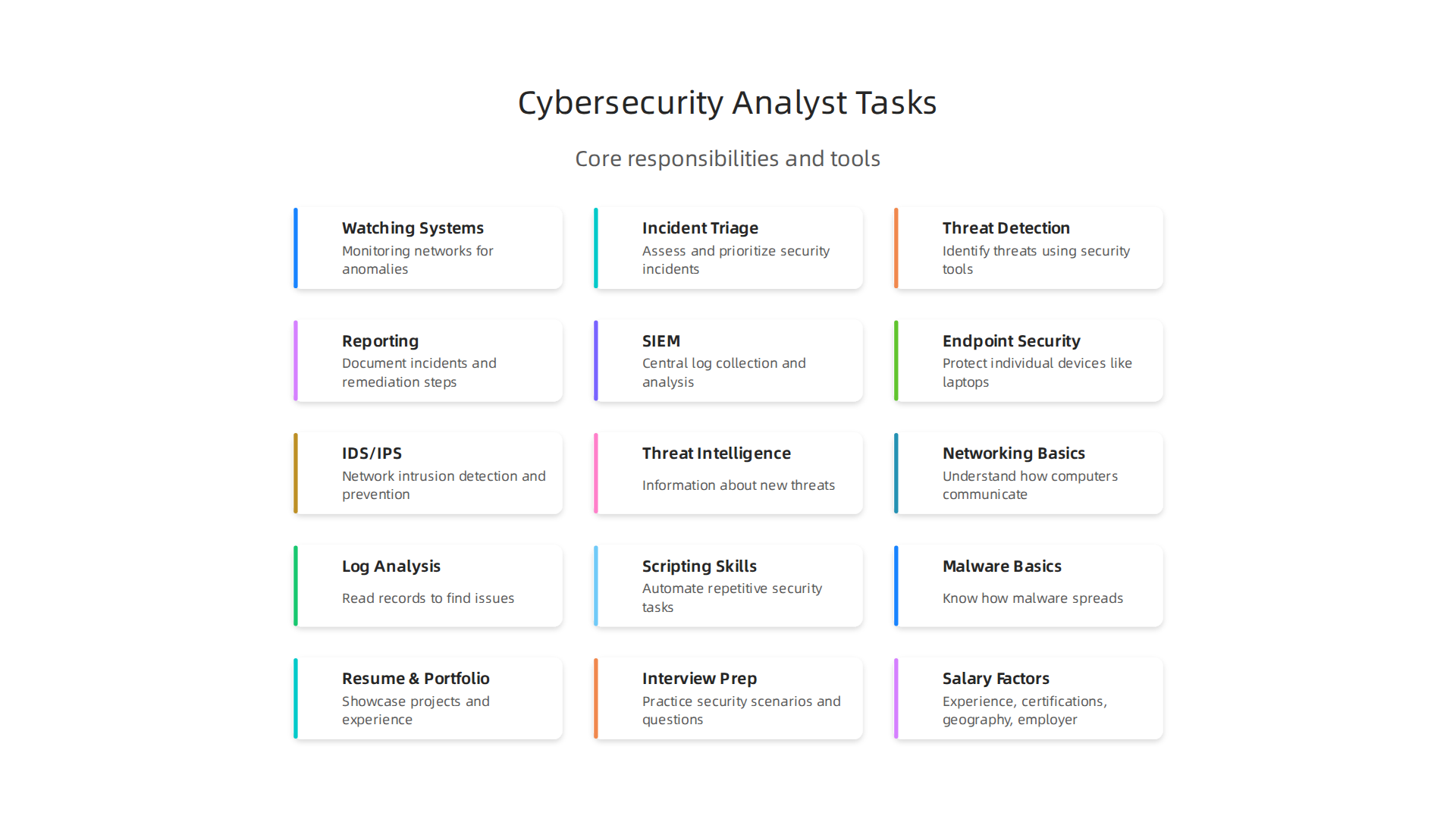
- Watching Systems (Monitoring)
They spend a lot of time watching computer networks. This is called monitoring. They look for anything strange or out of place. It’s like a security guard watching cameras, but for computers. If someone tries to get into a system without permission, the analyst will spot it. - Checking Problems (Incident Triage)
When an alert goes off or something looks suspicious, the analyst quickly checks it out. This first look is called incident triage. They need to figure out if it’s a real threat or just a mistake. A big part of their role is planning and carrying out security measures to protect computer networks and systems, as highlighted in the Information Security Analysts’ Handbook.

- Finding Dangers (Threat Detection)
A major part of the job is finding hidden dangers. This is known as threat detection. They use special tools to scan for viruses, malware, and other harmful software. They also look for weak spots in the system that bad guys could use to get in. - Telling Others What Happened (Reporting)
When a problem happens, the analyst doesn’t just fix it. They also write reports. These reports explain what happened, how they fixed it, and how to prevent it in the future. This helps everyone in the company learn and improve their security.
How Analysts Fit into Security Teams
Cybersecurity analysts usually work in a special area called a Security Operations Center (SOC). Think of a SOC as the main hub for computer security. Many analysts work together here, keeping an eye on everything.

Their main duties involve watching for alerts, figuring out what’s a real problem, and deciding how to respond or if they need more help SOC analysts’ duties.
They also work closely with other teams, like those who build the computer systems or manage the network. They share information about weak spots and new threats. Sometimes, an analyst might need special computer forensics certification skills to dig deep and understand exactly how an attack happened.
With new technology, ai cybersecurity training is becoming super important for these analysts. It helps them understand both the new dangers that AI can bring and how AI tools can help them do their jobs better. For people just starting out, getting entry level cyber security certifications or completing good cybersecurity programs are great ways to prepare for this exciting field. They will learn how to deal with all sorts of threats, including complex ones like stopping AI from giving wrong information. You can learn more about how advanced data analysis helps with stopping AI hallucinations with big data analytics.
To do all these important tasks, a cybersecurity analyst follows a certain routine and uses many special tools. Their day usually starts by looking at alerts that came in overnight. They check different computer screens that show what’s happening on the network. This constant watching helps them find anything unusual.
Here are some common tools a cybersecurity analyst uses every day:
- SIEM (Security Information and Event Management)
This is like a giant collecting point for all security messages. It gathers information from every computer and network device. This helps thecybersecurity analystsee a full picture of what’s happening. They use SIEM to spot patterns that might mean a hacker is trying to get in. For example, a SIEM helps in Streamlining SOC Analyst Diagnosis Through Workflow Extraction by making it easier to see what alerts are most important. - Endpoint Security Tools
These tools protect individual devices, or "endpoints," like your laptop, phone, or servers. They stop bad software, called malware, from running. - IDS/IPS (Intrusion Detection/Prevention Systems)
These are like smart guards for the network. An Intrusion Detection System (IDS) watches for bad traffic and sends an alert. An Intrusion Prevention System (IPS) not only watches but also blocks harmful traffic before it can cause problems. Manycybersecurity analystjobs list familiarity with tools like IDS/IPS as a key skill, according to a Cybersecurity Analyst Job Posting Template. - Threat Intelligence Platforms
These tools provide information about new threats and known bad actors. This helps analysts understand what attacks might come next and how to prepare. It’s like getting a heads-up on upcoming storms.
Learning to use these tools is a big part of any good cybersecurity programs. As technology changes, analysts also need ai cybersecurity training to understand how new AI tools can help them or how AI itself can be a target. For example, they need to know How AI Hallucinations Are Undermining Network Firewall Security. Sometimes, after a big security problem, a cybersecurity analyst might need deeper skills, like those gained from a computer forensics certification, to find out exactly how an attack happened. Even people with entry level cyber security certifications start learning about these tools right away.
Knowing the tools is a great start, but a skilled cybersecurity analyst also needs a strong foundation of core technical abilities. These are the skills that help them understand why and how things happen in a computer system, not just what tool to click. Many cybersecurity programs focus on building these key skills.
Here are some of the most important technical skills:
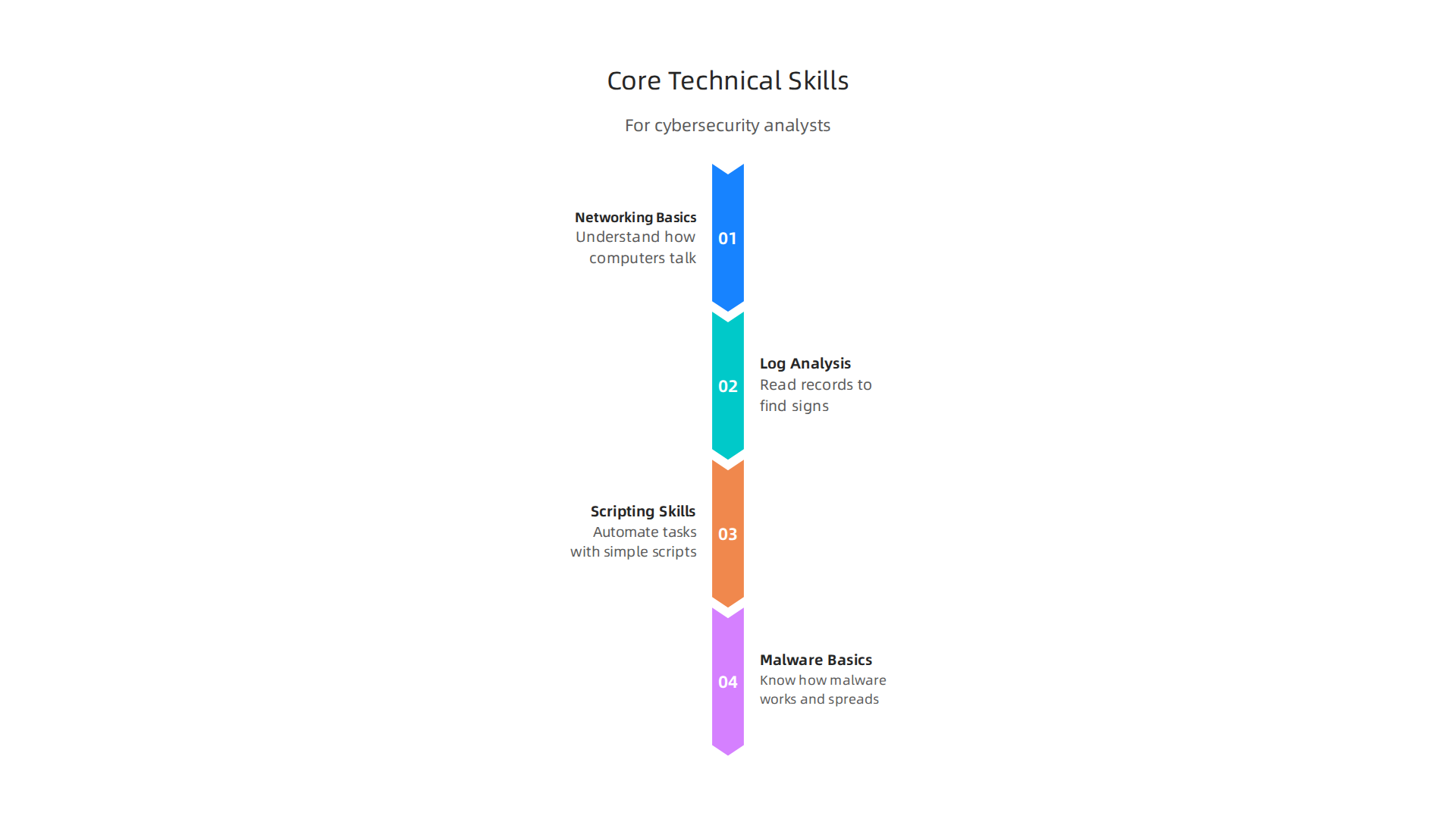
- Networking Basics: Imagine all computers and devices as people talking to each other. A
cybersecurity analystneeds to understand how they "talk" over a network. This includes knowing about IP addresses, different types of connections like Wi-Fi or Ethernet, and how information travels. Without this, it’s hard to protect the paths data takes. - Log Analysis: Every computer and network device keeps records of what it does. These records are called logs. Reading and understanding these logs is like being a detective, looking for clues after a crime. A
cybersecurity analystmust be good at sifting through huge amounts of log data to find signs of trouble, such as a hacker trying to get in or a program acting strangely. This skill is crucial for understanding security incidents, as highlighted in a Computer Security Incident Handling Guide.
For those interested in data analysis, skills for a cybersecurity analyst often overlap with those in Data Analyst Jobs in 2026 Skills Salaries and How to Detect AI Hallucinations.
- Scripting Skills: This means being able to write simple computer programs, often using languages like Python or PowerShell. Scripting helps analysts automate boring, repetitive tasks. For example, a script can quickly check many computers for a specific type of file. This saves time and makes security checks faster and more complete.
- Malware Basics: Malware is a general name for bad software like viruses or ransomware. A
cybersecurity analystneeds to know how different types of malware work, how they spread, and how they try to hide. Understanding the enemy helps them protect systems better.
According to a report on Cybersecurity Jobs in 2026: Top Roles, Responsibilities, and Skills, these technical skills are vital for success in the field.
How to Build These Skills with Hands-on Practice
Learning from books is helpful, but actually doing cybersecurity tasks is the best way to make these skills truly yours.

Think of it like learning to ride a bike: you can read about it, but you need to practice.
- Cybersecurity Labs: Many
cybersecurity programsand online courses offer virtual labs. These are safe, fake computer networks where you can practice finding and fixing problems without breaking anything important. It’s a great place to start, especially if you’re working towardsentry level cyber security certifications. - Capture The Flag (CTF) Challenges: These are fun, puzzle-like games where you use your security skills to solve problems and "capture flags" (which are hidden codes). CTFs help you think like a hacker and a defender at the same time.
- Build Your Own Home Lab: If you have some old computers or even virtual machines on your current one, you can set up your own small network at home. This lets you practice installing security tools, testing different settings, and seeing how systems react to various threats.
- Simulated Security Operations Center (SOC) Exercises: Some advanced
cybersecurity programsor specialai cybersecurity trainingoffer simulated SOC environments. Here, you get to act like a realcybersecurity analystin a security center, responding to fake attacks and alerts. It’s like a drill for real-world incidents, preparing you for tasks that might even require acomputer forensics certificationfor deeper investigation. You can learn more about practical training in a Detect AI Hallucinations A Training Guide for 2026.
While hands-on practice makes you really good at cybersecurity, showing what you know with the right papers is also very important. This means getting certifications and going through formal training. These pathways help a cybersecurity analyst prove their skills to employers.
Certifications and Degrees
Certifications are like badges that show you have special skills in a certain area of cybersecurity. They are very helpful when you are looking for a job.
- Entry-Level Certifications: If you are just starting,
entry level cyber security certificationslike CompTIA Security+ or Google Cybersecurity Certificate are great first steps. They show you understand the basic rules and practices of keeping computers safe. Employers often look for these to make sure you have a solid foundation. These types of IT certifications are known to make students more ready for jobs, especially in competitive areas like cybersecurity, according to a report on Understanding the Essential Role of IT Certifications in Modern Tech. - Advanced Certifications: As you learn more, you can go for harder certifications. These might be about specific tools, certain types of attacks, or deeper topics like ethical hacking or cloud security. For example, a
computer forensics certificationteaches you how to investigate digital crimes. These advanced certifications show you are an expert in a specific field. - Why Certifications Matter: Having the right credentials can give you a big boost in finding a job, as noted in a report about Credential Fluency: The Hiring Advantage in the Race for Skills. Many companies want to see that you have these official proofs of skill.
Besides certifications, a formal education like a college degree can also set a strong path. Many cybersecurity programs at universities offer degrees that cover a wide range of topics, giving you a deep understanding of the field. These programs are often supported by state boards, like those in Louisiana for the FISCAL YEAR 2025–26 Cybersecurity programs.
Training Pathways
Beyond traditional degrees and certifications, there are other ways to train and learn:
- Bootcamps: These are shorter, very focused training courses that teach you specific cybersecurity skills quickly. They are often hands-on and prepare you for
entry level cyber security certificationsor specific job roles. - Employer Training Programs: Some companies offer their own training programs for new hires. This is a great way to learn what a specific company needs and to grow your skills on the job.
- Ongoing Learning: The world of cybersecurity changes all the time. A good
cybersecurity analystnever stops learning. This means staying updated on new threats and technologies, sometimes through specialized courses. For instance, as AI becomes more common, understanding how to protect systems from new threats like AI-driven attacks is key. Acybersecurity consultantoften needs to know how to protect businesses from new risks, including those from AI. Learning how to deal with issues like How a Cybersecurity Consultant Protects Your Business from AI Hallucinations shows the evolving nature of the job.
After gaining skills and maybe some entry level cyber security certifications, you need to show them off to get hired. Your resume is important, but a strong portfolio really makes you stand out. This section will help you understand how to best present yourself.
Resumes and Portfolios
Think of your resume as a quick summary of your skills and experiences. It should be clear and easy to read. Make sure to list your certifications, any degrees, and key skills like network security, incident response, or ethical hacking.
A good portfolio shows what you can do, not just what you’ve studied. It is like a highlight reel of your best work. For a cybersecurity analyst, you should include projects you’ve worked on. This could be things like setting up a secure home network, helping to fix a fake cyberattack in a lab, or showing how you analyzed security logs. Explain what you did, how you did it, and what you learned from each project. Clean writeups from home lab exercises and incident response simulations can make a very strong cybersecurity portfolio, as experts agree that showing hands-on experience is key to getting noticed by employers in 2026. To learn more about building a strong portfolio, check out How To Build A Strong Cybersecurity Portfolio For Job Interviews.

You can also get helpful tips on what beginner candidates should include to get interviews by watching I Reviewed Beginner Cybersecurity Portfolios: What Gets Interviews?.
Interview Preparation
Once your resume and portfolio catch an employer’s eye, you’ll likely get an interview.

For a cybersecurity analyst role, interviews usually have two main parts: technical and behavioral.
-
Technical Questions: These questions check your knowledge about cybersecurity topics. Interviewers might ask about things like firewalls, different types of cyber threats, or how you would respond to a security breach. Knowing the basics and showing how you think through problems is important. In 2026, you should be ready for questions about SIEM (Security Information and Event Management), incident response, and cloud security. You can get an idea of what to expect from common Cybersecurity Analyst Interview Questions 2026. Many interview questions for a
cybersecurity analystalso cover important definitions like the differences between risk, vulnerability, and a threat, or how symmetric and asymmetric encryption work. Preparing for these can give you a big advantage. -
Behavioral Questions: These are about how you handle situations, work with others, and solve problems. Employers want to know about your teamwork skills, how you deal with stress, and how you learn from mistakes. Practice talking about your past experiences clearly and showing that you can be a good team player. In your answers, remember to show your ability to learn and adapt, especially with new challenges like
ai cybersecurity training. Understanding new threats and how to protect systems, including from AI-related issues, is a valuable skill for anycybersecurity analystin 2026. For example, learning about how to detect false information from AI is becoming very important. You can find out more by looking into a resource like Detect AI Hallucinations: A Training Guide for 2026.
Career Progression: From Analyst to Senior Roles
Getting your first job as a cybersecurity analyst is a big step. But it’s just the start of an exciting journey. In 2026, the cybersecurity field is always growing, and there are many paths you can take to move up. Thinking about your career path early can help you grow into more senior roles and even explore different cybersecurity programs.
Many entry-level cybersecurity analysts move up to become a Senior Cybersecurity Analyst. This means you take on bigger tasks, lead projects, and help guide newer team members. Other common paths include becoming an Incident Responder, where you are the first one to handle real cyberattacks, or a SOC Lead, managing the team that watches for threats. Some people enjoy being a Threat Hunter, actively looking for hidden dangers in a network. For a broader look at possible paths, you can check out a detailed Cybersecurity Career Path 2026 Guide. You can also see a visual roadmap of different roles and how to get there with the Cybersecurity Career Pathway tool.
To climb the career ladder, you need to keep learning and adding new skills. For example, moving into roles like a Security Engineer means you’ll design and build secure systems, which needs different skills than just monitoring. Getting advanced entry level cyber security certifications or specialized ones like a computer forensics certification can show you have the deeper knowledge employers are looking for. Many senior roles are in high demand in 2026, offering great opportunities for growth. Understanding the trends in Which Cybersecurity Roles Are in Highest Demand in 2026? can help you pick the right skills to focus on.
You should also keep your portfolio updated with more complex projects. If you’re aiming for a role that deals with advanced threats, include projects where you’ve tackled new challenges like those in ai cybersecurity training. For example, showing how you’ve worked to stop tricky issues like How AI Hallucinations Are Undermining Network Firewall Security can prove your advanced problem-solving skills. Each step up will mean more responsibility and deeper technical work. You can learn more about how a cybersecurity analyst moves from an intern all the way to a principal role by watching this Cybersecurity Analyst Career Path: From Intern to Principal video.
Job Market, Salaries, and Demand in 2026
After learning about how to move up in your cybersecurity career, you might be wondering about the job market itself. Good news: in 2026, the demand for a cybersecurity analyst is still very strong across the world. Cyber threats are always growing, so businesses and governments need skilled people to protect their information.
You’ll find many job openings for cybersecurity analysts in different places. For example, countries like the United States, Canada, Australia, New Zealand, and the United Kingdom have a high need for these professionals, as noted in a report on Building a Skilled Cyber Security Workforce in Five Countries. The demand is also high in Europe and Latin America, as cybersecurity becomes more important everywhere. Many different kinds of companies hire cybersecurity analysts. This includes big tech companies, banks, healthcare providers, and even government groups. They all need someone to keep their data safe. The Cybersecurity Workforce Supply and Demand Report shows that the number of available jobs is much higher than the number of people ready to fill them. This means it’s a great time to be in this field.
When it comes to how much money a cybersecurity analyst makes, it can change a lot. Your salary will depend on a few main things:

- Experience Level: If you’re just starting with
entry level cyber security certifications, your salary will be different from someone who has many years of experience. Senior analysts, especially those with specialized skills in areas likeai cybersecurity trainingor acomputer forensics certification, usually earn more because they handle bigger and more complex problems. - Certifications: Getting advanced certifications can really boost your earning potential. These certifications show that you have deep knowledge in specific areas that employers value.
- Geography: Where you live and work also plays a big role. Major cities often offer higher salaries than smaller towns, even for the same job. Different countries also have different pay scales, as shown in the UK Cyber Security Sectoral Analysis 2026 which provides a look at the sector in that region.
- Employer Type: The kind of company you work for can affect your pay. For example, a large tech company might offer more competitive salaries than a smaller non-profit organization.
Overall, salaries for cybersecurity professionals are quite good and are expected to keep growing due to high demand. A recent 2026 Cyber Security, AI, and Data Science Survey collected pay information from many organizations, showing just how valuable these skills are. If you are interested in how data skills, including spotting AI errors, relate to job opportunities, you might want to explore articles like Data Analyst Jobs in 2026: Skills, Salaries, and How to Detect AI Hallucinations.
Summary
A cybersecurity analyst protects company data and networks by monitoring systems, triaging alerts, detecting threats, and reporting incidents. This article explains why the role is critical in 2026 as cyber threats and AI-related risks rise, describes daily duties and how analysts fit into SOC teams, and lists the common tools like SIEM, IDS/IPS, and endpoint protection. It outlines the core technical skills—networking, log analysis, scripting, and malware basics—and shows how to build them with labs, CTFs, and simulated SOC exercises. The guide covers training routes (certifications, bootcamps, degrees), how to present skills via resumes and portfolios, interview preparation, and clear career progression options from entry analyst to senior and specialist roles. Finally, it reviews job market demand and the main factors that affect salary and hiring prospects in 2026.